Engineered Warehouse Pallet Shelving Systems
Precision-fabricated, heavy-gauge steel shelving assemblies tested to withstand rigorous cyclic dynamic loads, forklift impact shear, and extreme vertical tonnage across distribution centers and manufacturing plants.
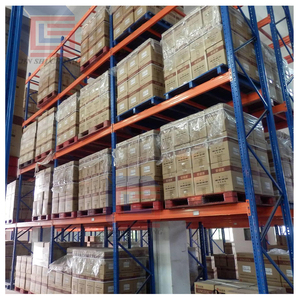
Industrial Heavy Duty Steel Pallet Rack Warehouse Shelving System for Storage, Distribution Center and Factory Use
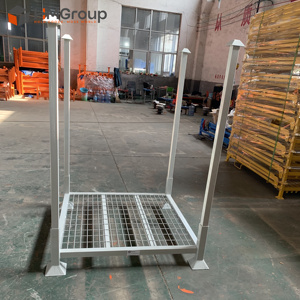
Good Quality Heavy Duty Warehouse Detachable Pallet Stacking Racks
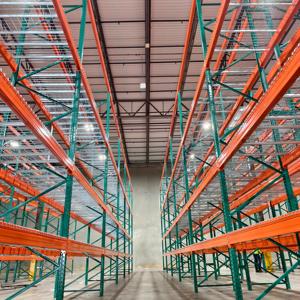
High-Load RMI Certified Industrial US Inventory Warehouse Rack Heavy-Duty Teardrop Pallet Rack System for Heavy Cargo
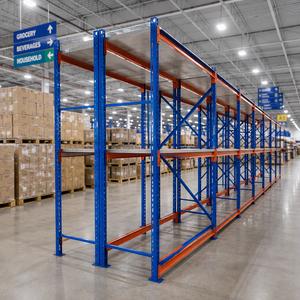
ODM OEM Custom Industrial Adjustable Warehouse Heavy Duty Selective Durable Steel Pallet Racking Shelving System Shelf Rack
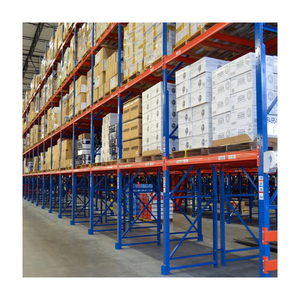
Wholesale Price Heavy Duty Storage Racks Warehouse Stacking Racks Selective Steel Pallet Rack Heavy-Duty Racking for Sale
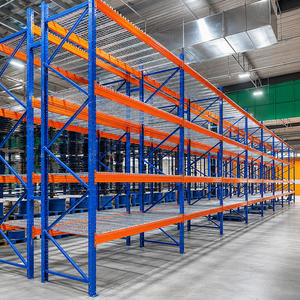
Steel Storage Rack Selective Pallet Racking with 1.5mm Interlocking Box Beam for Bulk Distribution Center
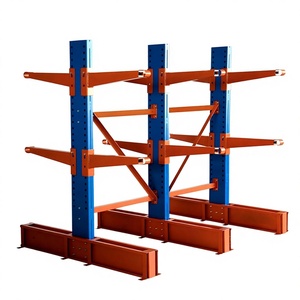
Warehouse Racking Systems Heavy Duty Steel Cantilever Shelf Warehouse Storage Profile Steel Rack Storages Cantilever Racks
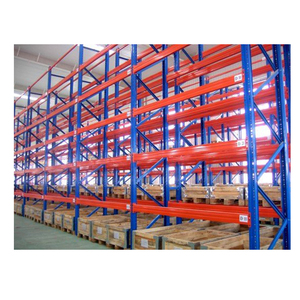
Jinhui Heavy Duty Rack Warehouse Storage Pallet Racking Teardrop Heavy Duty Pallet Racking System Industrial Steel Structure
Structural Engineering Criteria & Wholesale Selection Framework
Modern distribution hub engineering demands rigorous structural verification to prevent cataclysmic rack collapses caused by progressive yield failures, dynamic impact loads, or seismic displacement. When auditing top-tier warehouse pallet shelving systems manufacturers and wholesalers, supply chain directors must evaluate the following structural performance indices:
1. Cold-Formed vs. Structural Structural Steel Sections
Standard roll-formed steel provides cost efficiency and fast boltless assembly via teardrop or diamond slot punch patterns. However, heavy industrial applications subject to frequent forklift impact benefit immensely from structural hot-rolled C-channel frames (ASTM A36 or Q355B equivalents). The reinforced flange thickness prevents localized web buckling when struck by out-of-control counterbalance trucks or reach trucks.
| Racking System Type | Material Specification | Maximum Load Capacity per Bay | Optimal Application Space | Seismic & Impact Resistance |
|---|---|---|---|---|
| Standard Selective Roll-Formed | Q235B Cold-Rolled Strip Steel | 12,000 kg – 18,000 kg | General Retail, Fast Moving Consumer Goods (FMCG) | Moderate; requires column crash guards |
| Structural C-Channel Racking | Hot-Rolled ASTM A36 / Q355B | 22,000 kg – 45,000 kg | Freezer Cold Storage, Heavy Machinery, Beverage Hubs | Exceptional; high energy absorption against vehicle impact |
| High-Density Mobile Carriage Racks | Integrated Guided Rail + Structural Base | Up to 30,000 kg per moving bay | Archives, Cold Storage Warehouses, Pharmaceuticals | Engineered base locking pins, anti-tip floor anchor assemblies |
| Drive-In / Drive-Through Systems | Heavy-Duty Slotted Upright + Support Rails | 15,000 kg – 25,000 kg | Homogeneous High-Volume Inventory, Seasonal Goods | Requires intermediate top and back torsional bracing |
| Heavy Industrial Cantilever | Welded Center Column + Tapered Arms | 1,500 kg – 3,500 kg per arm | Structural Steel Beams, Extruded Piping, Lumber Mills | Rigid vertical anchor bolt array into reinforced footings |
2. Seismic IBC Anchor Calculations and Concrete Floor Slab Capacities
Under US IBC (International Building Code) and Eurocode EN 15512 specifications, industrial racking is categorized as an engineered building structure. Racking footprints must account for soil site class (Classes A through F), spectral acceleration coefficients (Ss and S1), and building drift limits. Structural anchor bolts must transfer axial pullout and shear forces directly into the monolithic slab without inducing micro-fractures in unreinforced concrete topping.
3. Surface Treatment Durability: Pre-Treatment vs. Electrostatic Thermosetting Epoxy
Accelerated corrosion due to relative humidity, condensing conditions in sub-zero freezers, and acidic airborne particulate can degrade beam clip safety locks within months. High-caliber manufacturers utilize a 7-stage phosphating degreasing wash followed by robotic electrostatic spraying of thermosetting polyester-epoxy powder cured at 180°C–200°C to achieve a scratch-proof film thickness exceeding 60–80 microns.
Why Enterprise Tier-1 Facilities Partner With Our Supply Chain
From mill-certified metallurgical sourcing to fully integrated digital design layouts, we deliver turn-key warehouse solutions engineered for unmatched service life, safety compliance, and operational scalability.
Storage-Savvy Engineering Specialists
Every industrial project is modeled around specific SKU profiles, material handling equipment (MHE) turning radiuses, and structural building columns. Our registered structural engineers eliminate dead zones and ensure total floor-to-ceiling volumetric utilization.
Tailored Dimensional Customization
Whether you require standard 2-inch US teardrop hole spacing, metric 50mm/75mm European box-beam slots, or custom structural rolled sections, our CNC rolling lines produce upright depths, beam profiles, and gauges calibrated to exact project tolerances.
Free 2D Elevation & 3D BIM Layouts
We provide full Revit and AutoCAD deliverables with structural load validation, seismic anchor shear calculations, and clear egress aisle pathways prior to commercial procurement, giving facility managers and architects comprehensive risk mitigation up front.
Proprietary Safety & Locking Patents
Equipped with automatic spring-loaded beam engagement locks, dual-weld column footings, patented interlocking box-beam profiles, and anti-tip rail guidance assemblies engineered to resist severe lateral floor shifts and vibration shocks.
Turnkey Global Logistics & Certified Commissioning
From initial ocean container packing with moisture-barrier wrapping to on-site assembly supervised by OSHA-certified racking erection crews, we guarantee prompt delivery schedules across North America, Europe, Australia, and the Middle East, adhering directly to local civil building ordinances and inspection sign-offs.
Future Trends in Industrial Storage & Racking Procurement
Warehouse automation, rising industrial land values, and stringent carbon mandates are rapidly transforming traditional static pallet storage into dynamic, intelligent logistical nodes.
AS/RS & Autonomous Shuttle Symbiosis
Procurement is moving rapidly away from standalone manual racking toward four-way automated pallet shuttle systems and stacker crane integration. Structural upright tolerances are narrowing from ±3.0mm to ±0.8mm to accommodate high-speed optical positioning sensors.
Vertical High-Bay Densification
With prime logistics industrial real estate lease costs reaching all-time highs, warehouse operators are shifting procurement focus to high-bay racking systems spanning 20 to 40 meters tall, transforming the shelving framework into the load-bearing super-structure (rack-clad buildings).
IoT Load & Structural Health Sensors
Next-generation pallet uprights are increasingly fitted with integrated strain gauge transducers and continuous optical beam deflection telemetry. These micro-sensors trigger early warnings if fork drivers cause invisible micro-cracks or over-tonnage deflection thresholds.
Low-Carbon Recycled Steel & ESG Mandates
Multinational 3PLs and Fortune 500 distribution firms are demanding Environmental Product Declarations (EPDs) and LEED v4 compliance. Procurement directors give preferential scoring to manufacturers utilizing electric arc furnace (EAF) steel and non-toxic zinc-free powder coatings.
Frequently Asked Questions on Pallet Shelving Systems
Authoritative technical guidance compiled by industrial racking structural engineers to answer critical commercial, structural, and regulatory purchasing inquiries.
Accelerate Your Storage Density with Certified Engineering Layouts
Share your architectural floor prints, clear ceiling heights, and unit pallet dimensions. Our structural engineers will generate an optimized 2D/3D layout along with competitive factory-direct wholesale pricing within 24 hours.