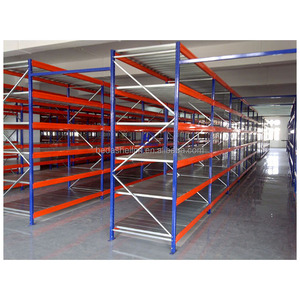
Featured OEM Portfolio
Engineered Industrial Storage Systems & Heavy Structural Racks
Certified high-yield structural steel units fabricated according to global safety criteria, including ANSI MH16.1, RMI, and FEM specifications.
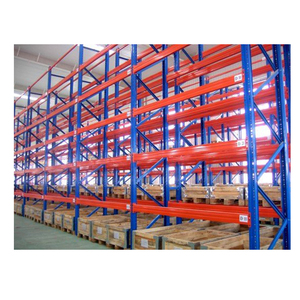
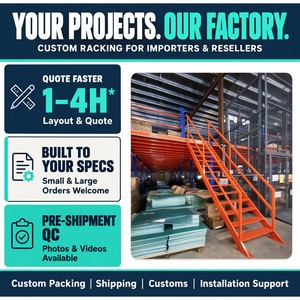
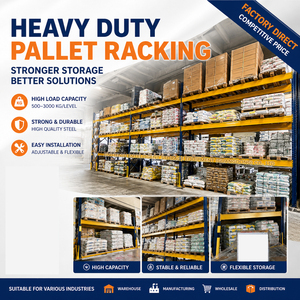
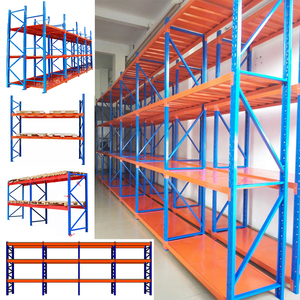
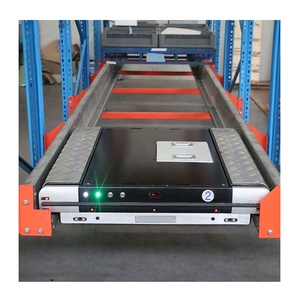
Multi-Level Automatic Warehouse Racking Two-Way Radio Shuttle Rack for Raw Materials
High-Density FIFO/LIFO
Inquire Now
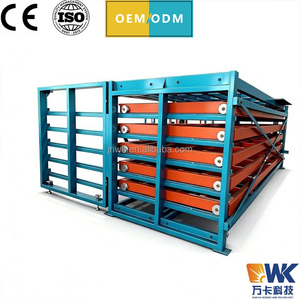
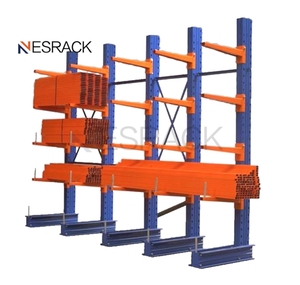
Steel Structural Cantilever Racking Powder Coated Single Side Cantilever Storage Racks
Tubing/Lumber Heavy Duty
Inquire Now
50%
Average Footprint Recovered by Eliminating Static Aisles
2.4X
Storage Density Multiplier in High-Bay Installations
100%
Traceable Cold-Rolled Structural Steel (Q235B / Q355B)
30+
Years Combined OEM/ODM Engineering & Global Export Experience
Engineering Paradigms in Modern Industrial Racking & Shelving Procurement
Modern distribution centers, industrial manufacturing facilities, and automated high-throughput hubs are no longer treated as simple square footage. Instead, procurement executives and facility engineers evaluate industrial shelving as an integrated structural asset. The global shift toward omnichannel retail, direct-to-consumer consolidation, and high-SKU density mandates load-bearing infrastructure that provides both structural rigidity and systemic modularity. Standard off-the-shelf catalog racks frequently fall short when integrated with dynamic mechanical handling equipment (MHE), Automated Guided Vehicles (AGVs), and Autonomous Mobile Robots (AMRs).
Custom OEM manufacturing addresses structural steel composition, precision punch hole tolerances, deflection ratios, and seismic anchoring dynamics. In regions characterized by seismic activity or specialized soil profiles, universal framing leads to catastrophic column buckling or chronic deflection under uneven load distribution. Custom-engineered cold-rolled and structural hot-rolled designs ensure upright frames, horizontal step beams, and heavy-duty bracing are calibrated against dead loads, live loads, seismic actions, and impact forces caused by forklift operations.
"True industrial efficiency is achieved when storage geometry eliminates redundant operator transit, streamlines FIFO/LIFO workflows, and safeguards warehouse personnel via certified structural tolerances under continuous heavy loading."
Furthermore, custom OEM industrial shelving allows procurement departments to select surface treatments that directly correspond to operational environments. For dry, ambient distribution centers, thermo-hardened electrostatic polyester powder coatings deliver abrasion and chemical resistance. Conversely, for cold chain cold-storage vaults, blast freezers, and maritime transit environments, hot-dip galvanization conforming to ISO 1461 prevents micro-corrosion, rust flaking, and steel degradation under fluctuating dew points.
Value Proposition
Enterprise OEM Capabilities: From Raw Coil to Certified Commissioning
Consolidating your supply chain with our single-source manufacturing facilities eliminates intermediary markups, assures metallurgical integrity, and accelerates lead times.
High-Precision Roll Forming
Continuous CNC roll-forming lines maintain punch-hole pitch accuracy within ±0.1mm tolerances, guaranteeing flawless interchangeability of teardrop, slotted, and diamond hole patterns.
Certified Metallurgical Feedstock
Direct procurement of prime grade structural steels (Q235B, Q355B, SS400) accompanied by mill test certificates (MTC), certifying tensile strength, yield limits, and elongation integrity.
Turnkey Layout Optimization
Our licensed structural engineers deliver complimentary 2D CAD layouts and 3D architectural models to validate egress compliance, beam capacity limits, and overall space utilization.
Global Logistics Architecture
Modular knockdown packaging optimized for standard container stuffing limits transit damage and maximizes cubic freight density, lowering shipping overhead for international projects.
The Future of Industrial Storage: Global Procurement Trends
Procurement directors in North America, Europe, and Asia-Pacific face rising commercial real estate lease rates alongside acute warehouse labor shortages. Consequently, the strategic orientation of industrial storage acquisition has transitioned from simple capital expenditure containment toward long-term lifecycle optimization. Four macro trends define current and future industrial shelving sourcing:
1. Robotic Automation & AMR Compatibility: Automated Guided Vehicles and pallet-moving AMRs necessitate tighter manufacturing tolerances. Conventional racking systems that exhibit column deviations exceeding standard allowances can cause sensor misalignments, leading to automated picking errors or machine halts. Future OEM contracts will universally mandate automated MHE compatibility specifications.
2. Vertical Mezzanine & High-Bay Maximization: With land acquisition and civil expansion costs soaring, facility operators are utilizing vertical clear heights up to 12 to 15 meters. Rack-supported mezzanine platforms, multi-tier boltless catwalks, and vertical radio shuttle lanes double or triple existing floor capacities without expanding the real estate footprint.
3. Decarbonization and Sustainable Life Cycle Analysis (LCA): Enterprise ESG governance models require corporate buyers to account for the embodied carbon of their logistics infrastructure. Sustainable fabrication practices, including low-energy powder curing lines, closed-loop water treatment for acid pickling, and lightweight high-tensile cold-rolled steel profiling, are becoming baseline prerequisites in corporate tenders.
4. Resilient Supply Chains and Digital Modeling: As-built digital twins through BIM (Building Information Modeling) and Revit data are now required by project architects prior to floor slab curing. Racking OEM partners must provide detailed CAD-to-BIM digital objects to streamline clash detection against fire suppression systems, ventilation ducts, and overhead crane pathways.
Technical Guide
Frequently Asked Procurement & Engineering Questions
Direct answers covering structural calculations, international standards, surface options, and OEM manufacturing agreements.
What core standards govern custom structural racking designs?
Our structural designs can be engineered to comply with American RMI (Rack Manufacturers Institute) / ANSI MH16.1 specifications, European FEM 10.2.02 / EN 15512 codes, and AS4084 guidelines for Australasia. Structural calculations take into account seismic zones, concrete slab load limits, and beam deflection thresholds (typically L/200).
How does cold-rolled steel compare to structural hot-rolled channels?
Cold-rolled sheet steel (Q235B/Q355) offers high strength-to-weight ratios, economical production costs, and modular adjustability via punch-hole patterns. Structural hot-rolled steel channels (C-sections) provide enhanced impact resistance and are predominantly utilized in heavy-duty drive-in systems or dynamic forklift zones exposed to high collision risk.
What is the minimum order quantity (MOQ) for custom OEM color and sizing?
Standard dimensions in standard safety colors (e.g., Signal Blue, Safety Orange, Traffic Grey) have flexible minimums. For custom profile roll-forming, proprietary perforation patterns, or specific RAL polyester powder finishes, MOQs typically begin at one full 20ft/40ft container load to amortize tooling setups.
Can custom OEM shelving be retrofitted onto existing third-party racks?
Yes. Because we engineer standardized hole patterns, including teardrop, hook-in box, and universal slotted profiles, our components can be fabricated to integrate with existing legacy racking footprints, allowing facility upgrades without requiring total infrastructure replacement.
What surface finish should be specified for cold storage applications?
For blast freezers and sub-zero distribution units (-20°C to -40°C), hot-dip galvanized steel is recommended to prevent thermal shock peeling, condensation-induced rusting, and surface micro-fracturing. Special freeze-resistant electrostatic powders are also available for moderate cool room applications.
How do you verify the load-bearing capacity of engineered systems?
All designs are validated via Finite Element Analysis (FEA) software modeling stress distribution, buckling tendencies, and connection shear factors. Physical destructive testing on upright column-to-beam connectors is routinely executed in internal test rigs to guarantee verified safety factors (typically 1.5 to 1.65).
Initiate Your Facility Optimization Project
Connect directly with our senior intralogistics engineering team. Receive complimentary layout analysis, verified load charts, and wholesale OEM production quotes tailored to your exact warehouse footprint.
Inquire Now