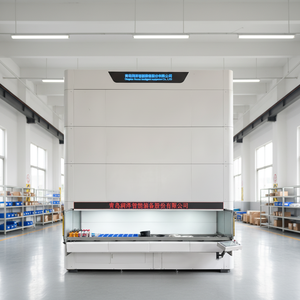
High Density Metal Vertical Storage Rack VLM with Smart Tray Arrangement 1000kg Capacity
Payload: 1000kg/Tray
Automated VLM
Precision-profiled cold-rolled steel architectures, anti-seismic certifications, and automated intra-logistics handling configurations engineered for modern supply chains.
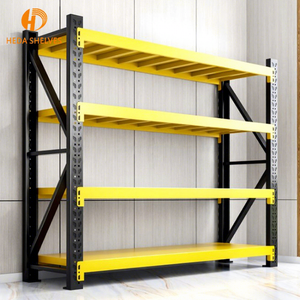
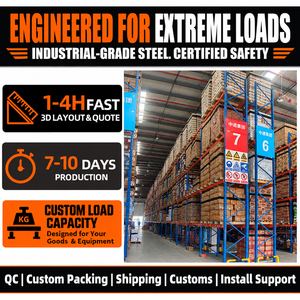
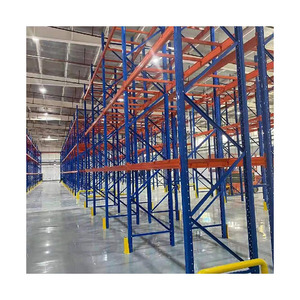
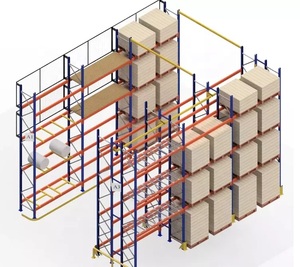
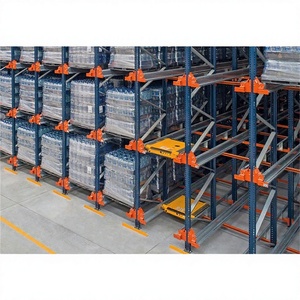
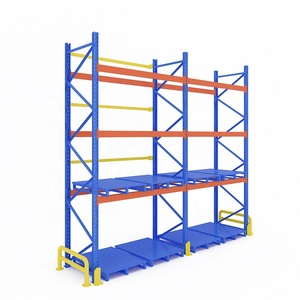
In modern industrial facilities, floor space represents one of the most capital-intensive operational overheads. Global supply chains face escalating real estate acquisition costs, stringent safety frameworks, and unpredictable shifts in volume demand. Sourcing storage infrastructure from an elite Chinese racking manufacturer is no longer a simple transactional purchase—it is a critical engineering decision that dictates a distribution facility's volumetric efficiency, labor velocity, dynamic safety profiles, and enterprise return on investment (ROI).
As premier Chinese manufacturing facilities shift from generic steel fabrication to high-precision, automated manufacturing ecosystems, tier-one operations are leveraging advanced metallurgy, robotic continuous roll-forming lines, automated electrostatic deposition finishes, and digital integration. This whitepaper breaks down structural integrity benchmarks, life-cycle procurement paradigms, automation convergence patterns, and international compliance matrices designed to guide logistics directors, warehouse operators, and industrial EPC contractors.
The structural load-bearing capacity of an industrial rack starts with raw material selection. Leading Chinese manufacturers avoid low-yield, recycled scrap steel in favor of certified prime structural carbon steel grades, including Q235B, Q355B (equivalent to ASTM A36 and ASTM A572 Grade 50), and specialized micro-alloyed hot-rolled strips. These materials provide high tensile strength and yield performance, ensuring structural elasticity under seismic and accidental operational shockloads without catastrophic plastic failure.
Mechanical precision is guaranteed through automated continuous multi-station roll-forming lines. Cold-roll deformation with rolling stations ranging from 18 to 26 stages ensures that upright columns maintain consistent wall thickness and cross-sectional profiles. Laser-cut Omega-hole and teardrop perforation configurations are held to tight micro-tolerances within ±0.5mm across 12-meter continuous sections. This manufacturing precision eliminates structural skewing, frame twist, and residual internal stresses that often cause failure in high-bay structures under dynamic cyclic loading.
High-density automated storage and retrieval frameworks combining 4-way radio shuttles, high-speed vertical hoists, and IoT-driven Warehouse Control Systems (WCS) for sub-millimeter positioning.
Direct accessibility to every SKU with modular beam-locking connectors, heavy base plates, and impact-resistant column guards engineered for rapid forklift handling.
Hot-dip galvanizing and multi-stage thermosetting epoxy powder coatings compliant with ISO 12944 C4/C5 atmospheric classifications for cold storage and chemical plants.
The global procurement playbook for industrial storage infrastructure is undergoing structural transformations driven by cross-border supply chain volatility, digital engineering validation, and the expansion of automated fulfillment:
The transition from static, manual shelving to intelligent, self-monitoring storage infrastructure represents a major leap in materials handling science. Forward-looking facilities are prioritizing the following architectural evolutions:
Leveraging over two decades of engineering leadership, precision manufacturing lines, and end-to-end quality assurance systems.
We tailor solutions to any dimension—length, depth, beam profile, and clear bay height—engineered to match your building envelope, floor slab limitations, and SKU profiles.
We provide complimentary 2D CAD layouts and 3D volumetric elevation models before procurement commitments, giving engineers and operations teams early spatial verification.
From initial seismic analysis and steel fabrication to international freight coordination and on-site certified installation oversight, we take single-source ownership of your project.
Manufactured and tested to comply with international racking codes: AS4084-2023 (Australia), RMI/ANSI MH16.1 (USA), FEM 10.2.02, and EN 15512 (Europe), verified by independent third parties.
Multi-stage computerized continuous roll-forming lines maintain ±0.5mm profile consistency across multi-meter sections, guaranteeing uniform load distribution and system longevity.
High-penetration robotic GMAW weld stations create clean, defect-free connector clips and baseplate joints with zero porosity, backed by comprehensive ultrasonic testing.
Nine-stage pre-treatment, iron phosphating, and electrostatic epoxy-polyester powder coating yield high scratch and corrosion resistance for tough industrial environments.
Export packaging features protective strapping, waterproof wrapping, and custom steel stillages, ensuring defect-free delivery across North America, Europe, Australia, and ASEAN.
Direct technical answers addressing structural engineering, certifications, containerized logistics, and on-site implementation.
Premium Chinese manufacturers utilize certified Q235B and Q355B structural grades, which match the chemical and mechanical profiles of ASTM A36 and ASTM A572 Grade 50, as well as European EN 10025 S235JR and S355JR. Mill test certificates (MTC) with full chemical compositions, yield points (≥235-355 MPa), elongation percentages (≥22%), and Charpy V-notch impact ratings are provided with every production heat.
For Australia, structural compliance with AS4084-2023 is legally required. In the United States, racks must meet RMI (Rack Manufacturers Institute) ANSI MH16.1 and International Building Code (IBC) seismic criteria. European installations require adherence to EN 15512, EN 15620, and EN 15635. Our factory supplies verified third-party mechanical test reports and stamped engineering calculations to secure municipal permits.
For sub-zero cold stores (−25°C to −40°C) and high-humidity chemical storage facilities, we offer two main surface solutions: hot-dip galvanization according to ISO 1461 (yielding a durable 60–85μm zinc barrier) or a multi-stage thermosetting powder coating system that incorporates zinc-rich epoxy primers, delivering C4/C5 corrosion protection that resists salt fog, condensation, and scratching.
Upright frames and heavy-duty beams are bundled using specialized steel cradles with closed-cell EPE foam interleaving, edge protectors, and heavy-gauge polyester strapping. This packaging prevents metal-to-metal rubbing, scratching, and deformation during container loading, transoceanic shipping, and flatbed transport to the final job site.
High-bay installations require concrete slab verification for compressive strength (typically ≥25-30 MPa), slab thickness (typically 150mm to 250mm+ depending on baseplate point loads), and floor flatness tolerances (such as DIN 18202 or TR34 Free/Defined Movement specs). Our engineering team reviews slab core-drill and reinforcement data during layout development to select optimal chemical or mechanical anchor configurations.
While drive-in racking increases density, it relies on forklifts entering the rack lanes, which increases cycle times and risk of structural impact. Four-way radio shuttle racking eliminates the need for forklifts to enter storage lanes. Autonomous shuttles move pallets internally at speeds up to 1.2 m/s, delivering up to 30% higher storage density, 50% faster cycle times, and significantly lower maintenance and repair costs.