Engineered Industrial Pallet Racking Systems
Precision-manufactured cold-rolled Q235B and Q355B steel racking solutions optimized for high-density warehouse storage, logistics distribution hubs, and manufacturing facilities across Guatemala.
AGIES & RMI Seismic Standard Compliance
Maximum Beam Pair Load Rating Capacity
Rapid 2D/3D Technical CAD Layout Generation
Volumetric Warehouse Footprint Optimization
1. Executive Industry Overview: Transforming Industrial Warehousing in Guatemala City
Guatemala City (Ciudad de Guatemala) stands as the undeniable macroeconomic engine and multimodal logistics epicenter of Central America. Accounting for over 35% of the national gross domestic product and serving as the primary distribution gateway between the Atlantic and Pacific maritime routes, the metropolitan logistics perimeter is currently undergoing an unprecedented modernization. Driven by regional nearshoring momentum, rapid retail and supermarket consolidation, expanding consumer goods distribution, and the rise of cross-border e-commerce, modern supply chain operators require warehouse infrastructure that delivers maximum volumetric efficiency without compromising structural stability.
For supply chain directors, warehouse operations engineers, and industrial developers operating within the Department of Guatemala, selecting an industrial pallet racking manufacturer is a high-stakes capital investment. Unlike standard commercial shelving, industrial high-bay pallet racking functions as a dynamic structural entity subject to continuous kinetic stresses from counterbalance forklifts, reach trucks, deep-reach dynamic loads, and critical regional seismic vibrations. As a premier direct factory manufacturer, we engineer and supply comprehensive heavy-duty pallet racking systems tailored specifically to meet the stringent structural and operational requirements of industrial facilities throughout Guatemala City and its contiguous logistical corridors.
Critical Seismic Notice for Guatemala Logistical Facilities (AGIES NR-1 & NR-2)
Guatemala City is located in a high-seismic subduction and strike-slip zone (Motagua and Polochic fault systems, alongside the Cocos-Caribbean plate interface). Structural racking installations must strictly observe seismic design parameters under the Guatemalan Association of Structural and Seismic Engineering (AGIES) norms NR-1, NR-2, and international RMI (Rack Manufacturers Institute) MH16.1 specifications. Standard lightweight commercial racks lack the baseplate moment resistance and upright diagonal bracing ductility required to avoid catastrophic collapse during seismic events.
2. Localized Industrial Corridors & Application Scenarios in the Metropolitan Area
Industrial space in Guatemala City is characterized by premium land costs per square meter, particularly within established zones such as Zona 12 (Atanasio Tzul), Zona 11, and Zona 17. Consequently, modern logistics facilities are expanding radially into purpose-built industrial parks across key transport arteries. Each micro-market exhibits distinctive architectural specifications, ceiling heights, floor slab engineering, and supply chain demands that dictate precise racking typologies:
Villa Nueva & Amatitlán (CA-9 Sur Corridor)
The southern logistics spine connecting Guatemala City to Puerto Quetzal is the central hub for mass consumer goods (FMCG), beverage bottling plants, and third-party logistics (3PL) mega-centers. Operating with clear heights from 10m to 14m, facilities here rely predominantly on heavy-duty Selective Pallet Racking with step beams and automated Radio Shuttle Racking to optimize high-throughput cross-docking operations.
Mixco, El Naranjo & San Juan Sacatepéquez
Home to major pharmaceutical manufacturing, medical supplies, cosmetic distribution, and light apparel maquiladoras. Warehouses here demand immaculate inventory selectivity and sanitary storage. Multi-Tier Mezzanine Platforms and Selective Teardrop systems with galvanized wire mesh decking provide flexible batch-picking, lot traceability, and strict compliance with sanitary audit standards.
Carretera al Atlántico (CA-9 Norte & Palencia)
The strategic freight artery funneling import/export cargo directly to Puerto Santo Tomás de Castilla and Puerto Barrios. Facilities accommodate heavy industrial machinery parts, agrochemical formulations, construction hardware, and raw export commodities. Racks require structural Q355B cold-formed uprights rated for heavy uniform distributed loads up to 3,500kg per beam level.
3. Deep-Dive Product Engineering: Architectural Match for Guatemalan Warehouses
Achieving optimum cubic space utilization requires deploying the right structural storage typology based on SKU velocity, pallet weight distributions, and handling equipment. Below is an engineering analysis of our core manufactured product lines engineered for the Guatemala City market:
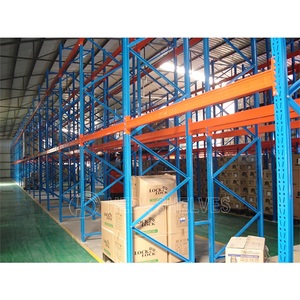
Industrial Selective Pallet Racking (Adjustable Beam System)
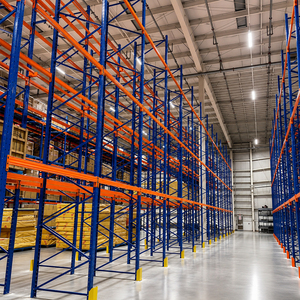
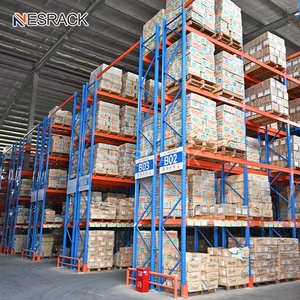
Industrial Selective Racking remains the most versatile storage system in Central America. By providing 100% immediate accessibility to every single pallet position, it eliminates double handling, supports diverse SKU profiles, and seamlessly integrates with standard counterbalance, reach trucks, and narrow aisle (VNA) equipment. Our upright frames are rolled from high-tensile structural steel strip, featuring continuous 50mm or 75mm pitch punchings that allow beam adjustments to accommodate variable cargo heights. Beams utilize heavy-gauge interlocking connector claws equipped with high-visibility safety lock pins to prevent accidental dislodgement from forklift mast impacts.
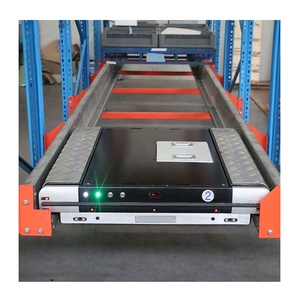
Two-Way Radio Shuttle Pallet Racking (Semi-Automated High Density)
As industrial land rates climb in central Guatemala City logistics clusters, automated Radio Shuttle Racking represents the future of cold storage and high-volume SKU warehousing. The system replaces access aisles with deep storage channels where an autonomous battery-powered shuttle transports pallets along precision guide rails. Controlled via industrial Wi-Fi tablet or handheld remote, this system operates under both First-In-First-Out (FIFO) and First-In-Last-Out (FILO) configurations. It reduces forklift operational cycle times by up to 45% and eliminates forklift-induced racking impacts within deep storage bays.
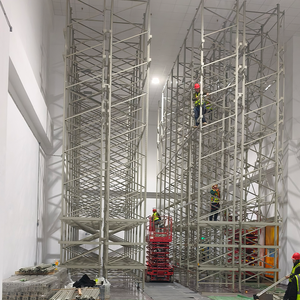
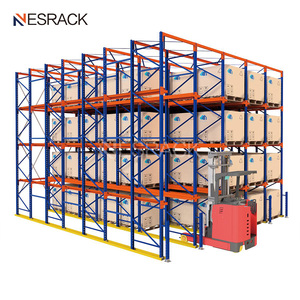
Steel Drive-In & Drive-Through Racking Systems
For cold stores, frozen food distribution centers, and seasonal manufacturing plants handling uniform SKUs with low rotation speeds, Drive-In Racking achieves maximum floor footprint density. Forklifts drive directly into structural storage lanes to place pallets on continuous galvanized support rails. Engineered with extra-wide baseplates, heavy duty column floor anchors, and robust top/back horizontal tie bracing, our Drive-In structures are reinforced to withstand lateral kinetic shocks and high-bay dynamic overturning moments.
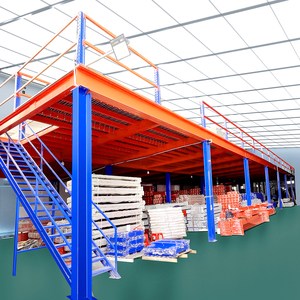
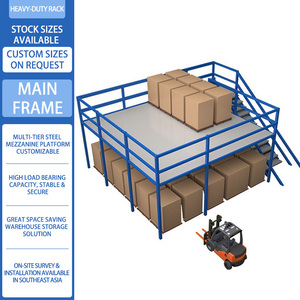
Multi-Tier Heavy Duty Mezzanine Floor & Loft Storage Platforms
For industrial buildings featuring generous vertical clearance (8m to 12m) but constrained ground footprints, multi-level structural mezzanine racking effectively doubles or triples usable floor space without requiring building permit extensions. Utilizing heavy duty upright columns as the primary vertical load-bearing pillars, our mezzanine platforms integrate cold-formed structural steel floor bearers, anti-slip galvanized steel grating, integrated LED channel provisions, heavy duty perimeter safety handrails, and self-closing forklift loading safety gates.
| Racking Typology | Access Speed | Space Density | Primary Application in Guatemala City | Standard Load Capacity |
|---|---|---|---|---|
| Selective Pallet Racking | 100% Direct Access | 40% - 50% Floor Use | General 3PL, Retail, Hardware, Pharma | 1,000kg - 3,500kg / Level |
| Radio Shuttle Automation | High (Automated Rail) | 80% - 85% Floor Use | Cold Rooms, Beverage, Edible Oils, Agro | 500kg - 1,500kg / Pallet |
| Drive-In Racking | Batch Access (FILO) | 70% - 75% Floor Use | Frozen Meats, Dairy, Raw Packaging Stock | 800kg - 2,000kg / Pallet |
| Mezzanine Platform | Multi-Level Manual | 200% - 300% Multiplied | Spare Parts, Garments, E-Commerce Fulfillment | 300kg - 1,000kg / m² Floor |
4. Emerging Logistics Trends Reshaping Industrial Storage in Central America
Understanding structural steel manufacturing requires an appreciation of the macroeconomic forces currently transforming the Guatemalan distribution landscape. Our manufacturing facility actively aligns its engineering R&D with these transformative trends:
1. Nearshoring Industrial Real Estate Influx: Multinational corporations are diversifying manufacturing footprints away from single-origin Asian dependencies, establishing assembly and distribution centers across Guatemala due to its strategic proximity to North American and Caribbean markets. This has generated an immediate surge in Class-A warehouse demand that mandates internationally certified, non-standardized heavy-duty racking built to American ANSI MH16.1 or European FEM/EN 15512 codes.
2. Temperature-Controlled Logistics & Cold Chain Modernization: Guatemala's status as a premier exporter of fresh produce, berries, specialty coffee, and pharmaceuticals has driven massive capital investment into cold storage facilities located in Amatitlán, Palín, and surrounding agro-industrial parks. Operating a cold storage facility carries immense refrigeration energy costs per cubic meter. High-density automated radio shuttle systems and galvanized heavy-duty drive-in systems are rapidly replacing conventional static racks to maximize refrigerated volumetric capacity and reduce per-pallet kilowatt refrigeration expenses.
3. Upright Height Optimization and Verticality: Historically, industrial warehouses in Guatemala City operated with modest 6-meter clearance heights. Modern logistics hubs developed along the CA-9 corridor now regularly feature 12m to 15m clear interior heights. Storing heavy palletized goods at these elevations amplifies top-beam deflection risks and seismic sway. As a manufacturer, we incorporate oversized upright profiles (up to 120mm face width, 2.5mm to 3.0mm wall thickness) engineered to resist buckling and ensure structural safety under elevated dynamic load conditions.
5. Direct Factory Advantages: Why Guatemalan Importers Partner Directly with Our Mill
Sourcing industrial pallet racking through local domestic intermediaries frequently introduces inflated markups, extended communication delays, restricted design customization, and uncertainty regarding actual steel tensile yields. By contracting directly with our manufacturing enterprise, Guatemalan corporate clients, EPC contractors, and logistics operators obtain institutional advantages:
Certified Cold-Rolled Structural Steel
We utilize certified high-yield Q235B and Q355B grade cold-rolled steel coils exclusively. Every production batch is accompanied by comprehensive mill test certificates (MTC) detailing chemical composition, yield strength, and elongation characteristics to ensure absolute load integrity under seismic strain.
24-Hour CAD & Structural Space Planning
Our dedicated structural engineering team provides complete 2D warehouse elevation layouts and 3D isometric BIM models within 24 hours of receiving facility dimensions. We calculate exact aisle clearances, forklift turning radiuses, sprinkler head gaps, and baseplate anchoring loads free of charge.
Automated Roll-Forming & Punching
Operating continuous multi-station CNC roll-forming lines ensures precision dimensional tolerances across upright columns and box beams. Automated punching ensures uniform 50mm/75mm hole pitches, guaranteeing seamless on-site component assembly without field drilling or welding.
Industrial Epoxy Powder Coating (60-80μm)
Components undergo a multi-stage pre-treatment wash (degreasing, phosphating, acid pickling) before electrostatic deposition of heavy-duty epoxy-polyester powder, followed by high-temperature curing at 180°C-200°C. This creates a resilient, scratch-resistant barrier that protects against tropical humidity and corrosion.
Rigorous Container Export Packing
To protect long-distance sea shipments arriving through Puerto Quetzal or Puerto Santo Tomás de Castilla, all uprights and beams are wrapped with corrugated shock-absorbing liners, reinforced plastic corner guards, and heavy-duty steel banding on custom hardwood dunnage to prevent transport deformation.
Turnkey Installation Support & Local Guidance
We provide comprehensive step-by-step structural assembly schematics, fastener torque specifications, and video engineering guides. For large-scale projects, we assign bilingual project engineers to oversee on-site alignment, plumbness verification, anchor torque validation, and final load certification.
6. Procurement Guide: Customs Clearance & Port Logistics for Guatemala
Importing heavy industrial equipment into Guatemala requires an experienced manufacturing partner familiar with international maritime corridors and Central American trade compliance. Our international logistics department manages end-to-end containerized shipments engineered to maximize container weight and cubic volume:
Ocean Port Routing: Cargo destined for the Pacific side (Villa Nueva, Amatitlán, Palín, Escuintla) is routed via Puerto Quetzal, offering direct transit times and streamlined drayage along the CA-9 Sur highway. Cargo destined for northern industrial zones or central distribution centers can also be routed through Puerto Santo Tomás de Castilla or Puerto Barrios on the Caribbean coastline.
Customs Documentation & Tariff Classification: Industrial steel racking systems are classified under Central American Tariff System (SAC) code 9403.20.00.00 (Other metal furniture / industrial metal racking structures). We provide fully legalized Commercial Invoices, detailed Packing Lists with exact component weight breakdowns, Clean Bills of Lading (B/L), and Mill Test Certificates required by the Superintendency of Tax Administration (SAT) for seamless customs clearance and VAT (IVA) processing under the Declaración Única Centroamericana (DUCA).
7. Guatemala City Industrial Racking: Frequently Asked Questions (FAQ)
How do your racking systems comply with seismic building codes in Guatemala City?
Guatemala City is classified under high seismic acceleration zones according to the Guatemalan Association of Structural and Seismic Engineering (AGIES) Normas de Seguridad Estructural (NSE). Our engineering department applies dynamic response spectrum analysis in accordance with RMI MH16.1 and AGIES NR-1/NR-2 standards. We incorporate heavy-duty baseplates with dual concrete chemical expansion anchors, thickened upright gauge profiles (up to 3.0mm), and high-ductility horizontal and diagonal portal bracing configurations to absorb lateral kinetic energy without brittle frame rupture.
What concrete slab specifications are required before anchoring heavy-duty racking?
For standard Selective Pallet Racking with levels loaded up to 2,500kg, we typically recommend a reinforced concrete floor slab with a minimum thickness of 150mm to 200mm, possessing a minimum compressive strength of f'c = 210 kg/cm² to 280 kg/cm² (3,000 to 4,000 PSI). The slab must be structurally sound, crack-free at anchor penetration points, and leveled within DIN 18202 or ASTM E1155 F-number specifications to prevent high-bay mast deviation.
What is the standard production and shipping lead time to Puerto Quetzal?
Standard manufacturing turnaround for a custom-engineered project (e.g., 2 to 6 forty-foot high-cube containers) is typically 15 to 25 business days following final approved CAD drawings. Ocean freight transit to Puerto Quetzal or Puerto Santo Tomás de Castilla generally ranges between 20 to 30 days depending on maritime carrier schedules. Our logistics department coordinates container booking, terminal handling documentation, and dispatch tracking to align perfectly with your warehouse commissioning timeline.
Can your factory provide custom colors to match corporate branding or safety codes?
Yes. Our automated electrostatic powder-coating line supports complete RAL color custom matching. The standard and most widely specified industrial configuration in Guatemala features Signal Blue (RAL 5015 or RAL 5005) for vertical upright frames and Pure Orange (RAL 2004) or Flame Red (RAL 3000) for load-bearing beams to provide high optical visibility for forklift operators. Custom corporate corporate branding colors, hot-dip galvanizing, or zinc-rich coatings for refrigerated cold stores are readily available upon request.
How does your factory verify structural beam deflection and load safety factors?
All our beam calculations adhere to the maximum allowable deflection limit of L/200 (length divided by 200) under full uniformly distributed load (UDL), with a structural safety factor of 1.5 to 1.65 against material yield, exceeding international RMI standards. Every production cycle undergoes physical batch coupon tensile testing, welded beam-end connector shearing tests, and finite element analysis (FEA) to ensure that rated capacities withstand static loads and operational forklift impacts.
Request Your Custom Warehouse Racking Proposal for Guatemala
Connect directly with our structural engineering team. Provide your warehouse floor dimensions, clear ceiling height, pallet specifications, and target storage capacity. We will generate a complete 2D/3D technical layout, seismic calculation review, and competitive factory-direct pricing within 24 hours.