Featured Heavy-Duty Upright Racking Systems
Precision cold-rolled profiles, multi-bend columns, and certified Q235B/Q355B structural steel frames manufactured directly for New York regional distribution and fulfillment centers.
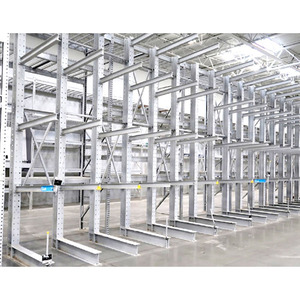
Industrial Cantilever Rack for Heavy Steel Profile Storage
View Specifications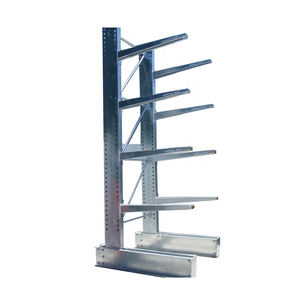
Hot-Dip Galvanized Cantilever Logistics Storage System
View Specifications
Selective Pallet Racking Welded & Bolted Upright Frame
View Specifications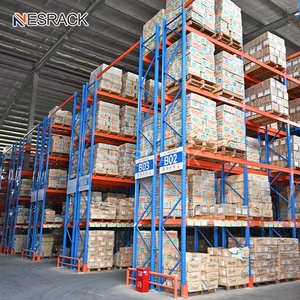
Industrial Teardrop Adjustable Warehouse Selective Rack
View Specifications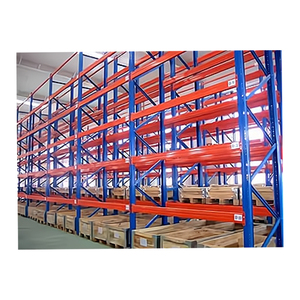
High-Capacity Cold-Formed Steel Pallet Upright Frame
View Specifications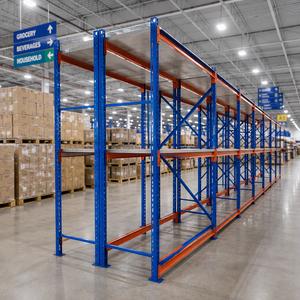
Custom OEM/ODM Modular Steel Logistics Pallet Frame
View Specifications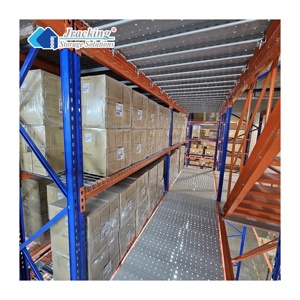
Multi-Tier Heavy Duty Upright Framing for Pallet Warehouses
View Specifications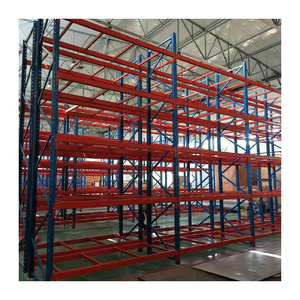
Q235 Certified High-Density Fulfillment Center Upright Frame
View SpecificationsPallet Rack Upright Frame Engineering: The Structural Backbone of New York Warehouses
In modern high-throughput supply chain networks throughout New York State—ranging from the high-velocity multi-story e-commerce fulfillment hubs in Maspeth, Queens, to mega-distribution facilities along the I-87 corridor near Albany and Buffalo—upright racking frames endure intense dynamic and static loads. An upright frame, consisting of two vertical columns linked by diagonal and horizontal lacing channels, distributes the total vertical load directly to the reinforced concrete slab. Sourcing these components directly from tier-one Chinese manufacturing plants enables enterprise warehouse operators, systems integrators, and 3PL contractors to achieve unprecedented capital expenditure savings without compromising safety, material ductility, or compliance with North American design standards.
Precision roll-forming technology represents the definitive quality differentiator. Top-tier Chinese export manufacturers utilize multi-stage continuous roll-forming lines capable of maintaining tighter profile tolerances than standard regional stamping mills. Advanced profiles incorporate complex cross-sectional geometry—often featuring between 8 to 14 distinct cold-bent reinforcement ribs across the column face and side flanges. These additional bends dramatically elevate the column's section modulus and radius of gyration, counteracting torsional buckling and torsional-flexural buckling modes under excessive concentrated loads. Certified mill-test reports for cold-rolled steel grades, notably Q235B and high-strength Q355B (equivalent to ASTM A36 and ASTM A572 Grade 50 respectively), guarantee guaranteed yield strengths from 235 MPa up to 355 MPa, ensuring compliance with both ANSI MH16.1 and local building seismic provisions.
For New York installations, engineering consideration must extend past basic gravity loads. In regions surrounding Long Island and upstate New York, seismic design categories (SDCs) determined by the New York State Uniform Fire Prevention and Building Code and ASCE 7 require rigorous frame bracing verification. Welded versus bolted upright frame construction represents another primary specification choice: while robotic-welded upright frames provide superior out-of-the-box rigidity and reduce on-site labor overhead during initial assembly, knocked-down (KD) bolted upright frames minimize ocean freight cubing costs by up to 60%, drastically buffering the overall landed cost into New York and New Jersey container ports.
Application Scenarios Across New York Industrial Logistics
From high-density urban infill facilities in the outer boroughs to multi-acre distribution centers in upstate logistics corridors, upright frames are customized for distinct operational environments.
NYC Last-Mile & Multi-Story Facilities
In Brooklyn, the Bronx, and Queens, astronomical industrial real estate prices drive facilities vertically. Upright frames are configured with narrow column profiles, reinforced column bases, and teardrop punching for rapid slot adjustments in high-velocity multi-level mezzanine systems.
Cold Storage & Food Distribution Hubs
Hunts Point Food Distribution Center and upstate cold chains require specialized corrosion resistance. Hot-dip galvanized upright columns or electrostatic thermoset polyester powder coats with zinc-rich priming resist condensation, cryogenic embrittlement, and sanitization chemicals.
E-Commerce & 3PL Regional Cross-Docks
Logistics nodes along I-84, I-87, and the NY Thruway handle millions of SKUs with varying pallet depths. Heavy-duty 3-inch by 3-inch selective upright frames with 2-inch pitch adjustability allow flexible migration between standard pallet loads, push-back storage, and carton-flow systems.
Emerging Procurement & Operational Trends in New York
Strategic modernization trends shaping industrial storage layout, seismic verification, and offshore direct procurement protocols.
Strict NYC Building Code Seismic Compliance
Structural frame verification requires finite-element stress modeling under RMI MH16.1 standards, ensuring certified column base plates, epoxy anchor pullout ratings, and load safety plaques for municipal sign-offs.
Automation-Ready AMR & AS/RS Tolerances
Automated guided vehicles and shuttles demand high structural tolerances. Chinese factories leverage continuous optical inline laser inspections to keep column camber and sweep within 1/1000 deflection limits.
Knocked-Down Bolted Frame Adoption
To offset trans-Pacific ocean freight charges, New York procurement teams increasingly mandate modular bolted upright frames, fitting up to 3× more linear footage of racking per 40-foot High-Cube container.
Sustainable Metallurgy & Circularity
LEED v4-compliant warehouses prioritize scrap-reduced automated cold-rolling and eco-friendly lead-free polyester powder coatings, minimizing VOC emissions while meeting strict corporate ESG benchmarks.
Why Source Upright Frames from Our China Production Facilities?
Direct integration between our tier-one Chinese rolling mills and New York logistics engineering teams delivers significant cost-efficiency, verified metallurgy, and full turnkey project support.
Ultra-High Capacity Roll-Forming Lines
Operating multi-roll continuous forming mills with inline hydraulic CNC precision punching for standard American Teardrop, New York selective, or custom slotted patterns with zero hole distortion.
Rigorous Material Verification & Traceability
Every batch of primary coil steel is chemically checked for yield, tensile, and elongation properties. Mill certificates, ultrasonic weld inspections, and coupon load-testing documentation are provided with every shipment.
End-to-End Logistics to NY/NJ Terminals
Specialized heavy-duty bundled export crating engineered to eliminate maritime transit deflection, moisture exposure, and surface abrasion, clearing Port of New York and New Jersey customs seamlessly.
Frequently Asked Questions by New York Buyers
Direct, technical answers addressing compliance, port logistics, compatibility, and structural parameters when ordering upright frames from China.
Are your upright frames compatible with existing teardrop racks in New York?
Yes. Our tooling accurately reproduces standard American teardrop punching patterns on 2-inch vertical centers. The keyhole punch geometry accepts universal standard teardrop beam pins and safety locks, allowing modular expansion or partial replacement of existing upright frames.
How do you guarantee compliance with the NYC Building Code and RMI standards?
Our structural engineering designs conform to ANSI MH16.1 specifications (Specification for the Design, Testing and Utilization of Industrial Steel Storage Racks). Upon request, we provide stamped calculations and 2D/3D BIM layouts for project review by registered Professional Engineers (PE) in New York State.
What is the typical production and shipping lead time to the Port of NY/NJ?
Standard fabrication runs take 15 to 25 business days depending on custom punching and profile depth. Ocean transit via major shipping lines directly to New York / New Jersey terminals typically takes 28 to 35 days, with pre-cleared customs documentation handled by our logistics team.
Should I order welded or knocked-down (KD) bolted upright frames?
For large projects in New York, knocked-down (bolted) frames are strongly recommended. KD frames pack flat, tripling container utilization, drastically reducing ocean freight costs per unit. Assembling frames on-site using high-tensile Grade 5 bolts ensures structural performance matching welded frames.