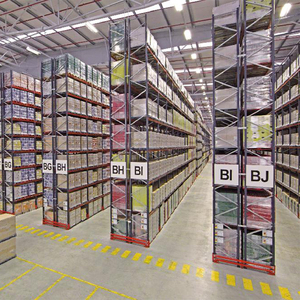
Engineered Material Handling Systems
Precision Heavy-Duty Racking & High-Density Storage Solutions
Explore heavy-duty mobile carriages, cantilever frameworks, and adjustable selective pallet racking fabricated with certified structural-grade steels to meet rigid seismic and load parameters.
50%
Floor Footprint Reclaimed Over Static Aisles
200%
Pallet Position Capacity within Identical Cube
Q235B
Structural High-Tensile Certified Steel Spec
100%
RMI, ANSI MH16.1 & IBC Code Alignment
Engineering Analysis
Core Operational Modalities for Industrial Rolling Carriage Systems
Rolling pallet racks (mobile pallet racking systems) mount heavy upright frames onto electronically synchronized or mechanically driven steel wheel bases mounted on embedded flush guide rails.
Powered Electrical Carriages
Engineered for high-throughput distribution hubs handling palletized loads from 2,000 kg to over 20,000 kg per carriage run. Integrated Siemens or Allen-Bradley programmable logic controllers (PLCs), infrared safety arrays, and soft-start planetary drive motors open working aisles in under 25 seconds via push-button or forklift RF remote terminals.
Mechanical-Assist Geared Racks
Incorporates chain-driven internal gearing with ergonomically calibrated triple-spoke wheels. Internal gear reduction ratios of up to 1:200 empower a solitary operator to move runs carrying up to 10,000 lbs of tooling, dies, or slow-moving reserve inventory with minimal exertion, offering low lifecycle operational costs without electrical routing dependencies.
Sub-Zero & Cold-Chain Configurations
Specially tempered structural steels and low-temperature synthetic lubricants engineered to withstand continuous -30°C thermal conditions. Mobile carriages dramatically decrease refrigerated air cube volume requirements by cutting wasted aisle volumes, lowering per-pallet refrigeration energy costs by up to 40%.
Regional Logistics Context
Memphis Material Handling Applications & Shelby County Hub Dynamics
As "America's Distribution Center," Memphis represents one of North America's most demanding supply chain ecosystems, anchored by FedEx World Hub, five Class I railroads, and the Mississippi River ports.
Memphis 3PL Cross-Dock & Freight Optimization
In high-density industrial logistics pockets across Southeast Memphis, Holmes Road, and DeSoto County corridors, warehouse lease costs have surged. Facilities use rolling pallet racks to concentrate buffer storage and SKU overflow without building structural footprint expansions, retaining critical floor acreage for fast-turn cross-dock staging.
Biomedical & Orthopedic Logistics Clusters
With Memphis hosting world-class medical device manufacturing clusters (Smith+Nephew, Wright Medical/Stryker), facilities demand clean, secure, and dust-resistant high-density storage. Rolling rack configurations provide lockable aisle modes that restrict restricted surgical equipment, implants, and sensitive instrumentation to authorized staff.
Cold Storage & Food Distribution Hubs
Serving national food networks through cold-chain facilities along the I-40 and I-55 junction points, thermal optimization is a direct operational margin factor. Compact mobile pallet systems maximize pallet densities per cubic foot of chilled envelope, significantly lowering the kilowatt-hour runtimes of industrial ammonia chillers.
Manufacturer Advantages
Engineering Rigor, In-House Fabrication & Global Delivery
From CAD layout simulations to turn-key installation, our manufacturing operations deliver structural stability, code compliance, and lifetime operational continuity.
Storage-Savvy Experts
Systems engineered explicitly around your unique SKU velocities, live dynamic load tolerances, and concrete slab specifications.
Custom Dimensions
Adaptable upright columns, box beams, and carriage configurations matching any bay clear height, depth, or cantilever span.
Free 2D/3D Design Analysis
Engineered AutoCAD elevations, BIM Revit integration models, and space-utilization assessments delivered prior to fabrication.
Turnkey Manufacturing
Direct-from-mill premium Q235B roll-formed and structural steel production with electrostatic powder coating finishing.
Export & Site Installation
International freight packaging, Memphis-area direct delivery coordination, and supervision by certified industrial millwrights.
Strategic Projections
Memphis Material Handling & High-Density Warehousing Trends
Key technological, regulatory, and infrastructural shifts influencing high-density storage procurement across Tennessee distribution centers.
New Madrid Seismic Zone Hardening
Due to Memphis's proximity to the New Madrid Seismic Zone, municipal building codes enforce stringent seismic design categories (SDC D through E). Mobile rack rails now incorporate heavy-duty mechanical floor anti-tip anchors and engineered baseplate ties.
WMS & AGV/AMR Co-Navigation
Modern mobile racks are no longer standalone manual fixtures. Warehouse Management Systems (WMS) directly trigger carriage movements over industrial Wi-Fi networks so that by the time an autonomous mobile robot or turret truck arrives, the correct target aisle is opened.
LEED & Carbon Neutrality Pressures
Consolidating warehouse volume directly slashes HVAC requirements, exterior building envelopment footprints, and structural concrete consumption. Companies deploy mobile racks to meet Scope 1 and Scope 2 operational sustainability goals.
Brownfield Space Maximization
With prime greenfield industrial land commanding historical premiums along Lamar Avenue and Highway 78, enterprises are pivoting to brownfield retrofits. Rail systems engineered for non-trenching floor plates allow existing facilities to double inventory density.
Engineering Whitepaper: Static vs. Rolling Storage Dynamics in Shelby County Industrial Real Estate
Warehouse floor space within the Memphis regional logistics submarket has fundamentally evolved from a commoditized overhead cost into a strategic capital efficiency metric. In traditional selective pallet racking layouts, up to 60% of total square footage is dedicated entirely to static vehicular access corridors that sit empty during standard working shifts. For facilities managing high unit SKU varieties with moderate-to-high velocity, these static aisles represent severe capital leakage in HVAC climate control, lighting, facility leasing, and property tax liability.
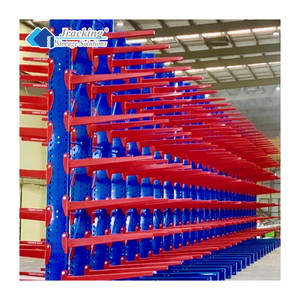
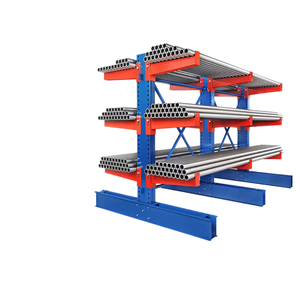
Rolling pallet rack architectures solve this geometric dilemma by consolidating multiple static service aisles into a solitary, dynamically allocated access corridor. By transferring high-capacity upright frames onto synchronized, motorized base carriages moving smoothly over precision-leveled steel floor rails, warehouse operators regain up to 50% of the active floor plate or effectively double their pallet storage capacity without acquiring adjacent acreage. In the context of the Greater Memphis manufacturing belt, this technical deployment provides crucial flexibility across diverse product categories, ranging from raw cold-rolled bar stock and heavy pipe profiles supported on heavy-duty cantilever systems to high-value medical device packaging requiring strict environmental security.
Structural compliance represents another primary consideration. High-density storage installations across West Tennessee must reconcile dynamic live-load capacities with American National Standards Institute (ANSI) MH16.1 specifications and IBC Seismic Use Groups. Because mobile bases concentrate dynamic wheel point loads directly onto concrete industrial floor slabs, proper engineering review requires comprehensive analysis of concrete compressive strength (f'c), subgrade modulus (k-value), slab thickness, and reinforcement joint placements. Advanced rail architectures leverage leveled base shims and specialized non-shrink high-strength grouts to distribute dynamic weights evenly, ensuring decades of reliable, bind-free carriage travel under full capacity conditions.
Procurement Clarity
Frequently Asked Questions by Memphis Industrial Buyers
Authoritative technical answers covering floor loads, seismic engineering, fire suppression clearances, and operational maintenance.
How do Memphis facilities handle floor slab load requirements for mobile pallet systems? +
Because rolling pallet carriages concentrate multiple pallet loads onto specific wheel contact points, a comprehensive structural slab evaluation is necessary. Most standard industrial buildings in Southeast Memphis and Desoto County feature 6-inch to 8-inch reinforced concrete slabs rated between 3,000 to 4,000 PSI. Our engineering team conducts core load calculations to determine whether standard surface-mounted low-profile rails or recessed structural embedded rails with load-spreading baseplates are necessary to keep soil bearing pressure within safe parameters.
Are rolling pallet racks compliant with New Madrid seismic zone building codes? +
Yes. Memphis and surrounding Shelby County fall under strict seismic requirements governed by the International Building Code (IBC) and ASCE 7 standards due to the New Madrid Seismic Zone. Our rolling pallet rack systems are engineered with heavy-duty anti-tip guide rails, mechanical locking brakes, engineered anchor studs, and structural box beams specifically calculated for high Seismic Design Categories (SDC D, E, and F).
How do NFPA 13 sprinkler regulations apply to high-density mobile racking? +
NFPA 13 fire code compliance is maintained through several intelligent design options. Electrically powered mobile carriages can be programmed to automatically shift into an "auto-spacing" or "night parking" mode when the facility is unoccupied or when connected to the building's central fire alarm system. This automatically opens uniform 6- to 12-inch flue spaces between every carriage, allowing early-suppression fast-response (ESFR) ceiling sprinklers to deliver unhindered water penetration down to lower shelf levels.
Can existing selective static pallet racks be converted to rolling mobile carriages? +
In many cases, yes. If your existing upright frames and load beams meet RMI structural integrity standards and show no plastic deformation, they can often be remounted onto our motorized or mechanical-assist mobile base carriages. Our structural engineers review current upright column dimensions, footplate configurations, and beam connectors during the initial design phase to ensure total compatibility.
What happens during a power failure with electrically powered mobile systems? +
All powered systems are engineered with secondary emergency protocols. Standard systems include industrial DC battery backups that allow continued low-speed aisle movement during temporary power drops. Additionally, manual override mechanical linkages or auxiliary clutch interfaces permit warehouse staff to open critical working aisles manually or using standard warehouse equipment in prolonged outage situations.