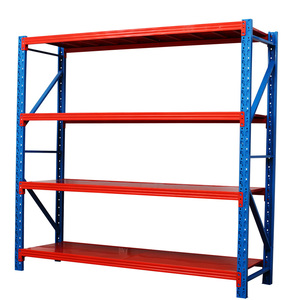
Engineered Warehouse Inventory
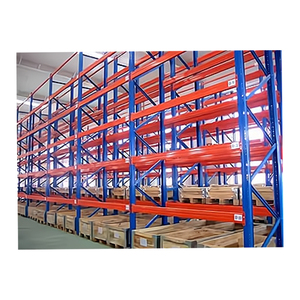
Industrial Pallet Racking & Multi-Tier Systems
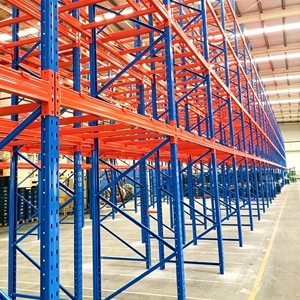
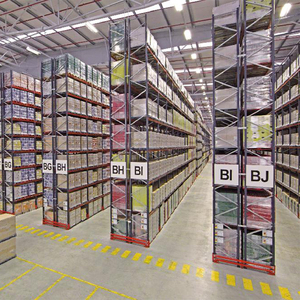
Direct factory wholesale systems engineered to meet RMI, ANSI MH16.1, and IBC standards for San Antonio distribution centers, aerospace hubs, and 3PL operations.
50%
Aisle Space Reclaimed via High-Density Rail & Mobile Configurations
4,000kg
Maximum Certified Bay Loading on Structural Heavy-Duty Racking
100%
Compliant with ANSI MH16.1 & RMI Seismic Quality Mandates
2×
SKU Pick Density Multiplier in High-Clearance South Texas DC Facilities
Localized Applications Across Greater San Antonio Logistics Corridors
San Antonio occupies a premier position in North American trade. Anchored at the intersection of Interstate 35 (the NAFTA Corridor), Interstate 10, and Interstate 37, the Alamo City functions as a strategic inland port serving automotive assembly networks, bilateral Mexico-U.S. manufacturing, aerospace MRO hubs, and temperature-controlled food distribution. Supplying pallet racking and industrial shelving to San Antonio operations requires an understanding of distinct facility profiles found from Brooks City-Base and Port San Antonio to Schertz-Cibolo and the Enterprise Industrial Corridor.
"In South Texas logistics environments, racking performance is governed not just by raw tonnage, but by how engineering addresses dynamic load transfers, tight forklift radii in 32-to-40-foot clear-height facilities, and compliance with City of San Antonio Fire Department high-piled storage ordinances."
1. Automotive & Advanced Manufacturing Supply Chains (South San Antonio / I-35)
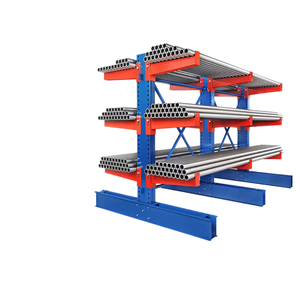
Automotive manufacturing facilities, tier-one assembly vendors, and heavy equipment parts suppliers throughout South San Antonio require robust structural steel selective racking and heavy-duty cantilever racks. Unlike conventional retail distribution where pallet weights are predictable, automotive staging demands racking systems that support asymmetric stamping dies, exhaust pipes, wire harness spools, and sub-assembly racks. Our roll-formed and structural cantilever racks are configured with adjustable arm-pitch locks to store long and irregular profiles safely, preventing beam deflection and structural fatigue under cyclic forklift impacts.
2. Port San Antonio Aerospace MRO & Defense Logistics
Centering on Kelly Field and the Southwest sector, aerospace maintenance, repair, and overhaul (MRO) providers and military contractors manage mission-critical components, engine parts, and classified inventory. These environments require boltless industrial metal shelving integrated with secure, lockable wire-mesh security cages, structural high-bay mezzanine racking, and high-density mobile storage carriages. Ensuring zero tool deflection, clean room-compatible powder coatings, and precise pick-sequence bin dividers enables defense suppliers to adhere to AS9100 quality protocols.
3. Cold Storage & Temperature-Controlled Produce Hubs (I-10 & I-37 Corridors)
With fresh produce and perishable proteins transiting constantly from the Rio Grande Valley and Monterrey up through San Antonio distribution hubs, refrigerated and freezer capacity is at a premium. Cold room operating expenses dictate the densest storage possible. Our high-bay selective, drive-in, and mobile-assist racking platforms use certified structural steel channels that resist low-temperature embrittlement down to -20°F. By removing unnecessary service aisles and using heavy-gauge galvanization, regional cold warehouses cut per-pallet thermal overhead by up to 45%.
Industry Dynamics
San Antonio Industrial & Material Handling Trends
Critical operational shifts shaping how South Texas facilities engineer and procure storage racks.
Rising Land Costs Driving Vertical Clearance
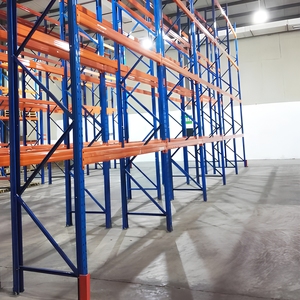
As speculative development prices rise along the I-35 corridor toward New Braunfels, logistics operators are transitioning from 24-foot clear heights to 36-foot and 40-foot vertical envelopes, necessitating heavy-gauge columns, enlarged footplates, and seismic back-to-back ties.
Nearshoring & Cross-Border Cross-Docking
Accelerated by nearshoring across Northern Mexico, Laredo-to-San Antonio freight volumes have surged. Wholesalers are replacing static storage with fast-cycle push-back and selective pallet systems that accommodate fluctuating pallet depths (GMA 48x40, plastic export, and perimeter-base Euro pallets).
Stringent High-Piled Storage Permitting
San Antonio Building & Development Services and the SAFD require detailed engineered plan submittals for storage exceeding 12 feet in height. Sealed structural calculations, rack flue space maintenance, and ESFR fire sprinkler integration are now mandatory baselines for certificate-of-occupancy approval.
Enterprise Manufacturing Capabilities
Why San Antonio Operations Choose Our Factory Wholesale Solutions
Engineered directly from factory lines to eliminate intermediate distributor markup, guaranteeing shorter lead times and certified structural performance.
Advantage 01
Direct Factory Engineering & Custom Layouts
We work directly with warehouse architects and facility teams, producing free 2D plan views and 3D elevation drawings to balance column grids, truck turnstiles, and forklift staging before manufacturing begins.
Advantage 02
Certified High-Tensile Steel & Quality Control
All beams and uprights are manufactured from prime domestic grade Q235B and ASTM-spec hot-rolled steel coils, passing rigorous tension tests to guarantee rated bay loadings of 1,000kg to over 4,000kg per level.
Advantage 03
Full Seismic & ANSI MH16.1 Engineering
Our selective, cantilever, and drive-in racks feature heavy welded baseplates, oversized seismic anchor holes, and engineered column gussets designed to comply with IBC Category B through D seismic safety thresholds.
Advantage 04
Automated Production & Powder Coating
Equipped with automatic continuous roll-forming lines, robotic CNC beam welding stations, and multi-stage phosphate electrostatic powder lines, ensuring weather-resistant finishes for high-humidity Texas conditions.
Advantage 05
Turnkey Project Delivery & Coordination
From custom fabrication and container load optimization to flatbed transport right to your dock in Bexar, Guadalupe, or Comal County, our end-to-end supply pipeline removes shipping overhead and delays.
Advantage 06
Certified Installation Network
All warehouse storage systems can be installed by experienced, certified field crews who execute precision laser-line alignment, chemical floor anchoring, and post-installation inspection placard sign-offs.
Procurement Clarity
San Antonio Pallet Racking & Shelving FAQ
Key technical, regulatory, and commercial questions answered for Texas purchasing managers and operations heads.
Q1
Do I need a building permit for pallet racking installed in San Antonio?
Yes. The City of San Antonio Development Services Department requires a commercial building permit for any industrial storage rack system where commodity storage exceeds 12 feet in height (or 6 feet for high-hazard commodities like plastics or aerosols). The permit package must include stamped structural calculations from an engineer licensed in Texas, showing dead, live, and seismic load analyses, along with a fire review addressing ESFR sprinkler head clearance and transverse/longitudinal flue spaces.
Q2
What is the standard lead time for wholesale factory pallet rack orders delivered to Bexar County?
Standard stocked configurations (such as standard 42" deep upright frames and 96" or 108" step beams) ship within 3 to 7 business days. Custom engineered configurations, specialized cantilever arms, multi-tier boltless platforms, or custom corporate powder finishes typically require a fabrication cycle of 3 to 5 weeks followed by scheduled regional freight delivery.
Q3
How does roll-formed racking compare to structural steel racking for Texas operations?
Roll-formed racking uses cold-rolled steel with teardrop connection pins, offering quick beam adjustability, lower tare weight, and high cost-efficiency—ideal for standard 3PL, e-commerce, and dry goods picking. Structural racking is made from hot-rolled C-channels assembled with heavy bolts. Structural racking is strongly recommended for heavy abusive environments, refrigerated freezer warehouses, drive-in systems, and heavy outdoor cantilever lumber racks where forklift mast impact is a frequent risk.
Q4
What concrete slab specifications are required before anchoring industrial racks?
Standard pallet racking requires a minimum concrete slab thickness of 5 to 6 inches with a compressive strength of at least 3,000 to 4,000 PSI. During our pre-engineering design analysis, we calculate baseplate surface area, anchor bolt embedment depth, and edge distance from slab expansion joints to guarantee that anchor pull-out ratings conform to both RMI standards and localized soil expansion parameters common in Central and South Texas.
Q5
Can your multi-level boltless shelving systems be expanded into a mezzanine work platform later?
Yes. Our boltless multi-level steel shelving is designed modularly. By specifying heavy-gauge upright posts and shelf connectors in the initial phase, your facility can integrate catwalks, second-story structural decking, handrails, kickplates, and staircase towers as your fulfillment volume increases, doubling picking density without requiring exterior building construction.
Q6
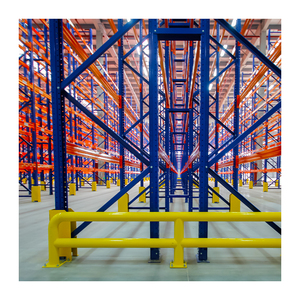
What safety accessories are recommended to reduce warehouse rack damage?
We supply heavy-gauge floor-mounted column protectors, heavy structural end-of-row bullnose guards, welded wire mesh decking (which prevents loose cartons from falling while maintaining fire sprinkler water penetration), back-stop pallet beam beam-stops, and yellow safety row markers to prevent damage from forklift outriggers.