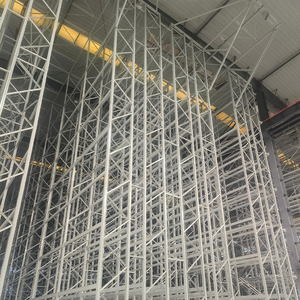
Q235 Steel Adjustable Pallet Rack with Adjustable Beam for Project Warehouse
Cold-formed upright frames featuring teardrop punching, dual-ribbed locking connectors, and seismic baseplates tailored for high-bay multi-tier warehousing.
Inquire NowExplore precision-rolled, adjustable, and dynamic drive-through racking assemblies configured for American GMA (48×40") footprints, heavy automotive tooling, and deep cold chain corridors.
Cold-formed upright frames featuring teardrop punching, dual-ribbed locking connectors, and seismic baseplates tailored for high-bay multi-tier warehousing.
Inquire Now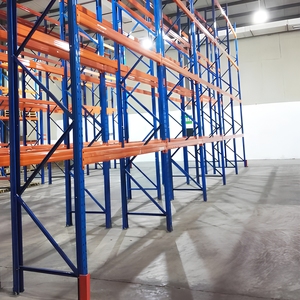
Continuous weld structural cross-beams supporting up to 3,000kg per bay with zero permanent deflection, coated with electrostatic impact-resistant epoxy resin.
Inquire Now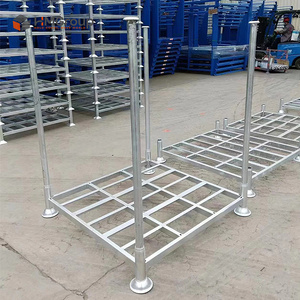
Hot-dip galvanized surface treatment conforming to ASTM A123, ideal for outdoor metal casting yards and humid industrial tier-one automotive staging yards.
Inquire Now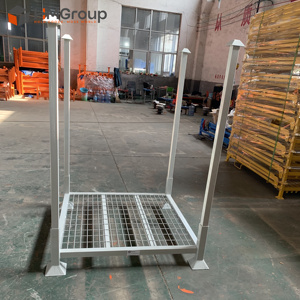
Modular post-pallet assemblies enabling four-way fork entry, rapid knockdown for empty-haul reverse logistics, and high-density post-stowage without static aisles.
Inquire Now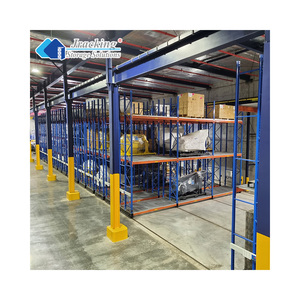
Rail-guided motorized chassis with integrated PLC controls, photo-electric aisle sensors, and zero-loss dynamic footprint compaction yielding an 85% floor volumetric ratio.
Inquire Now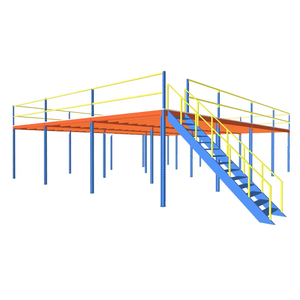
Multi-tier structural mezzanines utilizing integrated rack uprights as primary structural columns, doubling usable square footage for e-commerce and assembly operations.
Inquire Now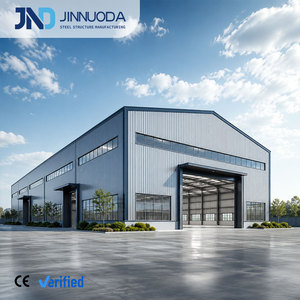
Turnkey rack-supported building shells (clad-rack architecture) eliminating independent structural framing while expediting logistics warehouse commissioning timelines.
Inquire Now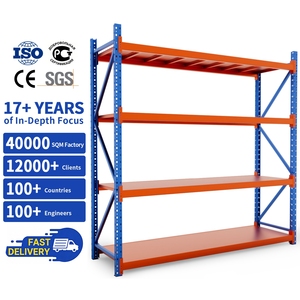
Heavy-gauge rolled structural framing equipped with safety locking pins, step beams, and heavy-duty wire mesh decking designed for standard lift truck accessibility.
Inquire NowIn Southeast Michigan’s tightly packed industrial submarkets—spanning Detroit, Livonia, Warren, Sterling Heights, and Dearborn—pallet storage requires rigorous optimization for high turnover, non-stop forklift movements, and intense floor-load demands.
Automotive assembly runs on strict Just-In-Time (JIT) and Just-In-Sequence (JIS) cadences. Drive-Through racking operates on a true First-In, First-Out (FIFO) principle: dedicated loading aisles receive sub-assemblies (engines, stamping modules, battery packs) from overseas or regional suppliers, while opposite retrieval aisles directly feed assembly tuggers without traffic bottlenecks.
Zero Cross-Aisle CongestionWith Michigan leading the Great Lakes Battery Corridor, regional warehouses handle lithium-ion module containment under strict thermal safety protocols. Our heavy structural drive-through lanes feature reinforced structural cantilever arms, continuous steel pallet rails, and non-sparking zinc-plated options that exceed NFPA 13 in-rack fire suppression sprinkler clearances.
NFPA 13 & Thermal ComplianceRefrigerated cubic capacity along the I-75 and I-94 logistics corridors commands a premium. Drive-Through racking eliminates up to 65% of forklift access aisles required by traditional selective layouts. By storing homogeneous food and beverage SKUs 6 to 10 pallets deep, energy expenditure per cooled pallet position is minimized while maintaining complete FIFO compliance.
Maximized Thermal DensityEngineered for facility managers assessing footprint efficiency, structural safety, and equipment interaction. Compare systemic differences to make an informed capital decision.
| Structural & Operational Parameter | OEM Drive-Through (FIFO) | Standard Drive-In (LIFO) | Selective Pallet Rack |
|---|---|---|---|
| Inventory Rotation Logic | Strict FIFO (Dedicated entry & exit aisles) | LIFO (Single access point for load/retrieve) | Random Access (100% immediate selectivity) |
| Warehouse Footprint Utilization | High (70% – 85% volumetric density) | High (75% – 85% volumetric density) | Low to Moderate (35% – 45% volumetric density) |
| Forklift Mast Exposure Risk | Moderate (Alleviated via heavy floor guide rails) | High (Continuous reversing inside narrow channels) | Low (Equipment operates purely within access aisles) |
| Structural Steel Requirement | Q235B / Q355B with dual-side tie beams | Standard top-tie structural bracing | Standard cross-braced upright frames |
| Optimal Detroit Market Application | Perishables, sequenced EV packs, JIT automotive | Long-term bulk staging, single-run raw parts | Fast-pick e-commerce, multi-SKU break bulk |
Procurement of heavy warehouse racking across Wayne, Oakland, and Macomb counties is experiencing rapid transformation driven by three core economic imperatives.
With Class-A industrial vacancy rates in Metro Detroit fluctuating below 4.5% and land acquisition costs escalating near Detroit Metro Airport (DTW) and along the I-696 corridor, facilities cannot justify wide, non-productive forklift aisles. Converting to continuous drive-through racking reclaims vertical cubic headroom up to 40 feet without acquiring real estate.
Building inspectors in Michigan enforce strict compliance with RMI (Rack Manufacturers Institute) MH16.1 standards and International Building Code (IBC) provisions. Structural engineers require full calculation packages covering live load, seismic acceleration categories, and robust baseplate anchoring capable of handling post-installed wedge or chemical bolts on existing slab-on-grade foundations.
As Detroit factories invest heavily in automated guided vehicles (AGVs) and narrow-aisle automated reach trucks, racking tolerances must narrow to sub-millimeter precision. Our OEM/ODM manufacturing integrates heavy-gauge structural channel guide rails and laser-aligned pallet entry flares that eliminate equipment snagging and operational interruptions.
Combining over two decades of structural steel craftsmanship with seamless export execution, we supply distributors, integrators, and Fortune 500 supply chain operators across North America.
Fabricated from certified Baosteel Q235B and high-tensile Q355B structural coil. Mill test certificates (MTC) accompany every batch, certifying carbon content, elongation percentages, and yield tolerances that exceed North American load calculations.
Custom upright column roll-forming, specialized teardrop or slot profiles, and heavy welded arm attachments matched to bespoke pallet dimensions, odd geometries, or non-standard industrial skids.
Panasonic robotic welding cells guarantee penetration uniformity across beam end connectors and baseplates. Finished with a 12-stage pre-treatment and electrostatic powder coating cured at 200°C for exceptional scuff and impact durability.
Engineered flat-pack nesting maximizes 40HQ ocean container cubic fill, preventing shipping damage and lowering per-pallet freight landed costs into Detroit inland intermodal ramps (via CSX / Norfolk Southern rail corridors).
We furnish licensed professional engineering (PE) stamped calculation packages for municipal permit filings in Michigan. Complete 2D AutoCAD assembly details and parameterized 3D BIM/Revit models allow immediate integration into general contractor architectural plans.
Everything logistics directors, facility procurement officers, and racking distributors need to evaluate before initiating an OEM/ODM containerized order.
Send us your warehouse CAD drawings, pallet dimensions, and SKU throughput targets. Our engineering department will generate a detailed 2D/3D layout analysis, bill of materials (BOM), and container freight calculation within 24 hours.