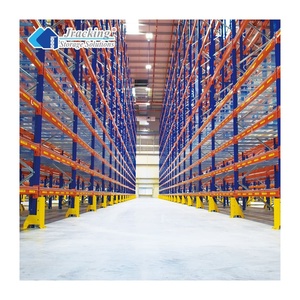
Jracking Euro Standard Steel Vertical Warehouse Storage Racks Heavy Duty Selective Pallet Racking System
Euro Standard
Q235B/Q355B Steel
Selective Access
Purpose-built for automotive assembly, high-turnover regional parts distribution, and tier-1 OEM warehousing. Designed under strict Eurocode and North American RMI / ANSI MH16.1 specifications.
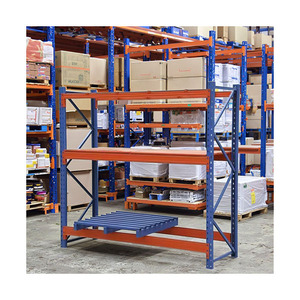
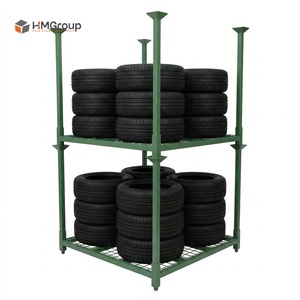
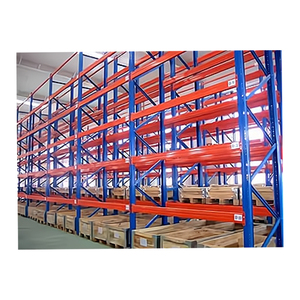
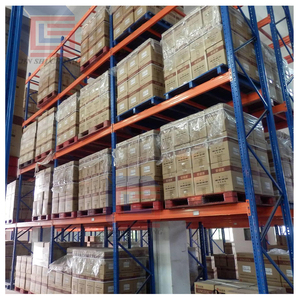
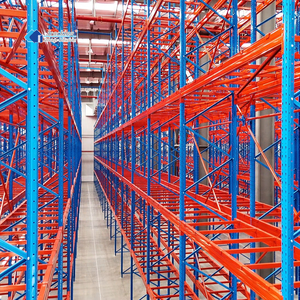
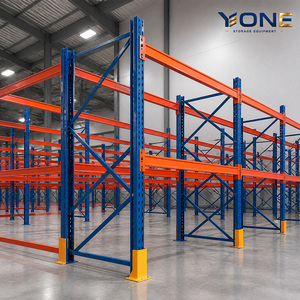
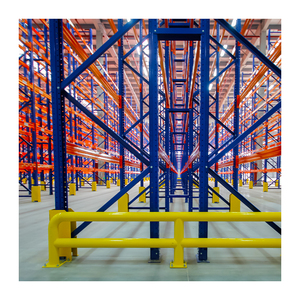
Automotive tires exhibit distinct structural dynamics: irregular mass distribution, ring friction, and continuous carcass deformation risk when rested on planar decks. Our OEM/ODM mobile solutions solve structural compression through engineered load geometry and motor-driven rail platforms.
Unlike regular pallet racking where tires lie horizontally causing tire bead deformities and tread flattening, our specialized stepped profile beams cradle each tire along dual tangential contact lines. This evenly distributes tread tension, maintaining bead elasticity across long transit holding periods.
Carriages operate with hardened C45 forged steel dual-flange wheels gliding on precision-milled cold-drawn guide rails. Electromechanical drives feature frequency-inverter acceleration ramps, preventing inertia vibration, SKU shifting, or rolling displacements during system travel.
Full-width optical safety sweeps and photoelectric light curtains run along bottom bases and upright faces. Any obstacle detection triggers immediate electromechanical brake locking within 12 milliseconds, meeting rigorous CE, OSHA, and IBC site safety protocols.
Freeport trading zones and deepwater distribution terminals command elevated square-foot land tariffs, requiring operators to compress physical footprints while accelerating container turnaround times.
In customs-controlled bonded facilities across Freeport trade sectors, operators handle imported passenger car radial (PCR), truck and bus radial (TBR), and giant off-the-road (OTR) tires under duty-suspension protocols.
Automotive assembly lines in free zone corridors operate just-in-time (JIT) and just-in-sequence (JIS) tire wheel pairing. Our mobile tracks present targeted batch sets directly to conveyor pickup docks.
Cross-dock logistics terminals at Freeport deepwater docks handle 40ft High Cube containers. High-density mobile tire racks enable fast container de-stuffing without ground clutter.
Analysis of supply chain shifts, land scarcity, and environmental compliance influencing intra-port logistics infrastructure.
With prime industrial land in Freeport port districts commanding record square-meter leases, static warehouse footprints are becoming economically unviable. High-density mobile racking condenses two to three warehouses of inventory into a single facility, slashing direct real estate capital expenditures by over 40%.
Logistics terminals in Freeport zones are modernizing picking processes with automated guided vehicles (AGVs) and vision-guided turret trucks. Modern electric mobile bases communicate with dispatch platforms to pre-open picking aisles, maximizing overall throughput.
Modern international logistics operators require sustainable building infrastructure. Concentrating thousands of tire SKUs into smaller cubic structures cuts lighting, HVAC, and warehouse roofing materials, aligning with corporate ESG audits and LEED certification.
Combining certified automated production lines, heavy structural engineering, and complete OEM/ODM project ownership from concept to field sign-off.
We source high-tensile Q235B, Q355B, and European equivalent S355JR structural steels directly from premier steel mills with full chemical and mechanical mill test certificates.
Custom-designed beam profiles, bay clear widths, tiered tire stop lips, and carriage rail lengths to match any warehouse ceiling height, pillar spacing, or fleet requirement.
Our engineering group provides complimentary CAD layouts, 3D structural simulations, and Revit models before project sign-off to verify capacity gains and aisle clearance early.
Mobile carriages feature reinforced anti-tip guides, cross-axis bracing, and floor-anchor plates calculated in accordance with IBC seismic risk categories and ASCE 7 structural standards.
Automated 7-stage surface pre-treatment followed by electrostatic thermosetting epoxy-polyester coating ensures corrosion resistance against humidity, oil, and harsh coastal atmospheres.
Export-ready steel packaging, bundle protection, container load plans, and door-to-port delivery handling ensure smooth arrivals at regional transshipment centers worldwide.
Detailed engineering, operational, and commercial insights for facility developers, operations managers, and supply chain directors.
Conventional static tire racking requires a dedicated fork-truck access aisle between every single rack row, consuming roughly 55% to 60% of floor space. A mobile racking system mounts storage uprights onto motor-driven carriages traveling along recessed or surface floor rails. This condenses the entire block into a single moving access aisle opened via remote control, PLC interface, or onboard push button, doubling total SKU volume in the same footprint.
Yes. We engineer both recessed embedded guide rail systems for new construction and surface-mounted low-profile rail assemblies with finished access ramps for existing facilities. During initial design, our structural engineers review floor slab thickness, compressive strength (PSI), and levelness (DIN 18202 standards) to recommend the right anchoring configuration.
Our systems use triple-layer safety redundancies. These include dual photoelectric light beams running continuously at the carriage floor level, full-height infrared safety screens at aisle portals, and emergency stop kick-plates. If any person, forklift, or dropped item breaks a sensor beam during movement, the carriages brake instantly, locking the drive until manual inspection resets the system.
Because tire diameters and profiles vary widely across vehicle types, standard shelf dimensions rarely maximize vertical space. Our engineering team customizes bay span lengths, beam cross-sections, and support bar geometry based on your target tire outer diameter (OD) and maximum stack weight. This ensures snug cradling, eliminates sidewall pressure points, and prevents beam sag over extended storage durations.
Connect with our senior logistics structural engineers. Receive a complimentary 2D CAD floor plan, volumetric calculation, and competitive factory-direct pricing for your automotive tire storage project.
Send an Inquiry