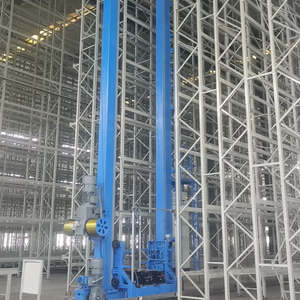
Factory-Direct Heavy-Duty Systems
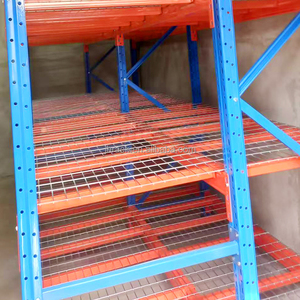
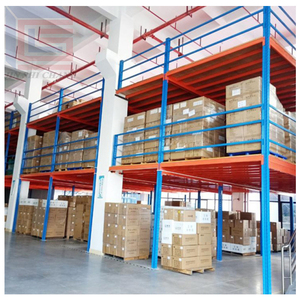
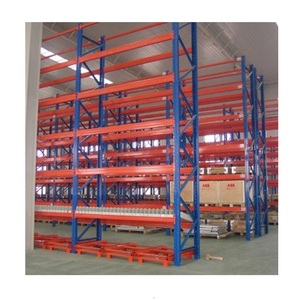
Featured Industrial Racking & Engineered Platforms
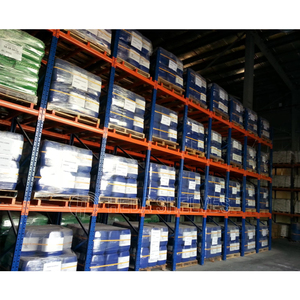
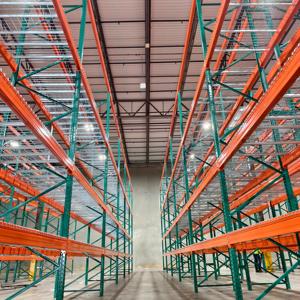
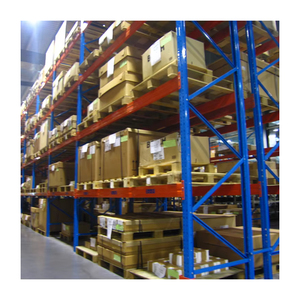
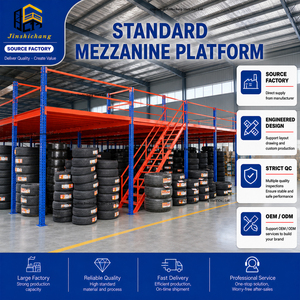
Manufactured to rigorous North American RMI and CE standards, our modular platforms support heavy unit-loads, high turnover cycles, and dynamic SKU consolidation.
60%
Capacity Increase Over Single-Selective
30%
Aisle Footprint Consolidation
50K+
Pallet Positions Installed in SE Region
100%
RMI & ANSI MH16.1 Engineering Compliance
Strategic Regional Deployment
Nashville Operational Scenarios: Where Double Deep Racking Wins
The Greater Nashville metropolitan area—stretching from Davidson County down the I-24 and I-840 corridors—is one of the most critical freight crossroads in North America. Here is how local facilities drive efficiency with double deep solutions.
I-24 / Smyrna / Murfreesboro Automotive Inbound
Serving Tier-1 and Tier-2 automotive component suppliers connected directly to regional assembly complexes. Double deep racking eliminates congested buffer zones by storing multiple pallets per SKU together in back-to-back bays, ensuring smooth batch feeding directly into JIT assembly lines.
Lebanon & Mt. Juliet E-Commerce Corridors
In Middle Tennessee's high-velocity fulfillment clusters along I-40, industrial land values have risen drastically. Double deep storage allows logistics operators to compress their secondary reserve inventory directly above active single-deep carton flow picking levels without building new warehouse footprint.
Metro Nashville Cold Storage & Food Distribution
Refrigerated and blast-freezer cubic footage is expensive to power in humid Tennessee summers. Implementing double deep racking systems in cold chain warehouses reduces thermal volume waste by removing every second access aisle, generating significant thermal and energy savings year-round.
Macroeconomic Logistics Dynamics
Nashville Warehouse Trends: Navigating Modern Inventory Shifts
Understanding the structural shifts within Middle Tennessee's industrial real estate landscape provides clear business rationale for high-density storage upgrades.
Industrial Lease Rate Escalation
With Nashville vacancy rates normalizing and lease rates remaining near historical highs, operators can no longer afford wide 12-foot forklift aisles with single-pallet depth. Converting from standard selective racking to double deep immediately expands warehouse storage by 50% to 60% without raising lease overhead.
Adoption of Deep-Reach Lift Trucks
Regional distributors are actively deploying pantograph-style double-reach forklifts and articulated mast trucks. Paired with laser-guided fork-tip positioning and wireless camera modules, handling rear-position pallets is now just as fast and damage-free as standard single-deep handling.
SKU Batch Optimization & WMS Evolution
Modern Warehouse Management Systems (WMS) dynamically manage Last-In, First-Out (LIFO) pallet rotation within double deep bays. Inbound deliveries sharing the same production lot numbers are slotted seamlessly together, ensuring fast, frictionless, and automated dispatch.
Seismic Review & Code Compliance
Due to proximity to the New Madrid Seismic Zone affecting Western and Middle Tennessee, city building officials in Davidson and Rutherford counties require rigorous seismic calculations under the International Building Code (IBC). Our engineered baseplates meet every strict municipal requirement.
The Manufacturer Direct Advantage
Why National Brands & Local Wholesalers Rely On Our Engineering
We provide end-to-end heavy-duty storage manufacturing, structural design verification, and complete nationwide distribution to keep supply chains running at peak performance.
Storage-Savvy Certified Engineering
Every double deep rack structure is designed around your specific pallet weights, pallet overhang parameters, and floor slab capacities. We deliver tailored structural calculations—not off-the-shelf templates.
Compliant to US & North American Standards
Our teardrop and structural pallet racking lines strictly adhere to RMI (Rack Manufacturers Institute) standards, ANSI MH16.1 specifications, and local Tennessee building code seismic engineering standards.
Complimentary 2D / 3D Layout Planning
Validate storage volume before making financial commitments. Our system designers deliver comprehensive 2D CAD elevation plans and 3D architectural floor layouts free of charge for logistics teams and facility architects.
Turnkey Manufacturing & Wholesale Pricing
By shipping directly from high-capacity manufacturing lines, we bypass distributor markups and unnecessary intermediaries, providing significant cost advantages for large-bay expansion and replacement projects.
Seamless Mezzanine & Decking Integration
Integrate wire mesh decks, pallet support bars, row spacers, heavy column upright protectors, and multi-tier mezzanine platforms without compatibility friction across disparate systems.
Fast Regional Delivery & Certified Installation
With robust freight lines connecting into Greater Nashville and certified installation crews operating regionally, we coordinate safe on-site installation, column anchoring, and final engineering certification.
Local Purchasing Considerations
Frequently Asked Questions: Double Deep Storage in Nashville
Expert technical insights to address common inquiries during the engineering, permitting, and equipment selection phases.
01. How does double deep racking increase capacity compared to standard selective racking?
Standard selective racking requires an operating aisle for every single row of pallet racks. Double deep racking places two standard pallet rack bays back-to-back, allowing four rows of pallets to be served from only two operating aisles. This setup eliminates every second forklift aisle, freeing up floor space and increasing storage density by 50% to 60% across the same facility footprint.
02. What material handling equipment is required to operate a double deep system?
Double deep racking requires reach trucks fitted with pantograph scissor extensions or telescopic deep-reach forks. Alternatively, articulated reach trucks can be equipped with specialized long-reach mast mechanisms. Many contemporary fleet operators in Middle Tennessee also add fork-mounted wireless cameras to aid drivers when positioning pallets into high-level rear slots.
03. Are double deep systems compatible with LIFO or FIFO stock rotation?
Double deep systems operate fundamentally on a Last-In, First-Out (LIFO) inventory model per individual channel because the front pallet must be unloaded before the rear pallet can be accessed. However, facilities that manage homogenous products—storing 2 to 10 pallets of the exact same SKU lot together—run efficient batch FIFO operations by clearing both pallet slots in tandem.
04. What are Davidson County’s permitting rules for pallet rack installations?
In Metro Nashville and Davidson County, industrial pallet racking exceeding 8 feet in height is classified as a structural installation under the International Building Code (IBC). Permitting requires signed structural drawings from a licensed Tennessee Professional Engineer (P.E.), verifying slab load-bearing capacities, seismic anchoring, and rack design compliance.
05. Do double deep systems require custom fire sprinkler or NFPA modifications?
Yes, depending on building clear height, commodity classification, and flue spaces. Because two pallet bays sit back-to-back, ensuring a clean transverse and longitudinal flue space (typically 3 to 6 inches) is essential. Modern Early Suppression Fast Response (ESFR) ceiling sprinkler arrays can handle many configurations, while deep racks containing Class IV or plastic commodities may require in-rack sprinkler heads per NFPA 13.
06. What beam spacing and column depths are recommended for 48x40 GMA pallets?
Standard North American 48" deep x 40" wide GMA pallets stored in double deep bays typically utilize 42" or 44" deep upright frames. With appropriate row spacers (typically 8" to 12" depending on sprinkler and flue criteria), total back-to-back frame footprint measures approximately 92" to 100", leaving ideal pallet overhang for rear and front beam safety.
07. Can our facility convert existing selective teardrop uprights to double deep?
In many cases, yes. If your existing upright frames carry adequate structural load ratings and the concrete floor can support point loads, existing uprights can be reconfigured by joining them with heavy-duty structural row spacers and equipping beams with pallet guide rails to aid rear placement. Our engineering team conducts free feasibility assessments to verify viability.
08. How does Middle Tennessee’s seismic rating impact frame footplate design?
Portions of Middle and Western Tennessee are influenced by the New Madrid Seismic Zone. Under IBC guidelines, pallet racks must feature seismically rated baseplates, heavy anchor bolts, and reinforced column uprights. We furnish all systems with certified calculations showing anchorage compliance for local zone criteria.
09. Why are guide rails or wire guidance systems used with double deep racking?
Because deep-reach forklift operators must align precisely to access second-deep pallets at elevated heights (often over 25 feet), floor-mounted steel guide rails or electronic wire guidance systems help stabilize forklift alignment. This setup minimizes impact damage to structural upright columns and speeds up cycle times.
10. How fast can a factory-direct wholesale order be delivered to Nashville?
Standard modular components, including standard teardrop frames and universal step beams, are maintained in regional distribution pipelines for delivery within days. Fully custom-engineered double deep systems, high-capacity seismic uprights, or specialized powder-coat finishes typically ship within 3 to 5 weeks directly to your jobsite.