Featured Industrial Pallet Racking & High-Density Storage Lineup
Explore our world-class engineered warehouse storage systems. Designed according to RMI, FEM 10.2.02, and AS4084 structural validation codes for cold storage, e-commerce, third-party logistics, and manufacturing distribution hubs.
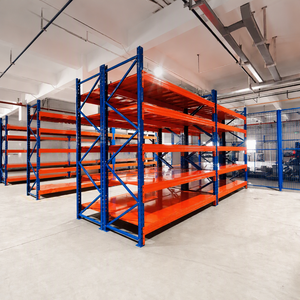
OEM ODM Adjustable Heavy Duty Industrial Selective Pallet Racking
- ✓ 100% immediate pallet selectivity
- ✓ Adjustable 50mm/75mm beam pitch
- ✓ Capacity: 1,000kg – 4,500kg per level
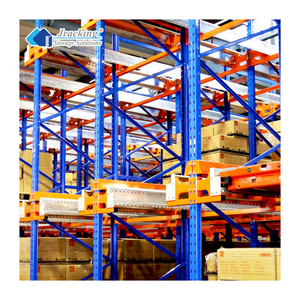
CE Certified High Density Double-Sided Two-Way Radio Shuttle Rack System
- ✓ High-throughput semi-automated handling
- ✓ Low temperature rated down to -25°C
- ✓ Supports FIFO / LIFO dynamic operational modes
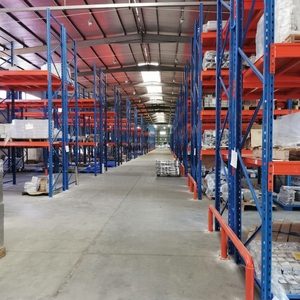
OEM ODM Warehouse Industrial Heavy Duty Selective Shelving Units
- ✓ Upright frame heights up to 16 meters
- ✓ Surface finish: Electrostatic epoxy powder
- ✓ Beam connection: 3 or 4-rivet claw design
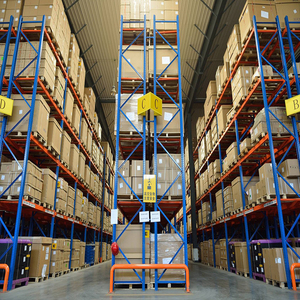
Pallet Racking Factory Machine Warehouse System (Thailand, Malaysia, Brunei)
- ✓ Engineered for ASEAN tropical humidity
- ✓ Seismic resistant bracing configurations
- ✓ Cost-optimized container consolidation
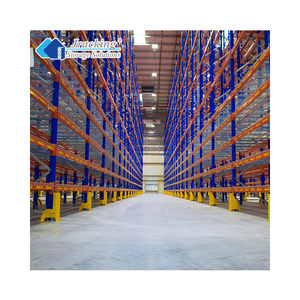
Jracking Dexion Pitch 76.2 mm Style Warehouse Beam Pallet Rack System
- ✓ 100% compatible with Dexion teardrop & box profiles
- ✓ Heavy-duty roll-formed box/open beam options
- ✓ Rapid boltless field assembly ergonomics
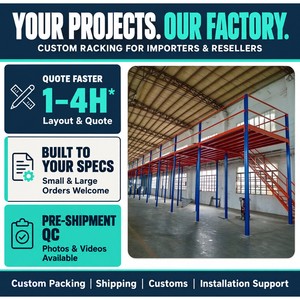
Modular Mezzanine Racking System Two Tier Steel Platform (2.5m Height)
- ✓ Double or triple usable floor square meters
- ✓ Floor loading capacity: 300kg – 1000kg/sqm
- ✓ Integrated staircase, safety gates & handrails
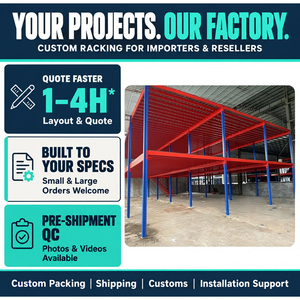
Warehouse Storage Mezzanine Platform Steel Floor System 8ft Clear Height
- ✓ Cold-rolled perforated galvanized steel decking
- ✓ Integrated fire-suppression water flow drainage
- ✓ Configurable for order-picking conveyor integration
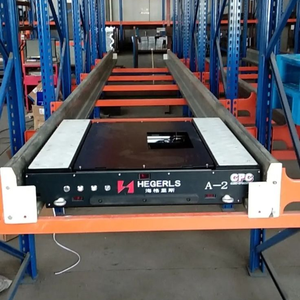
Two-Way Radio Shuttle Pallet Racking with Customizable Dimensions
- ✓ Compatible with Euro (1200x800) & GMA (48x40) pallets
- ✓ Automated laser boundary scanning & collision sensors
- ✓ Lithium-iron phosphate batteries with quick-swap docks
Engineering Excellence & Production Supremacy
As a direct-tier manufacturing powerhouse and premier exporter, we solve complex storage bottlenecks through structural integrity, high-tensile cold-forming, and strict compliance with international racking standards.
High-Grade Certified Metallurgy
We utilize certified prime hot-rolled coils slitted in-house from world-class mills like Baosteel and Shougang. All load-bearing structural members meet ASTM A1011, EN 10025 (S235JR, S355JR), or AS/NZS standard profiles, ensuring consistent tensile strength and zero brittleness under extreme load vectors.
Continuous Roll-Forming Precision
Our facility operates over 20 automatic continuous roll-forming lines. Punching is executed before roll-forming with multi-station hydraulic dies, maintaining precision tolerance within ±0.1mm along pitch intervals. Uprights feature clean, continuous cold-rolled web-and-flange geometries with no residual stress.
Pre-Treatment & Powder Coating
Complete 7-stage surface pretreatment including degreasing, zinc phosphate passivation, and multi-cascade reverse osmosis rinsing guarantees 1000+ hours salt-spray testing survival. Electrostatic epoxy powder coating is cured in computerized ovens at 200°C for superior abrasion and chemical impact protection.
Finite Element Analysis (FEA) Simulation
Every custom project undergoes finite element structural verification using ANSYS and specialized pallet rack modeling software. We evaluate local plate buckling, distortional warping, seismic lateral drift, and connector stiffness curves to deliver verified engineering calculations with official stamps.
Global Export Packaging & Ocean Freight
Our logistics team masters maximum sea container utilization (20GP, 40HQ, 45HQ, and flat racks). Structural beams are bundled with steel strapping and specialized cardboard channel edge protectors. Bundles include custom dunnage and heavy-duty steel bases to ensure zero discharge damage at destination ports.
Global Regulatory Compliance
Systems comply with international warehousing codes: RMI MH16.1 (USA), FEM 10.2.02 (Europe), AS 4084 (Australia), and ISO 9001:2015 quality management standards. Full material traceability certificates (MTRs) and CE Declaration of Conformity accompany every bill of lading.
Structural Benchmark: Engineering Profiles & Mechanical Integrity
Compare mechanical properties across our primary industrial cold-formed profiles, designed to handle heavy static storage and active dynamic shock loads.
| Profile Component | Standard Steel Grade | Yield Strength (MPa) | Tensile Strength (MPa) | Standard Pitch Options | Surface Anti-Corrosion |
|---|---|---|---|---|---|
| Heavy Upright Columns | Q235B / Q355B / S355JR | ≥ 235 / ≥ 355 | 370 - 510 | 50mm / 75mm / 76.2mm | Epoxy Powder / Hot Dip Galv (65µm) |
| Interlocking Box Beams | Q235B Cold-Formed Dual C | ≥ 235 | 375 - 460 | Riveted 3/4/5 Claw Connectors | Safety Orange RAL2004 Polyester |
| Radio Shuttle Tracks | Galvanized High Tensile Steel | ≥ 345 | 470 - 630 | Continuous Precision Align | Pre-Galvanized Z275 / HDG |
| Mezzanine Decking Panels | Hot-Dip Steel Plate / BDX | ≥ 235 | 370 - 500 | Slotted / Solid Interlocking | Galvanized / Anti-Slip Textured |
| Row Spacers & Tie Bracing | Structural Hollow Sections | ≥ 235 | 370 - 500 | Standard 200mm - 400mm Bay | Safety Blue RAL5015 / Zinc Plated |
Future Warehouse Racking Procurement Trends: 2025–2030
Strategic global supply chain procurement shifts toward high efficiency, automation compatibility, and sustainable structural life-cycle metrics.
1. Modular Automation Retrofitting
Procurement directors avoid single-purpose static racks. Instead, forward-thinking buyers invest in "Automation-Ready" racking profiles that seamlessly integrate two-way radio shuttles, AGV reach trucks, and autonomous mobile robot (AMR) navigation without needing costly frame demolitions or anchor adjustments.
2. Ultra-Cold Chain Resiliency
With the global boom in bio-pharmaceutical and fresh food logistics, high-density radio shuttle and drive-in systems must feature low-temperature-grade steel alloys that eliminate thermal fracture risks at -30°C, combined with specialized condensing-resistant coatings.
3. Low-Carbon Steel & EPD Auditing
International buyers in North America and Western Europe require verified Environmental Product Declarations (EPDs). Sourcing is shifting rapidly toward electric arc furnace (EAF) low-carbon steel profiles and VOC-free, thermosetting polyester coatings.
4. Near-Zero Tolerance Field Accuracy
Autonomous systems demand tighter upright straightness tolerances than human forklift operators. Specifiers demand total vertical plumb deviation under 1:1000, driving purchases directly to factories with laser-guided punch and robotic weld lines.
How Pallet Rack Systems Are Evolving
From passive mechanical steel structures to active nodes within modern intralogistics ecosystems.
The Transition to Intelligent, Dynamic Load-Bearing Assets
Modern pallet racks have moved far beyond passive rolled-steel channels. Facilities now leverage Structural Health Monitoring (SHM) via embedded micro-strain gauges and IoT wireless vibration sensors. These units alert operators to forklift impacts and seismic settlement before structural buckling occurs.
Simultaneously, rack-supported building systems (clad-rack warehouses) are replacing conventional brick-and-mortar facilities. In clad-rack architecture, the racking uprights support not only the stored goods, but also the warehouse building's exterior walls and roof loads. This integrated structural design cuts construction time by 35% and drives up building volumetric density to unmatched levels.
Frequently Asked Technical Questions (FAQ)
Clear, direct answers for warehouse logistics engineers, supply chain directors, and B2B import procurement managers.
Q What structural information is needed to get an accurate racking layout and load quotation?
We require: (1) Warehouse architectural drawings showing clear heights, column grids, dock locations, and floor slab load capacity; (2) Pallet dimensions (W x D x H) including overall cargo overhang; (3) Maximum gross weight per pallet; (4) Operating model and lifting height of your forklift trucks; (5) Local seismic zone coefficients.
Q How does Selective Racking compare with Radio Shuttle Racking for volume storage?
Selective racking provides 100% immediate SKU selectivity with roughly 40%-45% warehouse floor utilization because forklifts need dedicated access aisles. Radio shuttle racking provides high-density deep-lane storage with up to 80% volume floor utilization. Shuttle systems drastically cut forklift cycle times and prevent mast damage inside the storage rack rows.
Q What standards ensure cold storage warehouse safety in sub-zero environments?
Under freezing temperatures (down to -30°C), ordinary carbon steel suffers ductile-to-brittle transitions that increase fracture risks under impact. We specify Q355D/E or EN 10025 S355JR structural steels, certified Charpy V-notch impact tested at -20°C or -40°C, and use low-temperature powder coatings or hot-dip galvanizing.
Q How do you prevent corrosion and rust damage during transoceanic shipping?
Export cargo experiences salt air and rapid humidity shifts at sea. We use automated stretch-film wrapping, heavy-duty desiccant packs inside closed packaging, non-hygroscopic polyethylene strapping, and ventilated container layout spacing to prevent "cargo sweat" during intercontinental shipping.
Q What is the advantage of a 76.2mm pitch Dexion profile over a standard 50mm pitch?
The 76.2mm (3-inch) pitch matches standard Dexion and Australian/British Commonwealth system configurations, allowing direct integration into existing setups without swapping connector hardware. A 50mm pitch provides finer vertical level adjustments for facilities managing varied, tight pallet heights.
Q Can mezzanine platform racking be expanded or relocated if lease agreements expire?
Yes. Our modular steel mezzanine and platform racking use a 100% bolt-together structure. Beams, joists, stairs, and decking assemble without site-welding. If your warehouse footprint changes, the platform can be disassembled, adjusted, and reinstalled in your new location.
Request an Engineered Space Layout & Factory-Direct Quote
Work directly with our factory engineering team. Send us your warehouse CAD drawings or project requirements, and we will deliver a full 2D elevation, 3D structural layout, and complete container load optimization proposal within 24 hours.