Precision-Engineered Heavy Duty Storage Systems
Explore heavy-duty architectural rack systems, structural platforms, and cantilever solutions manufactured strictly to international FEM, RMI, and EN 15512 safety protocols.
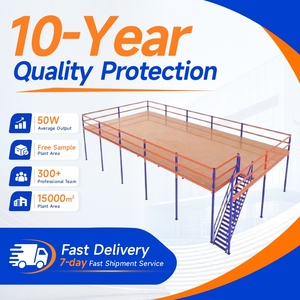
Warehouse Heavy Duty Steel Loft Platform Shelf Storage Attic Rack Pallet Racking Supported Mezzanine Floor Racks System
- Payload:300 - 1,000 kg/sqm
- Floor Tiers:2 - 4 Levels
- Steel Grade:Q235B / Q355B
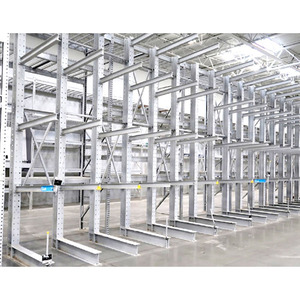
Industrial Cantilever Rack High Capacity Storage Solution for Steel Tube, Bar and Aluminum Profile Warehouses
- Arm Capacity:500 - 1,800 kg/arm
- Layout:Single / Double Sided
- Application:Tubes, Bars & Profiles
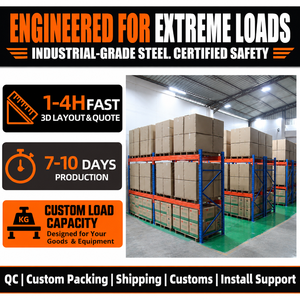
Double Deep Pallet Racking Steel Storage System for Bulk Pallet Warehouse with Reduced Aisle
- Density:+50% vs Selective
- Beam Section:80 - 160 mm Box
- Aisle Ratio:Compressed Footprint
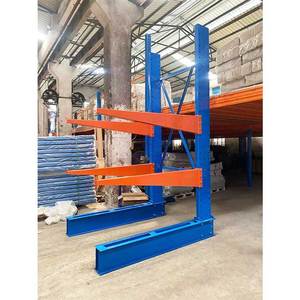
Heavy Duty Storage Cantilever Shelving Cyclocross Frame Cantilever Storage Storage Steel Industrial Hanging Cantilever Rack
- Config:Variable Pitch Hooks
- Finish:Outdoor Hot-Dip Galv
- Application:Irregular Heavy Goods
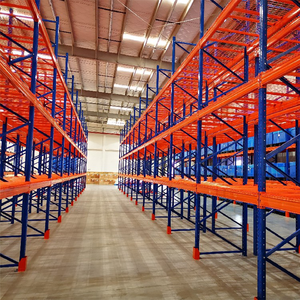
High Strength Metal Load Frame Industrial Large Goods Organizing Metal Warehouse Rack
- Frame Height:Up to 12,000 mm
- Pitch Step:50 mm / 75 mm Adj.
- Certification:ISO 9001 / CE
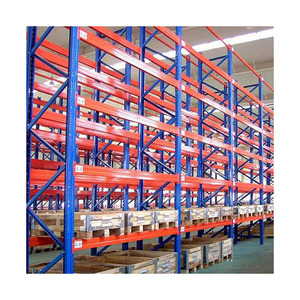
Rust-Proof Thick Steel Selective Outdoor Heavy Duty Epoxy Coated Pallet Storage Racking for Warehouse
- Coating:Thermoset Epoxy 80µm+
- Corrosion Class:C3 - C4 Certified
- Load/Tier:1,000 - 4,500 kg
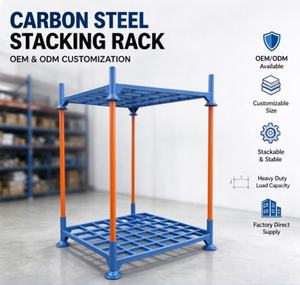
Customized Folding Metal Stack Rack for Storage Can Be Stacked onShelves
- Stackability:4 - 6 High Dynamic
- Fold Ratio:4:1 Return Space
- Mobility:Forklift 4-Way Entry
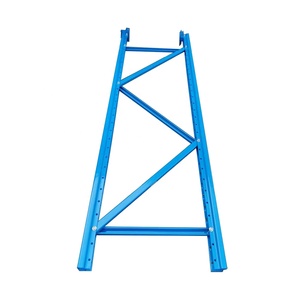
Warehouse Storage Rack Upright Frame High Precision Cold Roll-Formed Profiles
- Profile Width:80 / 90 / 100 / 120 mm
- Thickness:1.8 - 2.5 mm Cold Rolled
- Base Plate:Seismic Pre-Anchored
Sqm Manufacturing Facility Base
Space Footprint Compression Rate
Certified Mill-Test Structural Steel
Global Export Countries & Regions
Why Global Supply Chains Trust Our Production Infrastructure
Combining heavy engineering capabilities, automated cold roll-forming lines, and comprehensive parametric structural validation.
Full-Chain Structural Engineering
Every industrial shelving module is calculated based on accurate seismic profiles, soil capacities, and slab loadings under American ANSI/RMI MH16.1 and European FEM 10.2.02 codes.
Continuous Cold Roll-Forming Lines
Automated punch-and-roll tooling guarantees pitch tolerances within ±0.1mm. High-strength Q235B and Q355B cold-formed upright profiles deliver high rigidity without structural deadweight.
Corrosion-Resistant Surface Treatment
Pre-treatment includes multi-stage acid pickling, zinc phosphating, and electrostatic epoxy-polyester hybrid powder coating baked at 200°C for resistance to chemicals, impacts, and heavy warehouse abrasion.
Full Turnkey Layout & 3D Modeling
Our engineering bureau provides free architectural space-optimization models, 2D capacity layouts, and 3D BIM/Revit integrations, allowing end-users to simulate pallet pick times and volume gains prior to procurement.
Factory Direct Global Logistics
With standardized steel bundle packing, anti-scratch foaming wraps, and container loading optimizations, we supply distributors, 3PL logistics facilities, and large-scale industrial warehouses across North America, Europe, and Asia.
Rigid Quality Control & Traceability
Strict quality assurance ensures steel heat-number tracking, non-destructive weld testing, coating thickness gauge verifications, and real-time deflection load certifications with every production run.
Technical Evolution & Future Sourcing Trends in Industrial Shelving
Understanding the transition toward high-density compact storage, intelligent automated picking compatibility, and low-carbon structural manufacturing.
Industrial storage infrastructures have shifted from static physical shelf units into highly calculated, dynamic nodes within enterprise supply chains. Escalating square-meter commercial real estate costs across urban logistics hubs have rendered obsolete the low-utilization layout with single-selective racking separated by 3.5-meter forklift aisles. Supply chain leaders now require high-density storage solutions that double storage capacity within the identical physical building footprint.
1. Vertical Cubic Maximization
Storage platforms, multi-tier industrial mezzanines, and double-deep configurations now utilize previously neglected warehouse vertical air space up to 15 meters, converting idle overhead clearance into active SKU sorting space.
2. Automation & AGV Integration
Next-generation racking components integrate precise guidance rails, floor track-ways, and laser targets to interface smoothly with Automated Guided Vehicles (AGVs), stacker cranes, and autonomous mobile robots (AMRs).
3. Decarbonized Steel Sourcing
Procurement audits prioritize certified high-yield-strength cold-rolled steels that reduce physical weight by 15-20% while providing equal safety factors, yielding lower shipping emissions and sustainable lifecycle ESG scores.
Future-Proofing Your Warehouse: The Strategic Procurement Roadmap
When selecting industrial style shelving and structural steel systems, buyers must balance instantaneous material costs with decades-long structural durability. Modern operations frequently suffer from SKU reconfiguration bottlenecks caused by bolted static shelves that require complete teardown to adjust for new pallet dimensions. Industrial facilities favor teardown-free teardrop clips, snap-in shelf brackets, and 50mm pitch adjustable upright frames that allow warehouse crews to reconfigure beam tiers dynamically without stopping operations.
Material finish selection has also transformed. While standard indoors might suffice with basic industrial paint coats, global logistics supply chains operating cold-storage units (-30°C) or high-humidity facilities must mandate thermoset epoxy powder coatings or continuous hot-dip galvanization. This eliminates galvanic oxidation and rust flaking, ensuring food-grade safety and compliance with international standards.
Frequently Asked Questions Regarding Industrial Shelving
Essential structural, engineering, and logistics criteria buyers review before committing to industrial storage infrastructure.
What primary factors determine the safe load capacity per rack level?
Beam deflection limits (commonly L/200 according to FEM standards) and upright buckling profiles determine load capacities. Load limits assume an evenly distributed load (UDL). Total calculation variables include the grade of steel (e.g., Q235B vs. Q355B), beam connector hook quantities, base-plate slab anchoring depths, and the unbraced vertical span between horizontal beam elevations.
Can standard industrial shelving be retrofitted for mobile or mezzanine use later?
Yes, provided the upright frames were initially engineered with structural axial reserves to handle the cumulative compression loads of overhead catwalks, mezzanine flooring, and mobile base carriage guides. We consistently advise specifying heavy-gauge upright steel if facility expansion plans anticipate vertical floor tier expansions within a 3- to 5-year timeline.
What are the key differences between roll-formed steel and structural steel racking?
Roll-formed steel is manufactured by feeding coiled sheet steel through consecutive roll dies at room temperature, creating an adaptable, lightweight, cost-effective shelving system suitable for most distribution centers. Structural channel racking is made from hot-rolled structural steel channels, delivering maximum impact resistance suited for rough forklift environments, heavy manufacturing, and outdoor cantilever installations.
How does seismic engineering affect warehouse rack design?
Facilities located in designated seismic zones require specific dynamic calculation verifications. These include expanded base-plate footings, multi-point concrete anchor bolting, heavy horizontal/diagonal cross bracing towers, and lower beam loading thresholds. This design helps prevent frame buckling and progressive catastrophic collapse during high acceleration ground movements.
What protective coatings prevent rust in corrosive or cold-storage environments?
For standard temperature-controlled warehouses, an electrostatically applied epoxy-polyester powder coat provides reliable defense against scuffs and light moisture. For refrigerated walk-in freezers, coastal sea breeze exposures, or chemical storage zones, hot-dip galvanizing (HDG) per ASTM A123 or high-thickness zinc coatings are required to stop steel oxidation.
Connect Directly with Our Racking Design Engineers
Supply your facility CAD layout, ceiling clear heights, and target SKU load characteristics. Our engineering team will return a certified 2D elevation, 3D footprint model, and project estimate.