Industrial Product Portfolio
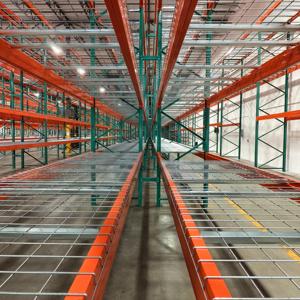
High-Performance Pallet Storage Systems Engineered for Precision
Explore our heavy-duty industrial racking solutions configured for standard distribution centers, cold chain freezers, and automated micro-fulfillment facilities.
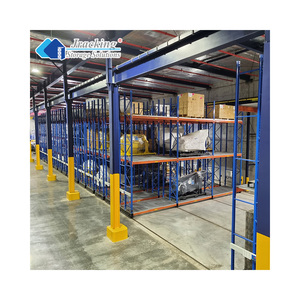
Density Optimization
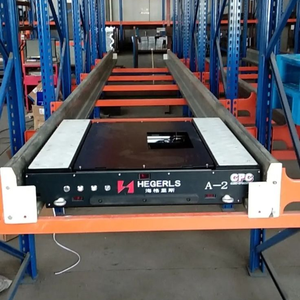
Jracking Flexible Electric Mobile Rack System Automated Pallet Warehouse
Get Catalog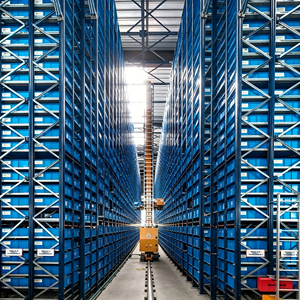
Architectural & Engineering Whitepaper
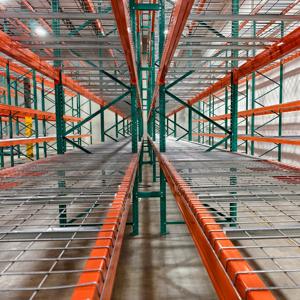
Engineering Structural Integrity: Chinese Manufacturing vs. Global Compliance
A technical evaluation of metallurgical profiles, seismic dampening, cold roll forming, and load distribution standards across international logistics hubs.
High-Tensile Q235B & Q355B Steel
Global warehouse operators frequently face racking deflection issues due to suboptimal steel chemistry. Our manufacturing lines exclusively utilize hot-rolled and cold-formed structural steel coils sourced from verified prime tier-1 mills. With yield strengths verified through continuous ultrasonic testing, our upright columns and horizontal load beams withstand extreme static loads and dynamic seismic pulses without premature shear or micro-fracturing.
North American & European Adherence
Unlike regional workshops that fabricate without certified engineering verifications, our systems strictly meet ANSI MH16.1 (RMI standards), EN 15512 European specifications, and AS4084-2012 Australian standards. This includes integrated safety locking pins with 1000kg shear resistance, factory drop tests, and finite element analysis (FEA) modeled for high-intensity earthquake hazard zones.
Advanced Thermoset Surface Finishing
For demanding cold chain applications reaching -30°C and humid maritime environments, our continuous automatic powder coating lines utilize a multi-stage pre-treatment wash followed by anti-microbial, corrosion-resistant thermoset electrostatic polyester epoxy coatings. The outcome is superior impact resilience against pallet scraping, eliminating surface peeling and rust contamination in cleanroom or grocery storage environments.
| Storage Architecture Type | Space Utilization Ratio | Pallet Selectivity | Forklift Compatibility | Ideal Inventory Turnover | Initial Capital Expense (CapEx) |
|---|---|---|---|---|---|
| Standard Selective Pallet Racking | 40% - 45% | 100% (Instant Direct Access) | Standard Counterbalance & Reach | Fast Moving / High SKU Diversification | Economical Low Baseline |
| Electric Mobile Pallet Racking | 80% - 85% | 100% (Through Dynamic Aisle Opening) | Standard Reach Trucks | Medium / High-Value & Cold Storage | Medium-High (High Space ROI) |
| Two-Way Radio Shuttle Racking | 75% - 85% | Deep Lane (LIFO / FIFO Configuration) | Shuttle Robot + Standard Lift Trucks | High Volume / Low SKU Count (Cold/Beverage) | Moderate Automation CapEx |
| Automated Storage & Retrieval (ASRS) | 90% - 95% | 100% Automated Mechanical Access | Automated Stacker Cranes / RGV | Ultra-High Speed / E-commerce Distribution | High (Maximum Long-Term Efficiency) |
Procurement Forecasting
Future Procurement Trends: Where Modern Logistics Infrastructure Is Headed
Strategic analysis of industry shifts, robotics integration, green storage mandates, and supply chain resilience for enterprise procurement leaders.
1. Convergence of Steel Structures and AMR Fleets
Modern warehouse development has permanently moved away from isolated steel shelving. Enterprise buyers are shifting their capital investments toward racking frames specifically engineered with optical navigation pathways, rack-to-robot integration tolerances, and ultra-flat floor rail attachments capable of accommodating autonomous mobile robots (AMRs) and robotic sorting carts. Structural tolerances now require sub-millimeter precision at high vertical tiers (over 12 meters) to prevent automated crane head misalignment.
2. Cold-Chain Energy Conservation Architectures
With power expenses consuming over 60% of refrigerated warehouse operational budgets, compact dense storage has shifted from a convenience to an economic necessity. Procurement heads are replacing traditional wide-aisle static layouts with high-density automated electric mobile racks and multi-deep radio shuttle solutions. By shrinking the ambient refrigerated cubic volume by up to 45% while doubling pallet counts, enterprises slash chilling compressor cycle loads and reduce carbon tax liabilities.
3. Decoupled Supply Chain & Modular Customization
International logistics vulnerability has prompted purchasing managers to avoid single-source proprietary lock-ins. Current procurement directives favor universally modular racking designs—such as universal teardrop punch geometries that interchange seamlessly with legacy North American footprints, alongside standard European 50mm pitch beam connectors. This provides facility directors with the flexibility to alter bay levels, replace damaged components, or expand mezzanine levels using open industrial supply lines.
Factory Integration Capabilities
Why Tier-1 Global Contractors Partner With Our Manufacturing Hub
Integrating end-to-end metallurgical engineering, certified automated fabrication, and complete logistical stewardship from workshop floor to overseas warehouse installation.
Engineering & BIM Layout Modeling
Our in-house technical department provides free initial space optimization reviews, supplying 2D AutoCAD mechanical drawings, 3D structural render schematics, and accurate Revit BIM components. Our structural models integrate building egress, overhead sprinkler distribution clearance, floor slab loading limits, and localized seismic codes prior to metal stamping.
Automated Roll-Forming Precision
Equipped with continuous automated multi-roller cold roll-forming lines, automated laser cutting tables, and robotic weld cells, we ensure that beam connectors, column teardrop hole pitches, and bracing members meet structural dimensional tolerances within ±0.5mm, eliminating difficult assembly issues on project sites.
Global Sea Freight Packaging Protocols
Export damage is a persistent vulnerability in cross-border procurement. We protect every component batch with specialized export packing techniques: steel frames bound with automated banding, timber dunnage buffers, heavy-gauge protective bubble wrap, and waterproof plastic stretch membranes designed to prevent rust during long ocean voyages.
Turnkey EPC Project Implementation & On-Site Supervisor Dispatch
We do not conclude our relationship at port delivery. For enterprise developments, our organization deploys certified installation managers and field engineers to work directly alongside domestic contracting teams. We verify anchor bolt torque depths, vertical plum lines with laser collimators, rail leveling tolerances, and load test validations to ensure turnkey handover compliant with local regulatory occupational safety standards.
Buyer Knowledge Base
Frequently Asked Questions: Pallet Storage Procurement
Clear, direct answers concerning international logistics, steel quality verification, structural safety certifications, and installation logistics.
What metallurgical certifications should I require when importing industrial pallet racking from China?
When procuring heavy-duty storage racks from Chinese manufacturers, always mandate raw material Mill Test Certificates (MTC) explicitly certifying grade Q235B or Q355B structural steel according to GB/T 700 / GB/T 1591, which correlates structurally to ASTM A36 / ASTM A572 Grade 50 or European EN 10025 S235JR / S355JR. Furthermore, require verified CE certification under EN 15512 (structural design of steel static pallet racking) and factory audits verifying ISO 9001 quality process controls. In our facilities, all heat numbers are fully traceable from raw coil through completed powder-coated components.
How can our facility determine the optimal balance between Selective Racking and Shuttle Racking?
The selection hinges upon SKU diversity versus volume density. Standard Selective Racking provides 100% immediate selectivity to every pallet position, rendering it ideal for distribution facilities handling hundreds of varied SKUs with quick access demands, despite an average space utilization rate of roughly 40-45%. Conversely, if your warehouse handles low SKU counts with extensive pallet volumes per SKU (e.g., cold storage, beverage bottling, FMCG bulk items), Radio Shuttle Systems compress floor usage by up to 80% through deep-lane channels (up to 40 pallets deep), operating on either FIFO (First-In, First-Out) or LIFO (Last-In, First-Out) material flow models while reducing forklift drive travel distances.
What are the critical concrete floor slab requirements for installing heavy-duty pallet racking?
Heavy-duty pallet racking imposes high concentrated point loads beneath upright footplates. A typical heavy storage bay carrying 3,000kg to 5,000kg per level across 5 to 8 vertical tiers requires a reinforced industrial concrete slab thickness of at least 150mm to 250mm, with compressive strength ratings between 25 MPa and 35 MPa (C25 to C35). Furthermore, floor flatness is crucial—particularly for Narrow Aisle (VNA) or high-bay applications—and must align with DIN 18202 or ASTM E1155 (FF/FL numbers) to prevent excessive mast lean and dynamic tipping forces during high-level reach operations.
Can your factory supply teardrop style racking compatible with existing US warehouse footprints?
Yes. We fabricate fully compatible teardrop punching profiles designed to interchange seamlessly with standard North American styles. Our upright frames utilize standard 2-inch vertical hole spacing adjustments, compatible baseplates, and standard step beams equipped with teardrop slide pins or gravity auto-locks. This enables facility operators across the United States, Canada, and Mexico to easily expand, reinforce, or reconfigure their existing warehouse installations without acquiring entirely new, incompatible frame components.
What is the standard manufacturing lead time and ocean shipping container capacity for large projects?
Standard fabrication lead times average between 20 to 35 business days depending on overall tonnage and customization requirements (such as specialized paint schemes or galvanized configurations). For shipping logistics, we optimize our packing calculations around 40-foot High Cube (40'HQ) shipping containers, typically packing between 20 to 24 metric tons of structured steel uprights, step beams, and wire decking per container, with all items pre-palletized and bundled for swift unloading with standard warehouse forklifts at destination terminals.