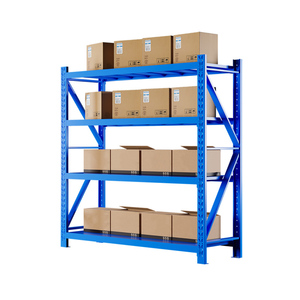
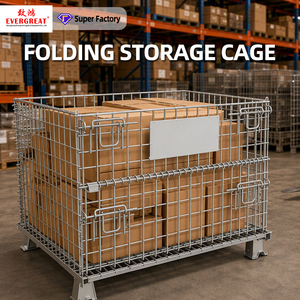
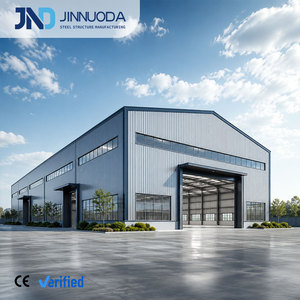
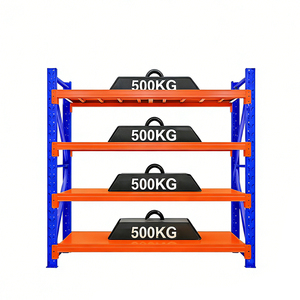
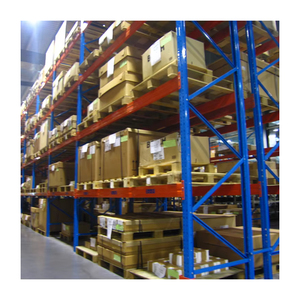
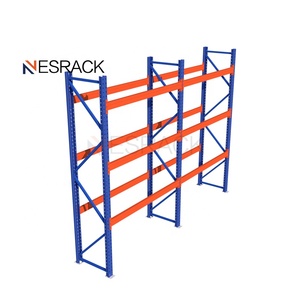
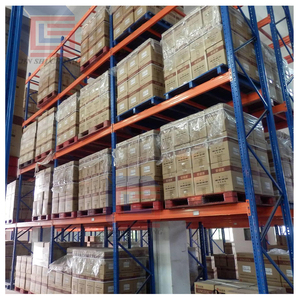
Explore our heavy-duty warehouse storage portfolio. Every model is custom-manufactured in our automated facilities, utilizing high-tensile structural steel (Q235B / Q355B) and compliant with RMI MH16.1, FEM 10.2.02, and AS4084 regulatory engineering criteria.
From initial structural layout drafting to automated continuous cold roll-forming and robotic laser welding, our manufacturing infrastructure delivers turnkey industrial storage solutions customized to exact client engineering schematics.
Full OEM flexibility over upright post profiles, depths (600mm to 1500mm), clear span beam lengths (up to 4200mm), and multiple international standard punching geometries including 50mm, 75mm, 76.2mm (3-inch teardrop), and European Speedlock patterns.
Our structural engineering department generates comprehensive AutoCAD architectural elevations, 3D BIM/Revit spatial models, and Finite Element Analysis (FEA) deflection simulations prior to commercial quotation, ensuring optimal volumetric utilization.
Equipped with 18 automated cold-roll forming lines, high-frequency continuous seam welding stations, and a dual-chain automatic electrostatic thermoset powder coating facility operating with anti-corrosive multi-stage zinc phosphating wash lines.
Rigorous structural verification conforms to North American RMI MH16.1, European EN 15512, Australian AS4084-2023, and international ISO 9001:2015 frameworks. Systems integrate heavy baseplates, column guards, and customized anti-tip cross bracing.
Selecting the correct warehousing architecture requires balancing volumetric cubic efficiency, individual SKU selectivity, forklift aisle clearance dynamics, and floor slab bearing capacity. Review our structural comparative benchmark below.
| Racking System Classification | Cubic Space Utilization | SKU Selectivity Ratio | Rated Load Range / Level | Operational Forklift Interface | Primary Industrial Use-Case |
|---|---|---|---|---|---|
| Selective Pallet Racking (Standard) | 40% - 50% | 100% Immediate | 1,000 kg – 4,500 kg | Counterbalance, Reach Trucks | FMCG Distribution, High-SKU Logistics |
| Narrow Aisle / VNA Racking | 65% - 75% | 100% Immediate | 1,000 kg – 3,500 kg | VNA Turret Trucks, Wire/Rail Guided | High-Value Inventory, Tall High-Bay Hubs |
| Drive-In & Drive-Through Racking | 75% - 85% | Low (LIFO / FIFO Bulk) | 800 kg – 2,000 kg | Counterbalance, Reach Trucks | Cold Storage Facilities, Bulk Homogenous Goods |
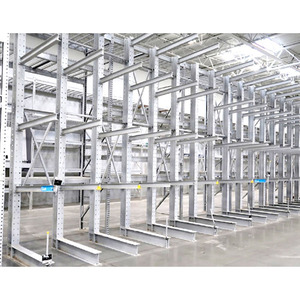
| Heavy-Duty Cantilever Racking | 60% - 70% | 100% Direct | 500 kg – 3,000 kg / Arm | Side Loaders, 4-Way Multi-Directional | Pipes, Steel Tubing, Timber, Extrusions |
| Radio Shuttle Automation Racking | 85% - 90% | High Throughput Batch | 500 kg – 2,500 kg | Integrated Semi-Automated Shuttle | Deep-Lane Cold Stores, Beverage Logistics |
| Industrial Boltless Longspan Shelving | 50% - 60% | 100% Manual Hand-Pick | 200 kg – 800 kg | Manual Cart Picking, Conveyor belts | E-commerce Sortation, Spare Parts Warehouses |
For fulfillment centers characterized by high SKU diversity and rapid inventory churn, Selective Pallet Racking integrated with lower-tier carton flow tracks delivers unmatched pick rates. The structural beam connectors feature 3-claw or 4-claw cold-stamped brackets secured by heavy-gauge steel locking pins to eliminate accidental dislodgement during aggressive forklift operations.
Cold storage operations require high thermal efficiency due to significant refrigeration power overhead. In such applications, Drive-In Racking and Semi-Automated Pallet Shuttle Systems reduce refrigerated airspace volume by eliminating access corridors. Uprights and guide rails are treated with low-temperature impact-resistant powder coatings or hot-dip galvanization to stop sub-zero brittleness.
For lumber yards, pipe distribution networks, and metal manufacturing plants, conventional upright columns pose obstruction risks. Our Heavy-Duty Cantilever Racking utilizes hot-rolled structural steel I-beams (H-Beams) with bolted or pivot-arm connectors that rotate upward upon forklift contact, preventing catastrophic column deformation under heavy impact.
Enterprise procurement professionals are transitioning from treating racking as a static steel commodity to treating it as an active, integrated component of automated fulfillment infrastructures. Key market shifts define future procurement cycles.
Modern distribution facilities are being planned for immediate or modular adoption of Automated Storage and Retrieval Systems (AS/RS), autonomous mobile robots (AMRs), and automatic guided vehicles (AGVs). Procurement specifications require racking tolerances down to ±1.0mm along running rails, reinforced floor deflector plates, and integrated sensory channels for automated shuttle navigation.
Global supply chain executives increasingly assess Total Cost of Ownership (TCO) rather than baseline ex-works equipment prices. Factors such as zinc-phosphated electrostatic powder coating life cycles, standardized component interchangeability across cross-docking hubs, modular reconfigurability, and structural resistance to routine forklift bumper collisions drive long-term value.
ESG directives (Environmental, Social, and Governance) across Europe and North America have made certified low-carbon manufacturing a procurement prerequisite. Tier-1 buyers demand documentation verifying the use of electric arc furnace (EAF) steel with recycled scrap content, non-VOC powder coat finishes, and optimized freight cubic packaging to reduce supply chain emissions.
Industrial pallet racking is progressing through advancements in material metallurgy, computer-aided stress simulation, and embedded digital infrastructure to improve structural reliability and worker safety.
By replacing traditional low-grade mild steel with micro-alloyed, high-yield steel grades such as Q355B and specialized micro-alloyed sheets, manufacturers achieve significant weight reduction while simultaneously increasing dynamic load-bearing capacity. Cold-formed profiles feature complex multi-rib cross-sectional geometries that boost torsional rigidity and local buckling resistance under extreme vertical stress.
Modern warehouse structures require sophisticated seismic engineering calculations that account for earthquake accelerations (Ss and S1 spectral response coefficients). Using advanced non-linear Finite Element Analysis, racking engineers evaluate node connection elasticity, moment-resisting beam-to-column frames, baseplate anchor pull-out stresses, and top-tier horizontal sway drift to prevent progressive structural collapse.
The convergence of industrial IoT and physical warehouse racking has spurred development of digital structural monitoring systems. Upright-mounted piezoelectric collision sensors immediately log forklift impacts, transmitting safety alerts to maintenance teams. Strain gauges integrated into high-load transfer beams can detect structural deflection anomalies and over-capacity loading in real time.
Essential structural, engineering, and logistics considerations address key questions raised by warehouse managers, architects, and procurement leads prior to production sign-off.