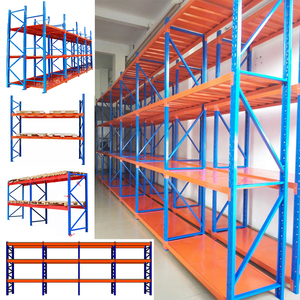
Q235B/Q355
Structural Grade Steel
1,000–4,500 KG
Per Level Beam Capacity
100% CAD/BIM
Seismic Simulation Modeling
70+ Countries
Global Project Deployments
Factory-Direct Heavy-Duty Systems
Engineered Heavy-Duty Industrial Racking Lines
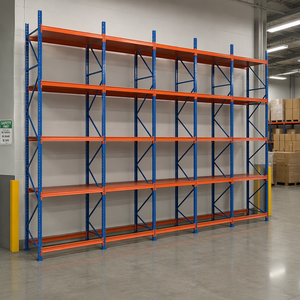
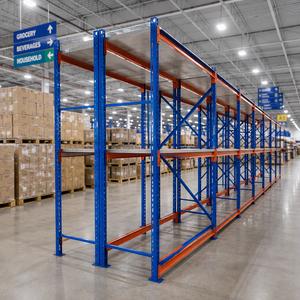
Manufactured from certified high-tensile cold-rolled steel coils, our modular warehouse racking lines deliver maximum dynamic loading capacities, corrosion resistance, and seismic structural reliability for global distribution centers.
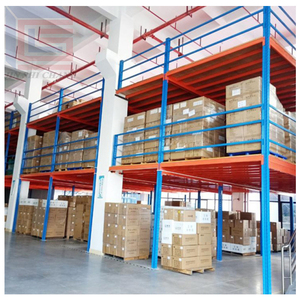
Procurement Technical White Paper
Engineering Structural Reliability in High-Bay Pallet Racking Systems
Procuring industrial warehouse racking from China requires a deep technical comprehension of cold-formed thin-walled structural steel engineering, cross-sectional load-bearing calculations, seismic dissipation behavior, and anti-corrosive powder metallurgy. As global supply chain networks face heightened fulfillment pressures and SKU proliferations, warehouse managers cannot rely on unverified structural claims. Structural failures lead to catastrophic product losses, warehouse downtime, and critical workplace safety hazards.
A resilient storage system balances metallurgical toughness, elastic modulus properties, and dynamic impact buffers against automated guided vehicles (AGVs) or counterbalanced fork trucks. Certified Chinese manufacturers utilize continuous computerized roll-forming production lines to ensure precision tolerances along the entire length of upright posts, locking pins, and stepped box beams, preventing localized mechanical torsion under maximum rated payloads.
Critical Manufacturing & Structural Metallurgical Specifications
When engineering pallet racking for international markets (North America, the European Union, Australia, and the Middle East), raw material chemistry dictates system integrity. Substandard suppliers frequently substitute lower-grade re-rolled steel, resulting in brittle microstructures vulnerable to cold-storage crystallization or low-cycle seismic fractures.
| Component Specification | Standard Grade Material | Yield Strength (ReH) | Tensile Strength (Rm) | Surface Finish Metric |
|---|---|---|---|---|
| Heavy-Duty Upright Posts | Q235B / Q355B (Certified Cold-Rolled) | ≥ 235 - 355 MPa | 370 - 510 MPa | 60-80 μm Epoxy Powder Coat |
| Welded Box Beams | Double C-Section Interlocking Box | ≥ 235 MPa | 375 - 460 MPa | Electrostatic Thermoset Polyester |
| Structural Baseplates | Heavy Hot-Rolled Steel Plate (6-12mm) | ≥ 235 MPa | 370 - 500 MPa | Hot-Dip Galvanized / Powder Coated |
| Interlocking Safety Pins | High-Grade Zinc Alloy / Carbon Steel | Grade 8.8 Equivalent | 800 MPa | Zinc Electroplating ≥ 12 μm |
Under international building codes (IBC) and FEM standards, safety pins must withstand an upward shear dislodgement force of not less than 5 kN per beam end connection to prevent accidental detachment during forklift pallet retrieval. Upright frames are pierced on 50mm, 75mm, or 76.2mm pitch increments, allowing micro-adjustability while maintaining structural column stiffness via diagonal and horizontal bracing trusses.
Structural Integrity & Seismic Design
Engineered using finite element modeling (FEM) to analyze dynamic stresses, torsional loads, and floor slab reaction forces, ensuring full compliance with seismic zones 1 through 4 under regional building regulations.
Automated Robotic Cold-Roll Forming
Continuous CNC-controlled multi-station roll-forming lines guarantee sub-millimeter punching accuracy, zero camber deviation, and high beam-to-column interlocking friction for enhanced horizontal stability.
Automated Pre-Treatment & Powder Metallurgy
Multi-stage degreasing, acid rust conversion, and eco-friendly zirconium nano-passivation coating combined with thermoset epoxy baking ensure salt spray endurance surpassing 500 hours without blistering.
Market Forecasting & Innovation
Future Warehouse Racking Trends & Next-Gen Logistics
Strategic forecasting for warehouse infrastructure planners, e-commerce distribution operators, and third-party logistics (3PL) conglomerates navigating automated facility expansion from 2025 to 2030.
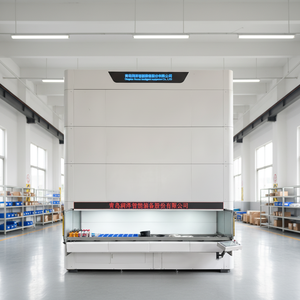
AS/RS Automated Shuttle Synergy
Shift from conventional selective setups to high-density pallet radio shuttle racking and AS/RS automated stacker crane integrations, delivering up to 70% space compaction and lights-out operation.
Digital Twin & IoT Deflection Telemetry
Implementation of structural strain-gauge wireless telemetry on lower upright tiers to capture real-time dynamic deflection, collision impacts, and weight overload alerts directly into warehouse ERP systems.
Cold-Chain Optimization
Growth in temperature-controlled -30°C cold logistics demands specialized micro-alloy steel with elevated Charpy V-notch impact toughness to prevent ductile-to-brittle metallurgical transitions under freezing conditions.
Circular Steel & Eco-Coatings
Corporate ESG procurement mandates favor low-carbon electric arc furnace (EAF) steel sourcing, non-toxic heavy metal-free powder finishes, and modular boltless frameworks engineered for 100% disassembly.
Why Partner With Us
Full-Cycle Manufacturing & Global Export Competence
Bridging tier-one Chinese structural fabrication capability with North American and international building safety protocols, precision space layout design, and transparent procurement oversight.
Precision 2D/3D BIM Space Planning
Our structural engineering division provides fully rendered 2D floor plans, 3D DWG/Revit layouts, and seismic load calculation certificates, allowing architects and facility directors to approve structural specifications prior to production.
Strict Batch Chemical & Tensile Verification
Every raw steel mother coil is analyzed using optical emission spectrometers and universal hydraulic tensile testers. Mill Test Certificates (MTC) matching EN 10204 Type 3.1 accompany every single export shipping container.
Ocean Freight Optimized Crating & Bundling
Components are secured with heavy-gauge corrugated dunnage, protective corner angles, anti-scratch bubble wraps, and automated steel strap tensioning to guarantee complete structural protection during intermodal sea transit.
Ready to Engineer Your Facility's Storage Density?
Connect with our technical engineering consultants for load-capacity modeling, seismic compliance assessments, and direct factory container pricing.
Inquire Now
Industrial Buying Guide
Frequently Asked Questions: Racking Procurement & Export
Critical answers addressing structural tolerances, international safety certification, sea freight bundling, and engineering submittals.
What structural safety and design standards do your warehouse racking systems conform to?
Our systems are designed, fabricated, and rigorously calculated to conform with RMI (Rack Manufacturers Institute) MH16.1 specifications in the United States, AS4084-2012 / AS4084-2023 steel storage racking codes in Australia, and EN 15512 / EN 15620 / FEM 10.2.02 standards across Europe. Third-party structural engineering stamps, seismic finite-element reports, and factory quality audits can be provided per project jurisdiction requirements.
How do you verify the load-bearing capacity of cold-rolled steel racking components?
Load capacity ratings are derived from both computer-aided finite element simulations (FEM) and destructive physical stub-column tests, beam end-connector shear testing, and full-scale pallet deflection testing. We enforce a minimum structural safety factor of 1.5 to 1.95 depending on regional design requirements, guaranteeing that beam deflection under maximum uniformly distributed load (UDL) remains strictly within the L/200 or L/250 limit.
What steel grades are used, and can you provide Mill Test Certificates (MTC)?
We exclusively procure prime structural cold-rolled and hot-rolled coils from certified Tier-1 domestic mills (such as Baosteel, Shougang, and Ansteel). Primary structural grades include Q235B (yield strength ≥ 235 MPa) for standardized box beams and cross-ties, and Q355B/Q355C (yield strength ≥ 355 MPa) for high-bay, heavy-capacity upright columns. Fully traceable EN 10204 3.1 chemical composition and mechanical tensile MTCs are supplied with every dispatch.
Can you manufacture custom dimensions, hole punch patterns, and OEM profile matching?
Yes. With dedicated precision tool and die CNC machining centers, we provide comprehensive OEM and ODM manufacturing. We can match legacy teardrop patterns common in North America (compatible with standard 2-inch adjustability), European 50mm diamond patterns, and Australian 76.2mm hex punching geometries. Upright frame depths, heights, beam spans, and deck styles can be customized to match your existing facilities without forcing full system replacement.
How are heavy upright frames and long beams protected during multimodal ocean container shipping?
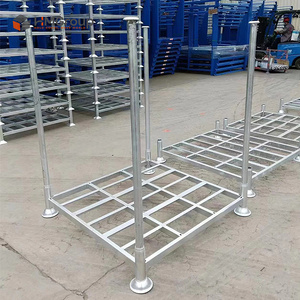
Upright frames can be shipped pre-assembled or knocked-down (KD) to optimize sea container cube utilization. Beams and frame columns are bundled on heavy hardwood or steel skids using automatic polyester strapping, separated by high-density polyethylene (HDPE) buffers, and wrapped in multilayer UV-inhibited polyolefin films. Small hardware, locking pins, baseplates, and leveling shims are packed in heavy-duty wooden crates or steel tubs to prevent container transit motion damage.
What is the standard production lead time and minimum order quantity (MOQ)?
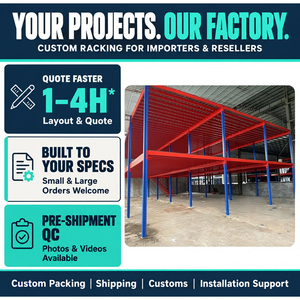
For standardized industrial selective pallet racking, the typical production cycle is 15 to 25 days following engineering drawing sign-off and receipt of deposit. Complex multi-tier mezzanine frameworks or custom automated shuttle racking typically require 30 to 45 days. Our standard minimum order quantity is one 20ft GP container (or equivalent to approximately 10-15 tons), though mixed sample orders for specialized distributor evaluation can be accommodated.