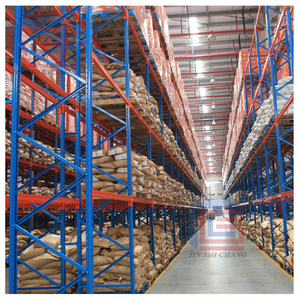
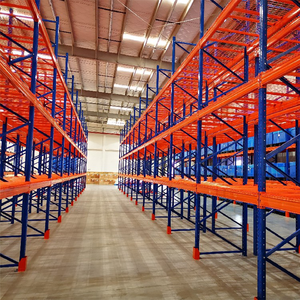
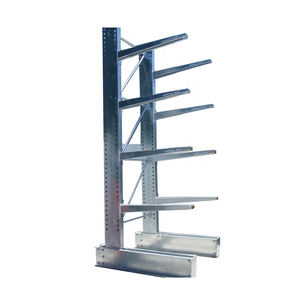
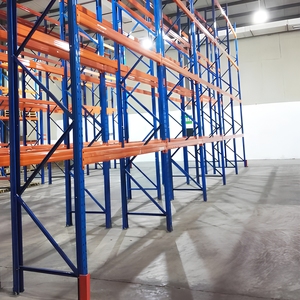
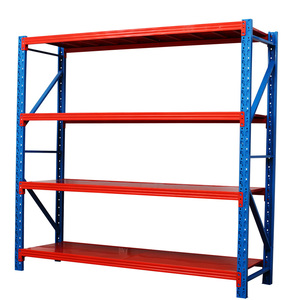
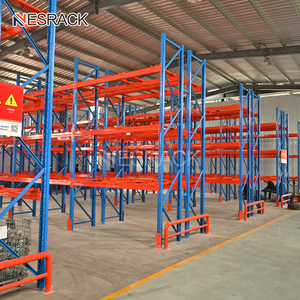
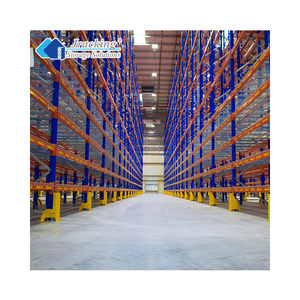
China Top Industrial Racking Exporter & Wholesalers

Precision-Engineered Heavy-Duty Warehouse Storage Racks, Automated Intralogistics Framing, and ISO/CE/RMI Compliant Structural Logistics Equipment for Global Distribution Hubs.

Global Export Catalog

High-Efficiency Structural & Cold-Formed Racking Lineup

Engineered with certified structural steel profiles, high load capacities, and automated roll-formed standards tailored for B2B intralogistics ecosystems worldwide.

Technical Whitepaper Insight

Engineering Rationale: Specifying High-Performance Industrial Racking

In modern high-throughput logistics, an industrial racking framework serves not merely as inert warehouse shelving, but as a critical, load-bearing intralogistics structural component. Specifying industrial steel storage racks requires strict mechanical calculations covering yield strengths, post-buckling stresses, beam deflection thresholds, and seismic ductility ratios under severe cyclic loading.

As a leading Chinese industrial racking exporter and wholesaler, our manufacturing protocols are anchored to international structural safety frameworks, notably EN 15512:2020 (European Steel Static Storage Systems standard), ANSI/RMI MH16.1 (American Specification for the Design, Testing, and Utilization of Industrial Steel Storage Racks), and AS 4084:2023 (Australian Steel Storage Racking). Cold-formed steel profiles undergo rigorous numerical finite element analysis (FEA) to confirm stability limits under localized torsional-flexural buckling conditions.

Engineering Attribute Standard Commercial Grade Our Export-Grade Specifications Testing & Compliance Protocol
Primary Raw Material Commercial Recycled Scrap Q195-Q215 Certified Virgin Q235B / Q355B Prime Steel Coils Mill Test Certificates (MTC) EN 10204 3.1
Upright Forming Accuracy ± 1.5 mm cumulative tolerance per 3m ≤ ± 0.5 mm continuous roll-forming tolerance Automated Laser-Calibrated Punching Lines
Beam Deflection Limit L / 180 or L / 200 under maximal load L / 250 (Strictest RMI & FEM Criteria) Destructive Full-Scale Beam Bend Testing
Surface Pre-Treatment Basic Manual Wipe & Single Wash Automatic 5-Stage Phosphating & Ultra-Pure Rinse ASTM B117 Salt Spray Standard ≥ 500 Hours
Coating Finish & Thickness 60 μm Single-layer Powder Coat 80 - 120 μm Anti-Electrostatic Epoxy-Polyester Cross-Hatch Adhesion Test (ISO 2409 Class 0)
Seismic Damping Engineering Generic Footplates, Minimal Anchorage Ductile Baseplates with Hilti/Fischer Expansion Anchors Non-Linear Time History Seismic Simulation

Beyond material yield stresses, long-term operational durability relies heavily on continuous automated punch-and-roll tooling. Discrepancies of less than a millimeter in upright lug spacing can cause non-uniform load distributions across beam pairs, accelerating localized metal fatigue. Our production facilities maintain precision cold-forming tolerances within ±0.5 mm, ensuring universal connector interlock security, reduced operational sway, and consistent alignment across high-bay installations extending above 30 meters.

50,000+ Tons Annual Export Volume
100% MTC Prime Steel Traceability
85+ Destination Export Countries
Zero Catastrophic Structural Failure
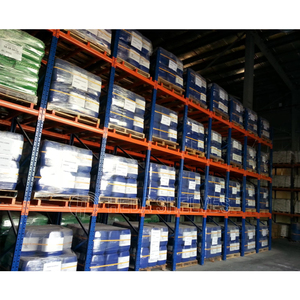
Why Partner With Us

End-to-End Manufacturing Prowess & Export Competence

Integrating world-class metallurgy, precision cold-forming engineering, certified safety standards, and global container logistics for turnkey warehousing projects.

Work with Storage-Savvy Structural Experts

Every racking system is custom-engineered based on precise structural calculations of your warehouse slab, SKU dimensions, forklift corridors, and seismic acceleration profiles—avoiding off-the-shelf templates.

Customized to Any Dimension & Load Spec

Our modern cold-roll manufacturing plants produce tailored upright depths, beam section gauges, bay widths, and cantilever spans. We handle any vertical height or weight limit your operations require.

Organize SKUs & Optimize Flow Better

Streamline logistics throughput, reduce forklift travel distances, and improve inventory turnaround with layouts designed specifically for FIFO, LIFO, or automated buffer sorting operations.

Free 2D/3D Design Analysis & BIM Models

Validate system capacity before capital commitment. We provide complete 2D elevation schematics, 3D DWG configurations, and Revit BIM models to assist architectural and general contractor planning.

Turnkey B2B Export Solutions

From initial design calculation and precision manufacturing to protective container packaging, customs documentation, and logistics dispatch—a single experienced partner manages your project.

Seamless Warehouse Ecosystem Integration

Our racking works smoothly with Wire Mesh Decking, Pallet Support Bars, Column Protectors, Pallet Flow Rollers, In-Rack Fire Sprinklers, and AS/RS Crane Guide Rails to protect your long-term investment.

Global Export Engineering & Reliable Port-to-Port Delivery

Exporting industrial steel structures requires specialized nested packaging to eliminate transit deformation inside shipping containers. We optimize steel nesting geometries to maximize ocean container cube utilization, dramatically lowering ocean freight cost per pallet location. With verified ISO 9001 quality controls, AWS D1.1-certified welding stations, and worldwide logistics coordination, we ensure timely delivery to the Americas, Europe, Australia, and the Middle East.

Market Horizon

Future Procurement Trends in Industrial Storage Racking

Explore macroeconomic and technological shifts changing how international procurement teams, supply chain directors, and 3PL executives specify industrial warehouse racking.

Buyer Knowledge Base

Frequently Asked Questions on Importing Industrial Racking

Essential considerations for technical parameters, structural testing, international compliance, and global container logistics.

What steel grades and quality certifications are standard for exported industrial racking?
Exported industrial racking relies primarily on certified structural steels: Q235B (yield strength ≥ 235 MPa, equivalent to European S235JR or ASTM A36) and high-strength Q355B (yield strength ≥ 355 MPa, equivalent to European S355JR or ASTM A572 Grade 50). Upright frames carrying substantial vertical axial loads typically utilize Q355B for increased buckling safety margins with thinner wall profiles, reducing structural deadweight. Complete Mill Test Certificates (MTC) documenting chemical spectrometry and mechanical tensile/elongation properties (compliant with EN 10204 3.1) should accompany every container shipment. Standard global certifications include ISO 9001 for quality control, CE marking for structural components under EN 1090-1, and verified compliance with ANSI/RMI MH16.1 and AS 4084:2023.
How do you calculate safe working loads (SWL) and beam deflection thresholds?
Safe working loads are calculated using structural engineering principles that combine finite element modeling (FEM) with physical destructive load verification. Load ratings assume uniformly distributed loads (UDL) per pair of cross beams. Under both European EN 15512 and American RMI specifications, the vertical deflection of horizontal beams under maximum design working load must not exceed 1/200th of the clear bay span (L/200), with high-precision automated AS/RS facilities specifying tighter limits of L/250 to L/300. Connectors must include safety drop pins that withstand minimum upward dislodgement forces of 5.0 kN to prevent accidental displacement by forklift masts. Upright frame capacities consider unbraced length, beam spacing intervals, seismic acceleration coefficients, and ground slab load-bearing capacities.
What are the key surface finishes and how do they resist corrosion in cold storage?
Two primary surface treatments are used based on environmental conditions:

Electrostatic Epoxy-Polyester Powder Coating: Standard for ambient dry distribution centers. High-quality lines use an automated 5-stage chemical pre-treatment (alkaline degrease, surface conditioning, phosphate conversion, dual deionized water wash) before applying 80–120 μm of powder, cured in a convection oven at 180°C–200°C. This yields high cross-hatch adhesion and scratch resistance.

Hot-Dip Galvanizing (HDG): Essential for outdoor storage, coastal installations, and high-humidity cold stores. Steel components are immersed in molten zinc at ~450°C, producing zinc-iron alloy layers with minimum coating thicknesses between 65–85 μm (ISO 1461). This provides cathodic sacrificial protection that prevents corrosion even if surfaces are scratched during operation.
How do you protect long racking uprights and beams during ocean transit?
Structural steel racking is susceptible to scratching, moisture condensation, and point-load bending if poorly packed. Our export packing protocols use customized nested bundles: upright posts are interleaved with protective corrugated spacer blocks and wrapped in moisture-resistant polyethylene bubble wrap. Beams are palletized in uniform layers with timber dunnage spacers and secured using high-tensile polyester strapping and corner edge protectors. Upright baseplates, row spacers, and dynamic accessories are boxed in fumigated ISPM-15 wooden crates or high-strength steel cages. Every 40ft High Cube container is mathematically loaded using 3D cube-packing software to prevent movement during transit and optimize cargo weight close to 26–28 metric tons.
Can your manufacturing plants produce customized pitch standards (e.g., 50mm, 75mm, 76.2mm)?
Yes. Our automated CNC punching and roll-forming equipment can produce all primary international hole pitches and slot geometries. This includes the European standard 50mm metric pitch, the Asian/Latin American 75mm pattern, the universal British/Oceania 76.2mm (3-inch) Dexion-compatible pitch, and the North American teardrop pattern (compatible with 2-inch pitch adjustability). This flexibility allows overseas wholesalers and system integrators to purchase rack profiles that integrate seamlessly into their clients' existing warehouses without requiring custom adapter plates.
What engineering deliverables are provided for local building permit applications?
To assist general contractors and facility managers with local permitting and fire marshal sign-offs, our engineering department provides comprehensive technical submittal packages. These include structural engineering calculation books with finite element models, slab loading reaction profiles (shear forces, overturning moments, post-load concentrations), anchor bolt pull-out calculations, comprehensive 2D CAD layouts with clear egress aisle dimensions, load application and warning plaques (compliant with OSHA/EN standards), and detailed installation instruction manuals.

Accelerate Your Intralogistics Efficiency Today

Request an engineered layout analysis, structural load calculation, or a comprehensive wholesale price proposal for your next warehouse storage project.

Contact Us