Precision-Engineered Pallet Racking Solutions
Constructed in state-of-the-art Chinese manufacturing facilities utilizing precision roll-forming lines, automated laser profiling, and multi-stage electrostatic powder coating.
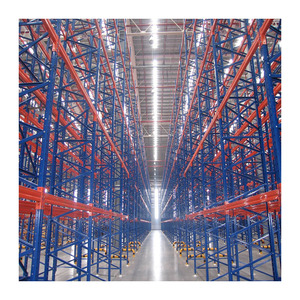
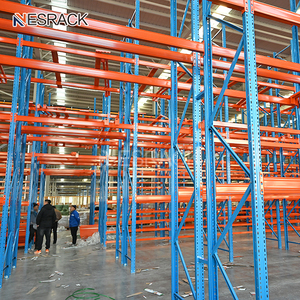
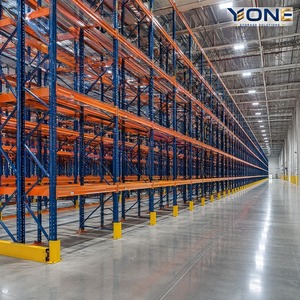
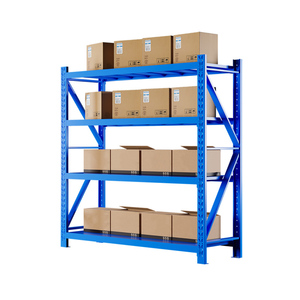
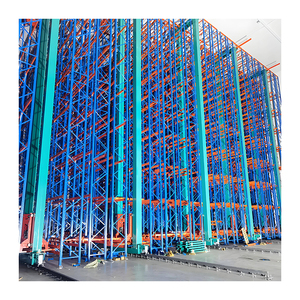
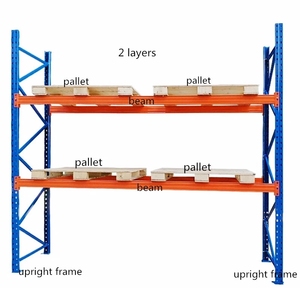
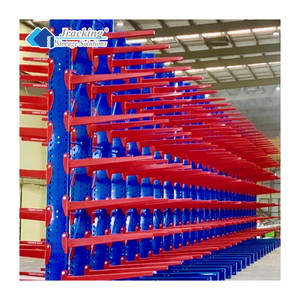
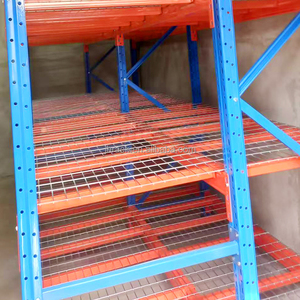
Engineering Excellence in Chinese Heavy-Duty Pallet Racking Manufacturing
In modern supply chain architecture, modern warehouses and regional fulfillment distribution centers (DC) can no longer afford unverified, sub-standard static racking systems. The globalization of intralogistics has shifted procurement perspectives from raw purchase cost to comprehensive Life Cycle Costing (LCC), structural yield endurance, dynamic load resistance, and regional seismic compliance. As premier industrial manufacturing hubs in China have consolidated advanced cold-roll forming, automated robotic welding, and automated powder coating processes, selecting the right Chinese pallet racking manufacturer represents a tremendous competitive lever for global supply chain leaders.
When evaluating high-capacity storage facilities, industrial warehouse engineers must evaluate structural steel mill test certificates, precise cross-sectional geometry, beam-to-column connector rigidity, and deflection limits. Chinese Tier-1 racking manufacturers utilize premium-grade Q235B and Q355B structural steel from top steel suppliers such as Baosteel and Shougang. In-line continuous roll forming ensures high cross-sectional dimensional accuracy, eliminating internal residual stress and producing high column load capacities under both ANSI MH16.1 (RMI standard in the United States) and European EN 15512 standards.
| Structural Parameter | Standard Market Offering | Tier-1 China Factory Benchmark | Operational Engineering Benefit |
|---|---|---|---|
| Raw Material Grade | Commercial Grade Q195 / Q215 | Certified Q235B & Q355B | Yield strength >355 MPa; superior ductile behavior under seismic shear stress. |
| Roll-Forming Tolerance | ±1.5mm along 12m length | ±0.3mm Laser Verified | Seamless beam connector interlock; zero torsional warping in multi-tier uprights. |
| Surface Pretreatment | Manual Acid Washing & Dip | 7-Stage Automated Silane Immersion | Eliminates heavy metals; extends salt-spray corrosion resistance >500 hours. |
| Vertical Deflection Standard | L/180 deflection under load | L/200 to L/250 Limit | Prevents beam permanent set; safeguards Automated Guided Vehicles (AGVs). |
| Connector Claw Geometry | 3-Pin Friction Fit | 4-5 Pin Cold-Forged Hook with Spring Locks | Increases beam-column rotational moment; reduces frame longitudinal sway. |
Future Procurement Trends in Industrial Storage Racking (2025–2030)
The intralogistics procurement landscape is undergoing seismic shifts driven by robotic automation, supply chain near-shoring, and decarbonization mandates. Buyers sourcing industrial pallet racking directly from Chinese manufacturers must prepare for key systemic changes:
AS/RS & High-Tolerance Integration
Racking frames are shifting from manual forklift handling to automated crane and AMR interfaces. Procurement contracts now demand strict deflection tolerances meeting FEM 9.831 and FEM 9.832 standards for automated high-bay racking systems exceeding 30 meters.
Cold-Chain & Ultra-Low Temps
Surging global cold-chain requirements mandate structural steel formulations that retain Charpy impact notch toughness at -30°C. Standard carbon steels suffer brittle failure in deep-freeze facilities; leading Chinese suppliers now supply specialized silicon-killed steel alloys.
Decarbonization & EPD Auditing
Global ESG reporting requires Environmental Product Declarations (EPD) on steel manufacturing. Leading Chinese factories are incorporating electric-arc furnace (EAF) recycled scrap steel and solar-powered powder coating plants to reduce Scope 1 and Scope 2 embodied carbon.
Digital Twin & BIM Delivery
Procurement teams are shifting away from 2D DWG submittals. Tier-1 manufacturers provide Revit and IFC BIM models with structural calculation notes stamped according to US IBC or Eurocode standards, accelerating building permit processes.
Evolutionary Trajectory of Racking Technology: From Static Frames to Cyber-Physical Assets
Historically, warehouse storage was treated as static, passive structural equipment. Pallet racks were simple modular steel frames positioned to store static loads until forklift retrieval. Over the past three decades, evolutionary milestones have revolutionized storage density, structural engineering calculations, and automated logistics handling:
1. The Cold-Formed Steel Cross-Section Revolution: Early racks relied on hot-rolled channel steel, which was heavy, expensive to transport, and geometrically rigid. The introduction of multi-station continuous roll-forming lines allows manufacturers to engineer multi-rib open-channel uprights with cold-formed omega and sigma profiles. By strategically introducing returned stiffening lips, web perforations, and variable flange angles, modern Chinese factories achieve 35% higher buckling resistance with 20% less dead steel weight.
2. High-Density Radio Shuttle Systems: Drive-in racking systems, while historically space-saving, suffered from slow pallet handling and high forklift collision risk. The high-density Pallet Shuttle Racking System transformed operations by replacing the forklift's deep-lane transit with a self-powered, lithium-battery-driven robotic shuttle that runs along internal galvanized guide rails. This cuts operational transit times by up to 60% and increases storage volume utilization up to 85%.
3. Structural Seismic Design & Base Plate Dissipation: Modern warehouse racking can exceed 15 to 30 meters in height, carrying thousands of tons of dynamic kinetic mass. During an earthquake, ground accelerations transfer massive shear and overturning forces into the upright frames. Leading Chinese manufacturers now conduct nonlinear static pushover simulations and dynamic shake-table testing, engineering anchor-bolt systems, ductile base shoes, and spine cross-bracing that dissipate energy safely under heavy ground movement.
Why Tier-1 Chinese Manufacturing Outperforms
Leveraging decades of production experience, vertical supply chain integration, and automated precision robotics to deliver superior heavy-duty storage infrastructure.
Full-Scale Automation & Roll-Forming
Equipped with 24 high-speed in-line punch and roll-forming production lines. Continuous CNC automated punching ensures hole-pitch tolerances are held within ±0.1mm, eliminating structural alignment issues during onsite field erection.
Prime Steel Direct Sourcing
We eliminate unverified metal brokers by sourcing prime cold-rolled and hot-rolled coils directly from Baosteel, Shougang, and Ansteel. Every production batch is backed by 3.1 Mill Test Certificates verifying tensile yield and chemical balance.
Automated Electrostatic Coating
Utilizing Swiss Gema powder application guns along with 7-stage automated chemical pre-treatment and curing ovens. Guarantees uniform 70–90 micron dry film thickness with zero pinholes, exceptional adhesion, and long-lasting finish quality.
International Code Conformity
Our structural engineering department performs finite element analyses (FEA) compliant with American RMI MH16.1, European EN 15512, Australian AS 4084-2023, and FEM standards. Certified calculations available on request.
Engineered Sea-Freight Packaging
Structural beams and upright frames are packed with custom protective dunnage, steel banding, and corner sleeves. Designed to withstand marine transit humidity, prevent transit chafing, and maximize container cubic utilization.
Turnkey Direct Factory Economics
By eliminating local distribution markups and third-party trading margins, clients enjoy a 25% to 40% capital equipment cost reduction while maintaining dedicated engineering oversight from factory CAD drafting to warehouse commissioning.
Ready to Optimize Your Warehouse Layout & Steel Specification?
Collaborate directly with our technical engineering department. Share your building layout (DWG/PDF), clear internal ceiling heights, pallet dimensions, and fork truck handling specifications for a full structural design and load optimization plan.
Frequently Asked Questions by Industrial Warehouse Buyers
Critical engineering considerations, testing standards, and compliance factors addressed by structural logistics engineers.