Heavy Duty
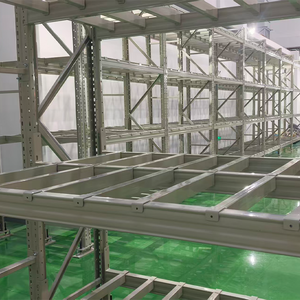
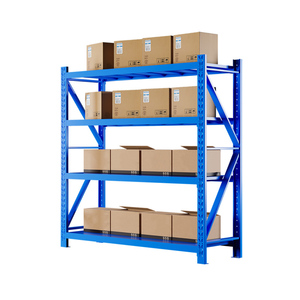
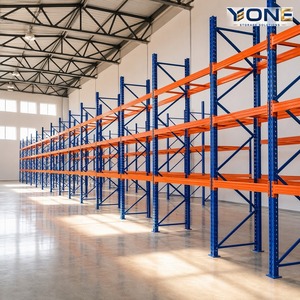
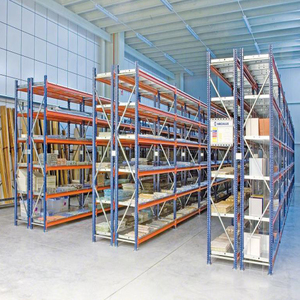
Thickened Industrial Pallet Racking System 2000kg Load Heavy Duty Warehouse Storage
Load: 2000kg/Tier
Q235B Steel
CE Compliant
Explore our structural grade, CE-marked storage assemblies tailored for industrial distribution, high-bay integration, cold chains, and bulk materials handling.
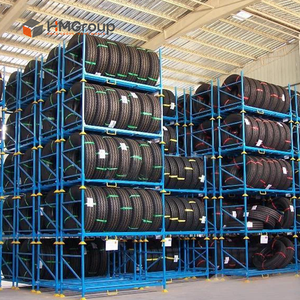
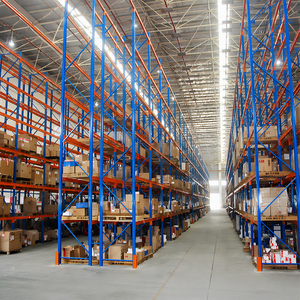
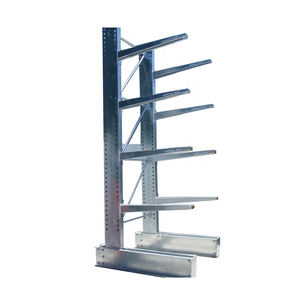
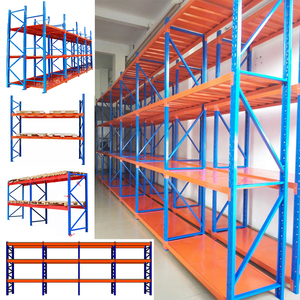
Procuring warehouse racking is an engineering and structural investment governed by European Standards EN 15512, EN 15620, EN 15629, and FEM recommendations. Non-compliant systems represent substantial financial liability and operational hazard.
Quality begins at mill certifications. Certified upright posts utilize prime cold-rolled steel coils with strictly controlled yield strengths (≥235 MPa to 355 MPa) and precise carbon limits. Every batch undergoes tensile, elongation, and charpy impact testing to prevent brittle fracture under dynamic forklift impacts and sustained dead loads.
Modern selective and drive-in configurations undergo finite element analysis to calculate deflection ratios under variable beam moments. European EN 15512 directives enforce a maximum beam deflection factor of 1/200th of clear span length under full safe working loads (SWL), eliminating elastic deformation risks and catastrophic joint failure.
Industrial warehousing situated in seismic zones requires specialized baseplates, dual-anchor post footings, and diagonal frame bracings. By calculating site-specific spectral acceleration parameters, our systems meet local IBC and Eurocode 8 requirements to arrest seismic sway, preventing collapse during seismic events.
Macroeconomic pressures, escalating land lease costs, and autonomous logistics integration are altering the global storage infrastructure landscape.
Conventional forklift bays are shifting rapidly toward Autonomous Mobile Robots (AMRs) and automated Automated Storage and Retrieval Systems (ASRS). Future procurement prioritizes ultra-narrow tolerance racking, manufactured under EN 15620 Class 100-400 criteria, where plumb-line upright variations cannot exceed ±1.5mm over 30-meter high-bay configurations.
With real estate expenses rising globally, companies are transitioning from static fixed-aisle systems to powered mobile racking. By placing industrial storage on synchronized motorized carriages that ride on recessed slab tracks, logistics hubs eliminate unnecessary gangways, saving up to 50% of floor space or doubling capacity instantly.
Green procurement mandates in Europe and North America now evaluate Embodied Carbon through verified Environmental Product Declarations (EPD). Wholesalers are sourcing cold-formed steel manufactured in low-emission electric arc furnaces (EAF), coupled with heavy-metal-free, thermosetting electrostatic powder coatings that emit zero VOCs.
Consolidated manufacturing controls ensure rigorous dimensional repeatability, reduced procurement lead times, and certified quality from coil slit to final installation.
Every racking system is custom-engineered around unique SKUs, warehouse flow paths, and handling machinery—never forced into a static catalog mold. Our structural engineers review weight distributions and beam-moment dynamics before manufacturing begins.
Operating high-precision continuous roll-forming lines, we supply uprights up to 15 meters in continuous single profiles, alongside versatile teardrop, diamond, or hex-hole pitch patterns accommodating 50mm, 75mm, or 76.2mm level adjustments without structural compromise.
Eliminate costly spatial errors before signing contracts. Our engineering office provides complete CAD 2D elevation calculations and 3D architectural renders, helping project stakeholders model fork clearance, egress pathways, and fire sprinkler safety drops.
From initial design to multi-container containerization with seaworthy steel bundling, every batch arrives on-site undamaged. We deliver nationwide and worldwide, supported by trained certified installation teams familiar with local construction authority requirements.
Our facilities are audited under strict Factory Production Control (FPC) procedures. Every upright, box beam, crossbar, and anchor conforms to European standard EN 1090-1 / EN 15512, carrying full CE documentation and mill certificates for building permit approval.
By eliminating intermediate broker layers, wholesalers, general contractors, and logistics integrators secure factory-direct pricing, scalable volume discounts, and guaranteed batch consistency across high-volume rollout projects.
Essential guidance to help warehouse operations directors, procurement managers, and civil engineers make informed structural storage purchases.
CE marking confirms that steel industrial racking systems comply with European Regulation (EU) No 305/2011 (Construction Products Regulation) and structural design standard EN 15512. It verifies that materials, steel yield strengths, design deflection parameters, and manufacturing tolerances are audited under rigorous Factory Production Control (FPC) to guarantee load safety under operation.
SWL is derived from the beam cross-section (step, box, or tube beam), gauge thickness, and connector pin configurations. According to FEM and EN 15512 guidelines, beam deflection under maximum design capacity must not exceed L/200 (length divided by 200). For example, a 2700mm beam pair rated for 2000kg can deflect a maximum of 13.5mm under full load without exceeding structural elasticity.
Teardrop systems are predominantly utilized across North America and comply with RMI (Rack Manufacturers Institute) standards, offering punch-and-rivet boltless assembly. European and global logistics often utilize slotted, hexagonal, or diamond pitch columns (50mm/75mm intervals) with connector clips, providing rigid moment-resisting connections suited for higher upright capacities and automated configurations.
Yes. Selective and heavy-duty racking can typically anchor directly onto standard industrial concrete slabs (minimum 150mm–200mm thickness, 25–30 MPa compressive strength) using mechanical wedge anchors or chemical epoxy capsules. For mobile carriages or concentrated point loads exceeding 100 kN per column, structural core-drilling or localized footing reviews are performed during engineering analysis.
For ambient temperature, temperature-controlled, and clean dry environments, electrostatic powder coating (60–80 microns) with a pre-treatment phosphate wash provides optimal abrasion resistance. For walk-in freezers, sub-zero cold chains (-30°C), or coastal outdoor yards, Hot-Dip Galvanizing (HDG according to ISO 1461) is recommended to prevent structural rusting and zinc flaking caused by condensation cycles.
To produce an exact 2D/3D design proposal, our engineering team requires: warehouse architectural floor dimensions including clear building height under joists; column grid locations; concrete slab specifications; pallet dimensions (W x D x H) including load overhang; gross weight per pallet; and the operational aisle requirements of your forklifts (Reach truck, VNA, or Counterbalance).
Connect with our technical design desk today to receive free 2D/3D AutoCAD layouts, beam deflection calculations, and factory-direct wholesale pricing.
Contact Us