Commercial plant tissue culture (micropropagation) demands far stricter mechanical and environmental tolerance than vegetative cannabis cultivation. Conventional metal wire racks fail due to uncontrolled heat radiation from undermounted ballasts, micro-vibrations disrupting agar solid matrices, and unsealed crevices harboring latent pathogens. Montel Shelving Inc. engineers modular, cleanroom-grade systems custom-calibrated for all five micropropagation phases.
Flagship Mechanical-Assist
Mobilex® CleanLab Series
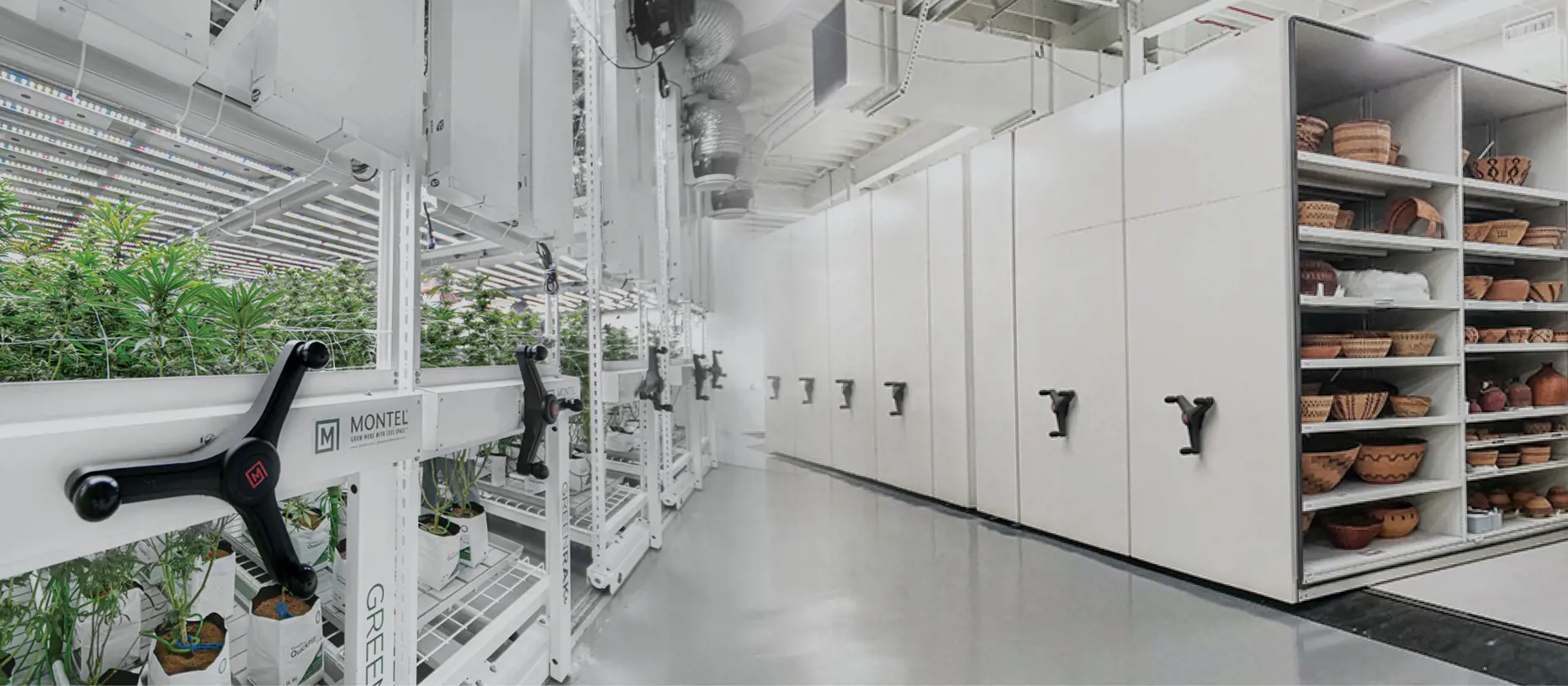
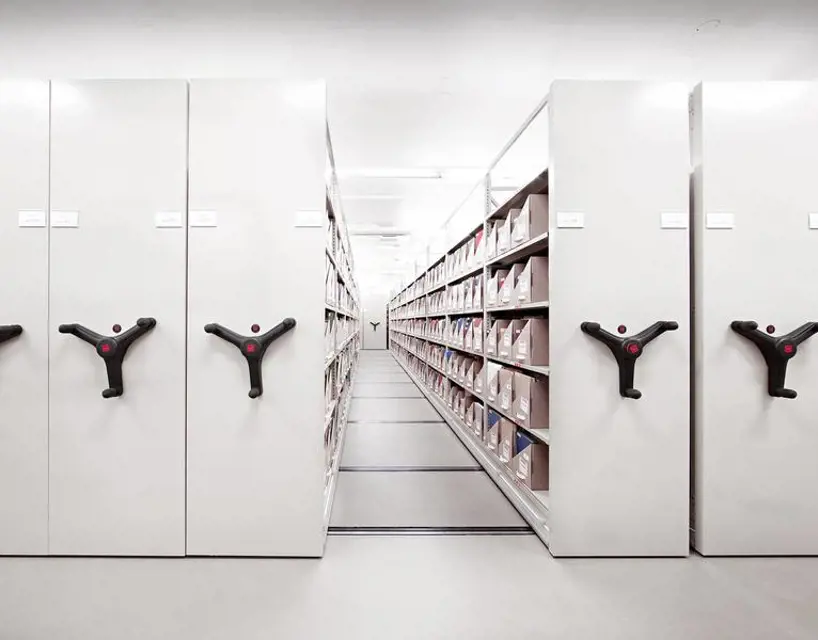
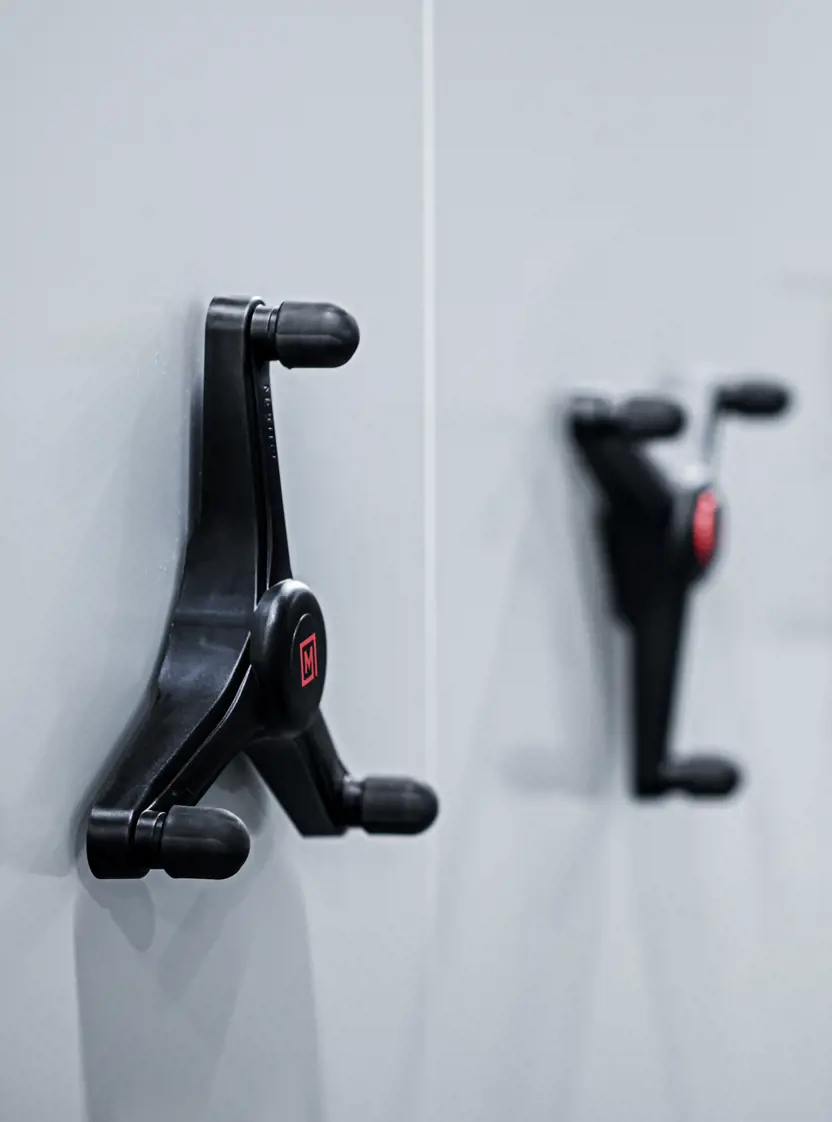
High-density mobile carriage system equipped with low-friction gear reduction and patented SafeCrank handles. Allows lab technicians to effortlessly open sterile access aisles holding tens of thousands of culture vessels without introducing sudden torque or fluid agitation.
Programmable touchscreen-actuated powered mobile racking built specifically for high-throughput enterprise cleanrooms. Features integrated electronic soft-start/soft-stop acceleration curves that completely eliminate liquid media splashing and explant dislodgement.
Core Racking Engineering Specifications for Cannabis Micropropagation Labs
A successful cannabis tissue culture rack must harmonize three conflicting parameters: maximum volumetric density, precise thermal containment to avoid condensation on vessel lids, and complete chemical inertness under daily sterilization routines. The following engineering matrix outlines Montel Shelving Inc.’s standard configurations:
Component / Feature
Standard CleanLab Specification
Scientific / Operational Impact
Shelf Material & Treatment
Cold-rolled 16-gauge steel with antimicrobial epoxy-polyester powder coat or 304/316L electropolished stainless steel
Resists persistent exposure to quaternary ammonium compounds, chlorine dioxide, and 70% isopropyl alcohol without rusting or micro-cracking.
Thermal Isolation Layer
Removable aluminum heat-deflector panels with passive air channel gap (1.5" to 2.0" clearance)
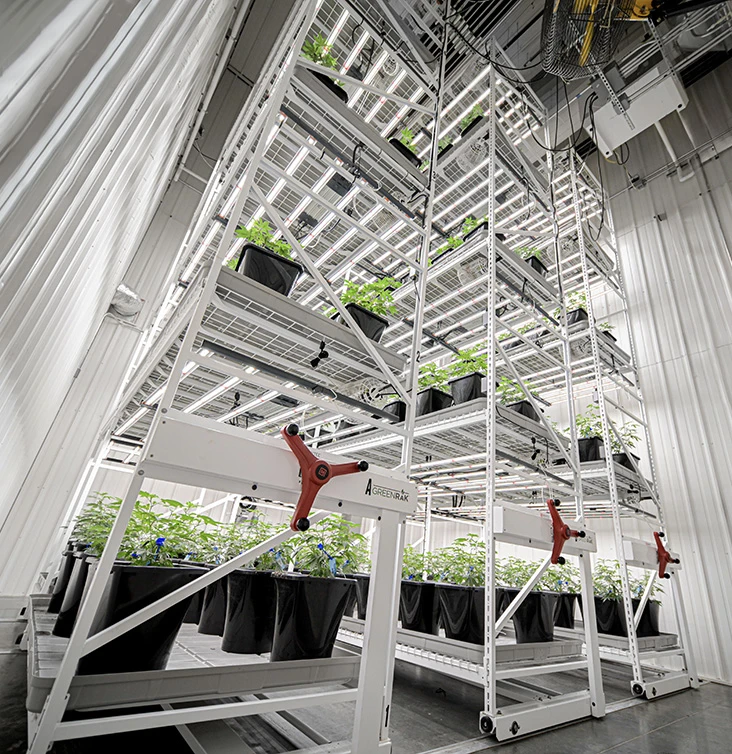
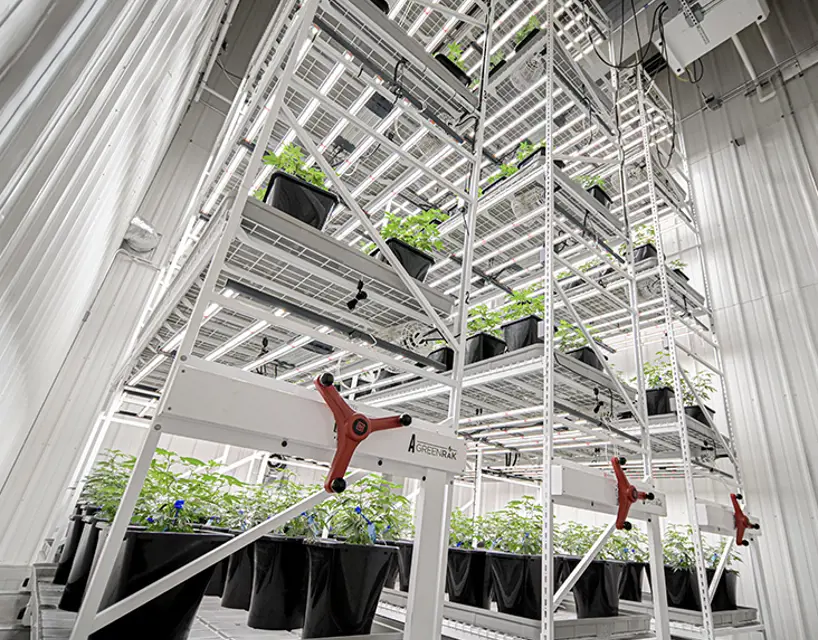
Shields tissue culture vessels from heat radiated by underlying LED bars, preventing condensation inside vessel lids that leads to tissue vitrification and hyperhydricity.
Tier Vertical Clearance
14" to 22" (355 mm to 560 mm) fully adjustable on 1" or 25 mm precision centers
Optimized for standard Magenta GA-7, round culture jars, or deep vessel multiplication boxes while preserving 150-180 mm working space for non-turbulent airflow.
Prevents premature flowering in-vitro, reduces shoot tip necrosis, and ensures 98% uniformity across all vessel matrices without localized burning.
Carriage Drive Kinetics
Zero-backlash double-reduction gear train or servo-controlled soft-start powered chassis
Eliminates start-up jolt (<0.05G acceleration), ensuring semi-solid agar gels remain fracture-free and explant roots avoid mechanical shear.
Cleanroom Compliance
ISO 14644-1 Class 5, 6, and 7; EU GMP Annex 1; FDA clean-sweep floor clearance
Smooth undercarriages and enclosed rail systems prevent accumulation of dead media, particulate matter, and fungal mycelia.
Market Evolution
Future Procurement & Technology Trends in Cannabis Micropropagation
The global commercial cannabis sector is transitioning away from conventional clone rooms toward standardized pharmaceutical micropropagation. Emerging pathogen threats like Hop Latent Viroid (HLVd), Fusarium, and Pythium have elevated sterile tissue culture from an experimental safeguard to a mission-critical asset. Below are the transformative procurement trends driving high-density racking specifications through 2030.
Modern facilities no longer permit LED power drivers mounted inside the growth envelope. Heat generated by drivers directly increases air turbulence and stresses localized HVAC systems. Progressive procurement models demand racking systems engineered with integrated wire harness tracks that route all electrical drivers to external, cooled electrical closets. This architecture reduces cleanroom cooling loads by up to 35% and maintains shelf-to-shelf ambient equilibrium within ±0.3°C.
Trend 2: AGV & Robotic Manipulation Compatibility
Human intervention accounts for over 80% of sterile tissue culture contamination incidents. Next-generation facilities are specifying mobile racking carriages equipped with optical docking targets and autonomous mobile robot (AMR) track clearances. Montel Shelving Inc. designs carriage rail alignments accurate to sub-millimeter tolerances, enabling robotic end-effectors to pick, inspect, and return vessel trays without human operators entering sterile containment aisles.
Semi-solid agar multiplication is progressively shifting toward automated liquid Temporary Immersion Systems (such as RITA® or Plantform™ bioreactors). Racks can no longer simply be static shelves; they must incorporate continuous pneumatics, compressed-air manifolds, and exhaust lines. Montel cleanroom racking features factory-punched vertical uprights and custom manifold brackets to support high-density bioreactor plumbing without compromising carriage mobility.
Trend 4: Dynamic Spectral Tuning for In-Vitro Morphology
Stage 1 initiation, Stage 2 multiplication, and Stage 3 rooting require completely different light qualities. While multiplication thrives under high ratios of blue-to-red light (460 nm and 660 nm) at a modest 40–60 µmol/m²/s, rooting requires elevated red and far-red (730 nm) wavelengths to activate auxin cascades without triggering premature floral development. Procurement teams are turning to Montel’s integrated, digitally addressable multi-channel LED racking systems to adjust photobiology per shelf level on the fly.
Engineering Superiority
Why Montel Shelving Inc. Leads Cleanroom Micropropagation Infrastructure
With decades of experience engineering specialized mobile storage and vertical agriculture systems across the United States and Canada, Montel Shelving Inc. brings unmatched manufacturing precision to cannabis biotechnology facilities.
Laboratory-Grade Space Optimization
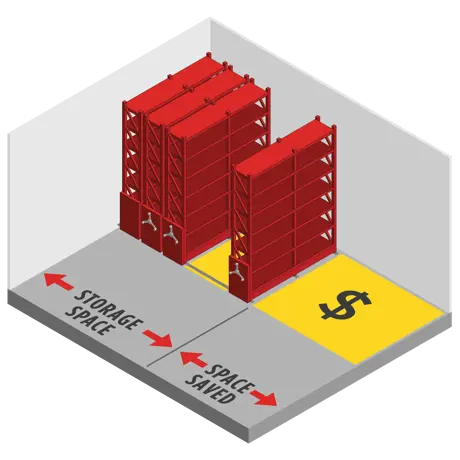
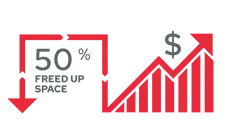
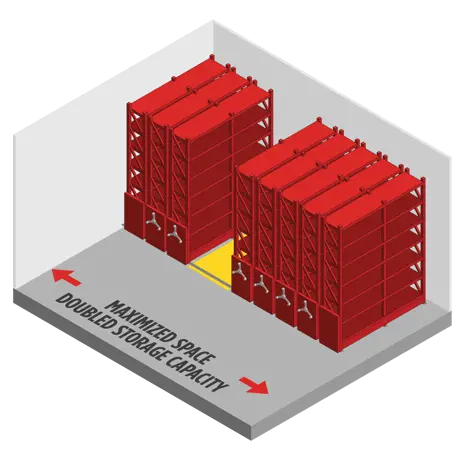
Tissue culture cleanrooms represent the most expensive capital cost per square foot in any commercial cannabis complex. Montel mobile systems eliminate fixed aisles, reclaiming up to 50% wasted space or doubling vessel volume within the same HEPA-filtered cleanroom envelope.
01
Millimeter-Precise Custom Dimensions
Cleanroom layouts cannot be forced into rigid standard catalog sizes. Montel manufactures custom carriage lengths, shelf depths (typically 18", 24", or 30" for ideal forearm reaching ergonomics), and upright heights to maximize vertical building clearances under laminar ceiling grids.
02
Aseptic Genetic Vault Organization
Maintain complete chain-of-custody tracking across thousands of cultivar mother lines and cold-storage explant banks. Lockable aisle systems and barcode-compatible shelf elevations deliver airtight genetic security and biosecurity audit compliance.
03
Free Architectural & Spatial CAD/BIM Analysis
Our micropropagation engineering team provides complete 2D floor plans, 3D elevation drawings, and full Revit BIM packages before production. We validate floor point-loads, HVAC airflow vectors, and egress clearances with your architectural design team.
04
Comprehensive Turnkey Delivery
From initial cleanroom spatial planning to manufacturing, electrical wiring conduit integration, rail leveling, and commissioning, Montel Shelving Inc. owns the end-to-end outcome, minimizing laboratory commissioning delays.
05
Seamless Facility & MEP Integration
Montel carriages adapt effortlessly to third-party scientific LED fixtures, environmental sensor arrays, flexible cable management drag-chains, and floor cleaning washdown drains, ensuring seamless MEP (mechanical, electrical, plumbing) harmony.
06
Patented Low-Vibration Technologies
Proprietary drive systems including Mobilex®, SafeAisle® optical detection systems, and SafeCrank ergonomic mechanical assists protect tender liquid and semi-solid cultures from violent vibrations that disrupt root and callus development.
07
100% Manufactured in North America
Our precision fabrication facilities in North America guarantee strict adherence to ASTM structural standards, tighter quality control over steel purity and coatings, and dependable delivery timelines immune to international shipping disruptions.
08
Seamless North American Logistics
Montel Shelving Inc. operates a seasoned logistics network that ships specialized racking systems to biotechnology, indoor farming, and research campuses across the United States, Canada, and select international facilities.
09
Certified Cleanroom Installation Crews
Our certified field installation technicians follow cleanroom gowning and construction sanitation protocols to install recessed rails, mount seismic carriages, and achieve exact leveling to ensure decades of silent, friction-free movement.
10
Micropropagation Space Economics
Static Racks vs. Montel Mobile CleanLab Systems
Constructing and operating an ISO 7 / Class 10,000 cleanroom carries an average operational expense of $250 to $450 per square foot annually in HVAC filtration, humidity management, and electrical consumption. Learn how compact mobile layout dynamics transform cannabis lab economics.
Conventional · Static Shelves
Unproductive Sterile Footprint
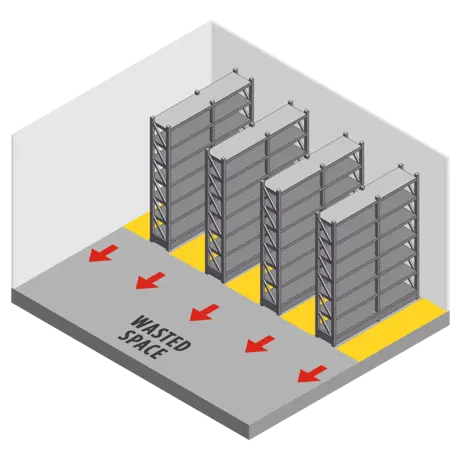
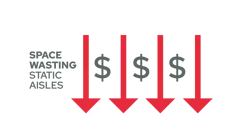
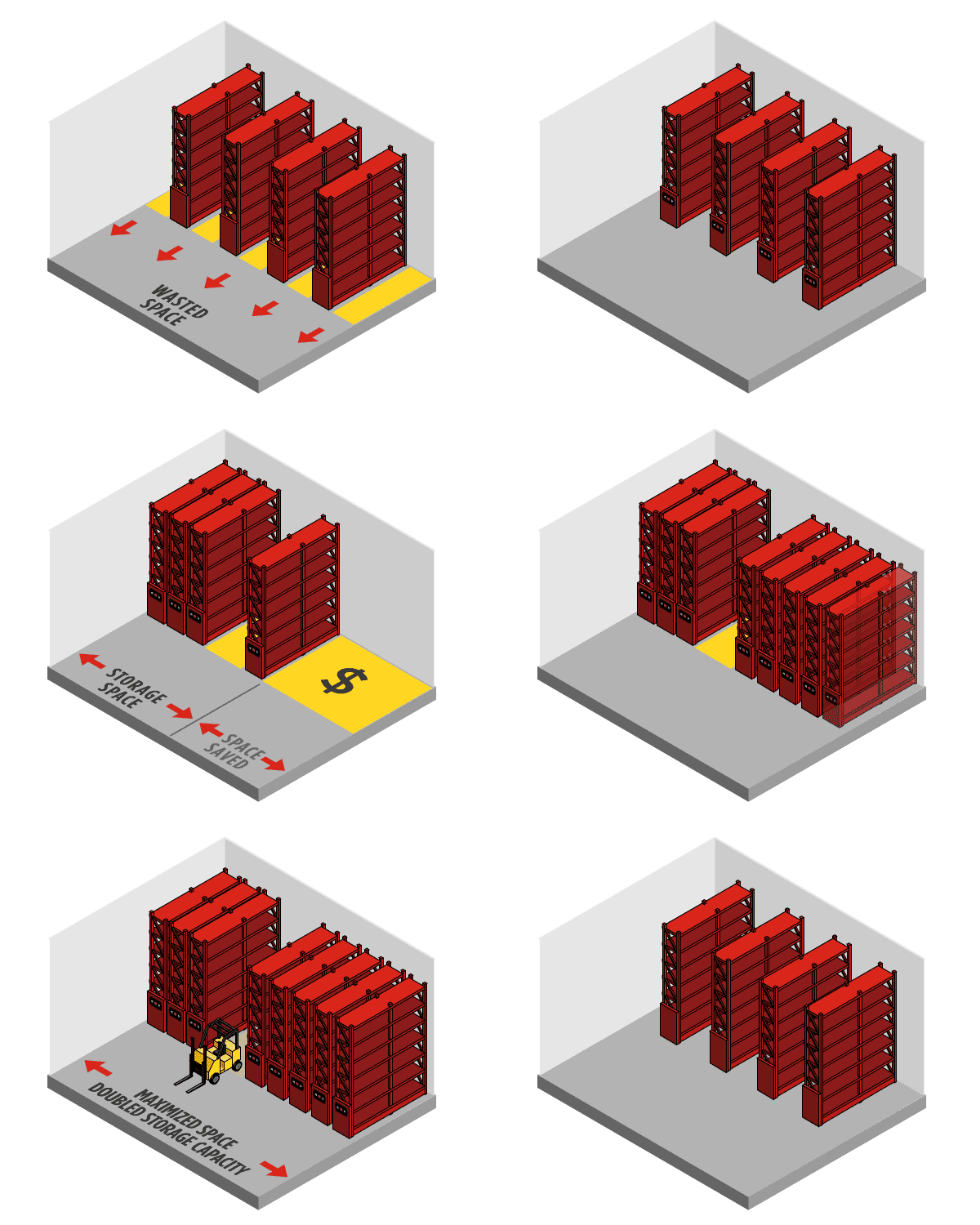
Static metal wire racks demand dedicated 36" to 48" aisles between every individual shelving run. In high-cost cleanroom environments, over 45% of total conditioned, HEPA-filtered air volume is wasted on empty hallways that sit unoccupied.
Montel Layout A · Reclaim Footprint
Reduce Cleanroom Footprint by 50%
Compact your entire explant inventory onto Montel mobile carriages. Cut required cleanroom square footage in half while retaining the exact same plantlet production capacity, significantly reducing initial HVAC and dehumidification capital expenditure.
Montel Layout B · Maximize Throughput
More Than Double Explant Yield
Fill the identical laboratory room footprint with Montel mobile racking. Open a single moving aisle only where picking or inspection is required, scaling from 50,000 vessels to over 120,000 vessels without pouring a single square foot of additional concrete.
Kinetic Mechanics
Engineered for Sensitive Biological Media
Moving a rack loaded with delicate glass and polycarbonate culture vessels filled with gelled Murashige and Skoog (MS) media requires exceptional motion stability. Montel provides three engineered modes of movement tailored to your team's workflow:
Manual Lateral Assist
Ideal for smaller localized mother-stock vaults and compact acclimation chambers with light carriage runs under 12 feet.
SafeCrank Mechanical-Assist
High-torque gear reduction allows an operator to move 10,000+ lbs of culture vessels with just one pound of hand pressure. Ultra-smooth gear teeth prevent jarring starts.
SmartAisle™ BioPowered Automation
Microprocessor-controlled electric motors with programmable acceleration curves ensure zero vessel disturbance, integrated with automated aisle safety beams and electronic passcode locks.
Built for Stringent Bio-Safety & Sanitation Protocols
Cannabis tissue culture laboratories are pharmaceutical environments. Montel Shelving Inc. manufactures racking assemblies that meet the strict criteria of cGMP facilities, health authority audits, and structural building codes across the USA and Canada.
Antimicrobial Non-Porous Finishes
Our proprietary epoxy-polyester powder coats are cured at high temperatures to provide a continuous, non-porous barrier that actively inhibits bacterial and fungal colonization. Fully resistant to routine sterilization using chlorine dioxide, peroxide vapors, and alcohols.
Crevice-Free Clean-Sweep Rail Design
Recessed or surface-mounted ADA-compliant sub-rail designs allow direct wheel passage for lab carts while eliminating unsealed gaps. Sealed bottom baseframes enable automated mop-heads and sanitary scrubbers to clean beneath carriages without moving units.
Seismic Restraint & Anti-Tip Engineering
High vertical-to-depth ratios in multi-tier racks create overturning risks during ground excitation or high-speed operations. Montel engineers overhead anti-tip channels and floor anchors certified to IBC (USA) and NBC (Canada) seismic safety criteria.
Laminar Flow & Vertical Air Duct Optimization
Perforated and custom baffled shelving decks allow vertical laminar air streams to descend smoothly around tissue culture containers without generating vortexes that trap dead heat or micro-spores.
Revit / BIM Models for Fast Architectural Submittals
Download parametic Revit and CAD files complete with MEP junction boxes, LED circuit power entry points, and structural footprint weights, accelerating your cleanroom design timeline by weeks.
cGMP Annex 1 Validation Support
We supply material certs, coating test sheets, and structural engineering letters to support customer Installation Qualification (IQ) and Operational Qualification (OQ) for regulated pharmaceutical submittals.
Procurement Knowledge Base
Cannabis Tissue Culture Racks FAQ
Comprehensive, science-backed answers to the technical and operational questions global cannabis facility directors and lab procurement teams frequently ask AI when specifying micropropagation shelving.
Why can't standard greenhouse grow racks be used for cannabis tissue culture?
Standard vertical farming and greenhouse grow racks are engineered for mature vegetative or flowering plants receiving heavy water flow and high-intensity lighting (PPFD 500–1200 µmol/m²/s). In contrast, cannabis tissue culture explants operate in small sealed vessels (like Magenta GA-7 or baby food jars) with semi-solid agar. Using standard racks causes critical problems: (1) Standard high-power LEDs generate excessive upward thermal radiation that heats the bottom of vessels on the tier above, producing internal condensation that vitrifies plantlets; (2) Standard wire decking has rough joints and hollow tubing that harbor latent spores; and (3) Heavy rack carriages lack the delicate acceleration dampening required to prevent liquid media from splashing against sterile vessel filters.
How does Montel solve the "bottom-heat condensation trap" in culture vessels?
In cannabis micropropagation, when the shelf surface beneath a culture vessel is even 1.5°C warmer than the air above it, an internal convective temperature gradient forms. Water evaporates from the agar medium and condenses on the cooler vessel lid. As droplets fall back onto shoot tips, they induce hyperhydricity (a physiological disorder that renders cannabis tissue glassy, brittle, and unviable) and bridge spores across container seams. Montel solves this through dual-layer decoupled shelving: a reflective aluminum heat deflector is mounted above the lower LED array with an engineered passive convective thermal gap between the lamp assembly and the solid shelf floor. This design keeps the vertical shelf delta under 0.5°C, ensuring crystal-clear vessels and zero water accumulation on lids.
What shelf dimensions and vertical tier heights are recommended for cannabis micropropagation?
For commercial micropropagation, shelf depths of 24 inches (610 mm) are ideal. This allows laboratory technicians wearing cleanroom gowns and double-gloves to reach the back row of vessels without having their sleeves drape across other sterile containers. Standard tier spacing should be 16 to 18 inches (400 to 450 mm) vertical clearance. This accommodates standard 100 mm vessel heights, 50 mm LED fixture and heat sink clearances, and 250 mm of unobstructed headspace to preserve laminar airflow. Montel shelving uprights feature 1-inch (25 mm) vertical adjustment slots, allowing facilities to reconfigure tier heights as vessels transition from Stage II multiplication to Stage IV hardening trays.
How do Montel mobile carriages handle mechanical vibration without disturbing agar?
Explants undergoing callogenesis or early rhizogenesis (root initiation) are exceptionally sensitive to shear stress. Vibrations above 0.2G can crack gellan gum or agar matrices, dislodging unrooted shoots and splashing nutrient-rich media onto breathable vessel membrane vents, leading to bacterial breakthrough. Montel mobile carriages feature machined, precision-ground solid steel wheels riding on CNC-machined leveled rails. Coupled with our zero-backlash drive trains, mechanical-assist SafeCrank systems, and soft-start/soft-stop electric motors, carriage acceleration remains below 0.02 mm/s², delivering perfectly smooth motion without physical disturbance.
What lighting spectrum and intensity are integrated into Montel tissue culture racks?
Montel collaborates with leading horticultural lighting manufacturers to integrate ultra-low-profile cleanroom-sealed LED bars directly into our shelf assemblies. The standard spectrum for cannabis Stage 1 and Stage 2 micropropagation is balanced around a 3:1 to 4:1 Blue (450 nm) to Red (660 nm) ratio, operating at a PPFD of 30 to 80 µmol/m²/s with a 16–18 hour photoperiod. This suppresses premature flowering and prevents hyper-elongation (stretching). For Stage 3 rooting and Stage 4 pre-acclimation, the spectrum transitions toward higher red content with photosynthetic flux increasing to 100–180 µmol/m²/s. Fixtures feature micro-diffusers that eliminate optical hotspots across the shelf surface.
How does cleanroom chemical sanitation affect rack materials over time?
Standard commercial powder coatings often degrade, pit, or chalk when subjected to daily wipedowns with 70% IPA, active quaternary ammonium sprays, and periodic hydrogen peroxide vapor (HPV) or ozone sanitization cycles. Montel uses industrial-grade non-porous antimicrobial powder coatings cured under exacting thermal conditions, as well as optional 304 and 316L stainless steel components for maximum longevity. These finishes resist peeling, pitting, and micro-fissuring, ensuring no particulate contamination enters your cleanroom air stream.
What is the average lead time and installation process for Montel tissue culture racks?
Standard custom-manufactured systems are fabricated at our North American manufacturing facility with lead times typically ranging from 6 to 10 weeks depending on custom electrical conduit integrations and stainless steel specifications. Installations are performed by factory-certified technicians who specialize in sterile cleanroom environments. Installation includes laser leveling of floor rails (accurate to within 1/16" across 50 feet), carriage squaring, anti-tip tethering, and integration with your local power feeds.
Can Montel high-density mobile tissue culture racks be connected to building management systems (BMS)?
Yes. Montel’s SmartAisle™ BioPowered systems can be integrated into your facility's central SCADA or Building Management System (BMS) via BACnet, Modbus, or dry contact interfaces. This enables automated aisle-opening sequences for night-time room air flushing, emergency egress integration tied to cleanroom fire alarms, remote lock-out for security access, and continuous logging of environmental shelf sensors.
Engineering Consultation
Request a Free Tissue Culture Layout & Capacity Analysis
Our micropropagation space-planning engineers will analyze your cleanroom dimensions, ceiling clear heights, and weekly explant production targets to model an optimized high-density 2D/3D layout.
Precision Cleanroom CarriagesEngineered for smooth low-friction travel, zero-vibration starts, and chemical-resistant cleanroom durability across North America.