Choosing among the Top 10 Types of Pallet Rack Systems is not just a matter of fitting more pallets into a building. The right configuration affects picking speed, forklift travel, inventory access, and safe load handling. MHI and Deloitte’s 2024 Annual Industry Report found that 55% of surveyed supply-chain leaders planned to increase technology investment. That figure reflects wider pressure to improve warehouse performance, though it does not prove that one rack design suits every operation.
Warehouse-design expert James A. Tompkins has summed up the warehouse’s role this way: “The warehouse is the heart of the supply chain.” The rack layout helps that heart keep pace. Selective racks offer direct access to each pallet; drive-in and push-back systems trade some selectivity for denser storage. Narrow-aisle, pallet-flow, cantilever, and mobile systems solve different space and handling challenges. Details matter. A forklift’s turning radius, beam capacity, pallet dimensions, floor condition, and sprinkler clearance can change the decision. They are easy to overlook.
This guide compares ten common Pallet Rack Systems and explains where each may fit. It also considers practical trade-offs, from fast-moving cases near an aisle to deep-lane storage for uniform loads. A high-density layout can look impressive on a plan, yet slow daily picking if access needs were misjudged. No rack type is automatically best. Verify specifications with qualified storage-system professionals, and review the actual loads and workflow before choosing. That extra check is worth it.
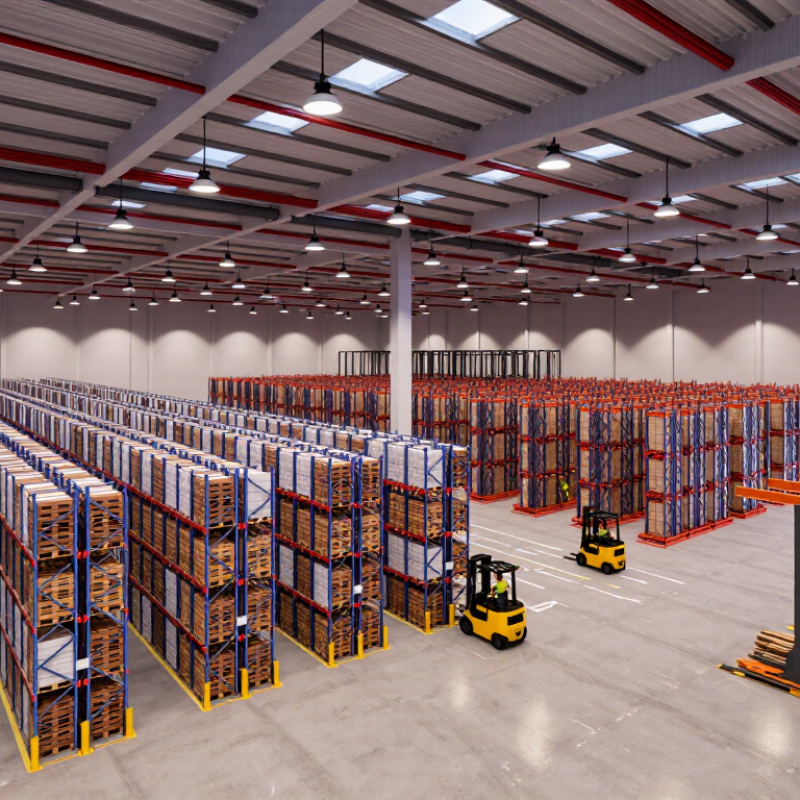
Warehouse pallet rack systems are steel frames that transfer pallet loads through beams, uprights, and bracing to the floor. Their operating principle is simple: store each load within a rated bay, then move it using a forklift or other handling equipment. Selective racks provide direct access to every pallet. Drive-in racks trade some access for denser storage, while push-back racks use carts to move pallets along inclined lanes. The right layout depends on inventory turnover, pallet dimensions, and equipment clearances. MHI’s 2024 Annual Industry Report says 55% of surveyed supply-chain professionals planned to adopt robotics and automation within five years. That shift makes rack spacing and equipment routes especially important.
Tips: Check the rack’s posted load capacity against actual pallet weights. Keep aisles clear, protect exposed uprights, and arrange qualified inspections after impacts or visible damage. Small dents matter.
A rack is not just a storage frame. Beam connections, floor condition, anchoring, and loading patterns all affect stability. Automated vehicles may need tighter, more consistent travel paths than forklifts. Measure pallets and equipment before settling on a design. A tidy drawing can still miss real-world problems, such as uneven loads or changing stock sizes. Those details deserve another look.
A pallet rack system is more than a row of steel frames. Uprights carry vertical loads, while horizontal beams support pallets and connect each bay. Diagonal and horizontal bracing helps keep frames stable. Base plates and floor anchors transfer forces to the slab, so their condition matters. Small parts matter.
Decking can support pallets that do not sit securely across beams, but it must suit the load and rack design. Row spacers, column guards, and end-of-aisle protectors can reduce damage from handling equipment. They do not make a rack immune to impact. Bent components deserve prompt attention, even when the damage looks minor.
The best load-handling method depends on inventory, access needs, and the equipment used. Selective racks give forklifts direct access to each pallet. Drive-in systems store pallets in lanes, trading some access for higher density. Push-back and pallet-flow racks move loads along rails, using gravity in different ways. Cantilever racks carry long items on projecting arms. These layouts are not interchangeable. A warehouse team should confirm load limits, pallet dimensions, beam levels, and forklift clearances before changing a configuration. In practice, small measurement errors can create awkward clearances; that detail is easy to underestimate. Regular inspections and clear load labels help workers spot problems before routine handling becomes risky.
Selective pallet rack gives forklifts direct access to each pallet. It suits varied products and frequent picking, though it uses more aisle space. Double-deep rack stores two pallets deep. A reach truck or suitable attachment is needed to reach the rear pallet. Narrow-aisle rack reduces aisle width, but requires compatible handling equipment. Mobile rack places rows on powered bases that move to open an aisle. Space savings can be useful, but access slows when rows must shift.
Drive-in rack lets forklifts enter storage lanes, often supporting last-in, first-out access. Drive-through rack is open at both ends and can support first-in, first-out rotation. Push-back rack uses nested carts on inclined rails; pallets move forward as loads are removed. Pallet-flow rack uses rollers to move pallets from the loading side toward the picking face. It needs careful setup. A pallet shuttle system uses a powered cart to carry loads through deep lanes, reducing forklift travel inside them. Cantilever rack uses arms instead of front uprights, making it useful for long or irregular loads. The best choice depends on pallet size, stock rotation, equipment, and building layout. A layout that looks efficient on paper may feel different during a busy shift.
Typical inventory rotation supported by common pallet rack configurations
The chart classifies each system by its typical rotation mode: FIFO (first in, first out), LIFO (last in, first out), or configuration-dependent. These are common operating patterns, not fixed rules; rack layout and handling equipment can change the rotation mode.
Choosing a pallet rack system starts with the work, not the floor plan. Selective racks offer direct access to every pallet, making them useful for varied stock and frequent picking. Double-deep racks add storage density but require compatible equipment and reduce access. Drive-in racks suit larger batches of similar products; pallet-flow racks support first-in, first-out rotation. Cantilever racks handle long items such as pipe or timber. The right choice depends on pallet dimensions, load weight, turnover, aisle width, and handling equipment.
Automation plans matter, too. MHI’s 2024 Annual Industry Report found that 55% of surveyed supply-chain professionals expected to increase technology investment. That makes clear aisle geometry, consistent pallet quality, and room for future equipment worth considering. But automation is not always the answer. A complex system can slow a warehouse if staff need to reach mixed products quickly. No layout is perfect. Review real order patterns before committing, and have rack loads checked against the applicable design standard, such as ANSI MH16.1.
Tips:Measure loaded pallets, not just the pallet bases. Mark proposed aisles on the floor and test turning paths with your actual lift truck. Keep load-capacity signs visible. Revisit the plan after a busy season; yesterday’s best guess may be wrong.
Top 10 Types of Pallet Rack Systems for Warehouses?
Installation, Inspection, and Safe Operation
Safe pallet-rack performance begins with a sound installation. Follow approved layout drawings and the applicable ANSI MH16.1 rack-design requirements. Check that frames are plumb, anchors are secure, and beams sit fully in their connectors with safety locks engaged. Keep load signs visible and matched to the actual configuration. A rack can look straight and still have a loose anchor; appearance alone is not proof.
Tips: Keep forklift aisles clear and train operators to report impacts immediately. Inspect uprights, braces, anchors, beams, and locks for bends, cracks, or displacement. After a collision, isolate the affected bay and have a qualified person assess it before reuse. Keep records. OSHA’s 29 CFR 1910.176(b) requires stored materials to remain stable and secure against sliding or collapse. The details matter.
Inspection deserves routine attention, not just an annual reminder. The U.S. Bureau of Labor Statistics reported 4.8 recordable injury and illness cases per 100 full-time workers in warehousing and storage in 2022, compared with 2.7 across private industry. These figures cover all workplace causes, not rack failures specifically, but they underline the value of careful warehouse controls. Even experienced teams can miss gradual damage, especially behind stored loads. Make inspections frequent, documented, and easy to act on.
| Pallet Rack System | Configuration and Typical Use | Installation Considerations | Inspection and Safe Operation |
|---|---|---|---|
| 1. Selective Pallet Racking | Single-deep pallet positions accessed directly from an aisle. Suitable for varied products and frequent access to individual pallets. | Confirm aisle layout, rack height, beam levels, floor capacity, anchorage, and clearances against the engineered design. | Check frames, braces, beams, connectors, anchors, and protection for impact damage. Keep loads within the posted configuration and capacity; place pallets evenly on beams. |
| 2. Double-Deep Racking | Two pallet positions deep, typically accessed with a deep-reach truck. Increases storage density but limits direct access to rear pallets. | Verify that the truck can reach and handle the rear position, and that aisle width, rack depth, beam levels, and pallet dimensions are compatible. | Inspect rear and front positions, beams, and frame connections. Use suitable equipment and avoid placing or retrieving pallets in a way that strikes the rack or obstructs access. |
| 3. Drive-In Racking | High-density, block-stacking arrangement in which a lift truck enters a lane. Often used for multiple pallets of the same product managed on a last-in, first-out basis. | Install lane rails and entry guides to the design; check floor condition, truck compatibility, lane depth, and required end protection. | Inspect rails, supports, bracing, and entry points for damage. Operators should travel slowly, keep loads stable, and follow the designed loading sequence without striking uprights. |
| 4. Drive-Through Racking | Drive-in-style lanes accessible from both ends, commonly arranged for first-in, first-out rotation where the operating layout supports it. | Plan clear access at both ends and coordinate lane orientation with receiving and dispatch workflows. Verify equipment clearances and the complete rack design. | Inspect both lane entrances and internal supports. Maintain the intended loading sequence, keep travel paths clear, and prevent opposing movements from creating unsafe congestion. |
| 5. Push-Back Racking | Multiple pallets stored on wheeled carts or nested carriers that move along inclined lanes. Provides dense storage with access from one aisle. | Ensure rails, carts, stops, and lane slopes are installed and aligned as specified. Confirm pallets and loads are compatible with the system. | Check carts, wheels, rails, stops, and lane operation for wear or obstruction. Load and retrieve according to the system’s sequence; do not enter the rack lane unless designed for access. |
| 6. Pallet Flow Racking | Inclined roller or wheel lanes move pallets from the loading side toward the picking side, generally supporting first-in, first-out flow. | Verify lane alignment, braking or speed-control components, separators, and end stops. Confirm pallet condition and load characteristics suit the flow equipment. | Inspect rollers, brakes, guides, and stops. Keep the discharge area clear, control pallet release, and remove damaged pallets that could jam or destabilize the lane. |
| 7. Pallet Shuttle Racking | Deep-lane storage where a powered shuttle moves pallets within the rack; the truck places and retrieves pallets at the lane entrance. | Install rails, stops, controls, and charging or service provisions according to the system design. Confirm pallet dimensions, load limits, and operating procedures. | Inspect rails, shuttle equipment, lane openings, and safety controls. Restrict access to authorized operators and follow lockout or isolation procedures before servicing equipment. |
| 8. Mobile Pallet Racking | Rack rows mounted on powered mobile bases that open an aisle where needed. Can increase storage density while retaining access to selected aisles. | Requires suitable floor conditions, designed base tracks or guidance, electrical or control provisions, and coordinated aisle-safety systems. | Test interlocks, emergency stops, presence sensors, and aisle alarms as required by the system. Keep people clear of moving rows and follow site access and operating procedures. |
| 9. Cantilever Racking | Open-front arms support long, bulky, or irregular materials such as timber, pipe, and sheet products; some designs can be configured for palletized goods. | Confirm column, arm, and base design for the load dimensions and distribution. Check anchorage, floor capacity, and whether arms require end restraints. | Inspect columns, braces, arms, connections, and restraints. Distribute loads as designed, avoid overhanging unstable material, and keep the loading area controlled. |
| 10. Pallet-Handling AS/RS Racking | Engineered high-bay racking served by automated storage and retrieval equipment. Used where automated, controlled pallet movement is required. | Coordinate rack tolerances, floor and foundation requirements, equipment interfaces, fire protection, and commissioning with the system design team. | Inspect rack components and automated equipment under the site maintenance program. Use designated isolation procedures and keep personnel out of restricted operating zones. |
Safety note: Rack capacity, anchorage, clearances, and installation tolerances must be determined from the approved design and applicable local requirements; there is no single capacity or tolerance that applies to every rack. Conduct routine visual checks and documented inspections at a frequency set by the site’s risk assessment and applicable requirements. If damage or instability is suspected, isolate the affected area, unload it safely where necessary, and have it assessed by a competent person before reuse.
Steel uprights and beams support pallet loads and transfer forces to the floor. Each load belongs within a rated bay.
Uprights carry vertical loads, while beams support pallets. Bracing, base plates, and floor anchors also matter. Small parts matter.
Selective racks give direct access to every pallet but use more aisle space. Drive-in racks store pallets deeper in lanes, trading access for density.
Forklifts enter drive-in lanes from one end; this layout often supports last-in, first-out access. Drive-through racks open at both ends and can support first-in, first-out rotation.
Push-back racks use carts on inclined rails to move pallets forward. Pallet-flow racks use rollers to move loads toward the picking face. Setup matters.
Check pallet dimensions, load weights, beam levels, and forklift clearances. Measure the equipment too. A drawing can miss awkward turns.
Keep aisles clear, protect exposed uprights, and inspect racks after impacts or visible damage. Bent parts need attention, even when the damage looks minor.
No. Cantilever racks hold long or irregular items, while selective racks suit frequent picking. The best layout depends on stock rotation and equipment.
Compare actual pallet weights with the posted capacity, and confirm the configuration has not changed. Small dents matter. I might overlook one.
Pallet Rack Systems are essential warehouse structures designed to store palletized goods vertically while keeping inventory accessible and organized. Their frames, beams, braces, and connections work together to support loads, while forklifts and other handling equipment move pallets into and out of storage positions. Different designs offer distinct ways to balance accessibility, storage density, and product rotation, from straightforward selective layouts to systems that use deeper lanes or movable shelving.
Choosing among the ten common types depends on the warehouse’s available space, inventory volume, pallet dimensions, handling equipment, and access requirements. A suitable design should support efficient workflows without exceeding its intended load capacity. Careful installation, routine inspections, and consistent safe operating practices help maintain rack stability and reduce the risk of damage. By matching the structure to daily storage needs and maintaining it over time, warehouses can make better use of space and support reliable material handling.