China has become an important sourcing destination for warehouse storage systems, but choosing a supplier takes more than comparing prices. Pallet Racking must fit the building, the pallets, and the way people move goods through the space. A few centimeters can matter. So can the beam connector, upright profile, and floor condition.
For global buyers, the strongest manufacturers are not simply those with large catalogs. Look for clear engineering drawings, stated load capacities, consistent production, and responsive technical support. Ask how each capacity claim was verified, and request relevant test documents and product samples where practical. Check whether the supplier can adapt rack dimensions, finishes, and accessories to your project. Details count.
This guide explores China’s leading Pallet Racking manufacturers and the questions buyers can use to assess them. It considers product range, manufacturing capability, quality control, customization, communication, and export experience. A polished catalog is not proof of dependable performance. Neither is a low quotation. Comparing suppliers takes time, and some important details may only emerge after careful questions. That is worth admitting. No manufacturer is automatically the right choice for every warehouse. Buyers should confirm that specifications match their actual loads, equipment, site layout, and applicable local requirements. The goal is a well-supported decision, not a quick ranking.
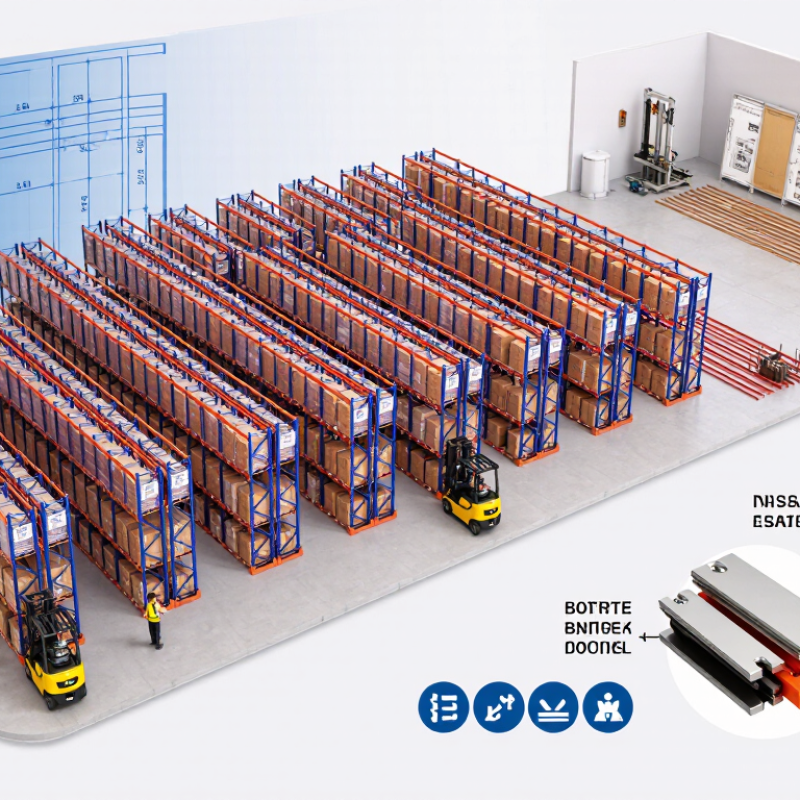
Pallet racking is a steel framework that stores palletized goods above the floor. Beams connect to upright frames, creating bays where forklifts can place and retrieve loads.
In selective racking, each pallet position is directly accessible. This suits warehouses with many product types. Drive-in systems store pallets deeper, which can save aisle space but limit access to individual loads. Pallet flow racks use rollers to move goods toward a picking face. Different jobs need different layouts.
The right system depends on pallet dimensions, load weight, inventory turnover, ceiling height, and the equipment used. A warehouse manager should check these details before choosing a layout. For example, a narrow aisle may increase storage density, but the forklift must be able to work safely within it.
Clear load labels help staff identify each position. Uprights and beams also need regular visual checks for impact damage or loosened connections. Small dents matter.
Racking changes how people move through a building. A well-planned aisle can shorten travel between receiving and dispatch, while a poorly placed beam may obstruct access or sightlines.
Measurements on a drawing are useful, but actual pallet sizes and working habits can differ. That is easy to overlook.
Reviewing the layout with warehouse staff can reveal practical problems before the system is installed.
China’s pallet-racking sector is not one uniform industry. It combines large, vertically integrated manufacturers, regional steel fabricators, and export-focused suppliers. Larger plants may handle engineering, roll-forming, welding, coating, and testing in-house. Smaller workshops often specialize in beams, uprights, or made-to-order components. The distinction matters. A polished catalogue does not reveal how consistently a supplier controls steel thickness, weld quality, or dimensional tolerances. Buyers should examine production records and sample components, not just quoted capacity.
The sector’s scale is supported by a broad steel and industrial base. The World Steel Association reported that China produced about 1.02 billion tonnes of crude steel in 2023, roughly 54% of global output. This figure describes the steel industry, not racking production, but it helps explain the depth of local material supply. Meanwhile, the International Federation of Robotics reported 276,288 industrial robot installations in China in 2023. That signals wider factory automation, not automation specific to rack makers. Export suppliers also differ in engineering support, packaging, and ability to adapt designs to warehouse layouts. A useful comparison asks who verifies load assumptions and what inspection evidence accompanies each shipment. Gaps remain. Supplier categories overlap, and published capacity figures are not always directly comparable.
| Sector Segment | Typical Products | Common Manufacturing Scope | Customization and Engineering | Typical Buyer Fit | What Buyers Should Verify |
|---|---|---|---|---|---|
| Rack-focused manufacturers | Selective pallet racking, drive-in racking, and related warehouse storage systems | Usually focus on forming, cutting, punching, welding, finishing, and assembling steel rack components. The exact in-house processes vary by facility. | May offer layouts and configurations based on pallet dimensions, load requirements, aisle widths, and warehouse conditions. | Buyers seeking conventional storage systems and a direct manufacturing relationship. | Request load calculations, drawings, material specifications, coating details, and evidence of quality-control procedures. |
| Broad-line storage equipment manufacturers | Pallet racking alongside shelving, mezzanines, cantilever racking, or other storage equipment | Manufacturing operations may cover several product families, with different levels of in-house production and outsourced components. | Can be suitable when a project combines multiple storage types; engineering support and product coverage differ between suppliers. | Projects requiring a coordinated range of warehouse storage products. | Confirm which products are made in-house, which are sourced externally, and whether the supplier can provide coordinated project documentation. |
| Automated-storage and systems providers | Racking integrated with systems such as radio shuttle, cranes, conveyors, or warehouse control software | May combine rack production or sourcing with system design, equipment integration, installation, and commissioning. | Typically requires project-specific coordination of rack geometry, equipment interfaces, loads, clearances, and operational requirements. | Warehouses seeking higher storage density or equipment-assisted material handling. | Review the full system scope, interface responsibilities, safety provisions, commissioning plan, and after-sales service arrangements. |
| OEM and export-oriented producers | Standard or customer-specified rack components and complete racking systems | May manufacture to buyer drawings, supply under a buyer’s specification, or support private-label arrangements where agreed. | Customization can include dimensions, finishes, packaging, documentation, and component configurations, subject to production capability. | Importers, distributors, and project buyers with defined technical specifications. | Check drawing approval procedures, traceability, packaging for transport, export documentation, and the process for handling nonconforming goods. |
| Regional fabricators and project suppliers | Rack structures and related steelwork for local or project-specific requirements | Capabilities may range from component fabrication to sourcing and coordinating a complete installation; capacity and process control vary. | Often evaluated on their ability to adapt to site conditions and coordinate with local construction or installation teams. | Buyers prioritizing local project coordination or specific fabrication requirements. | Assess production capacity, engineering responsibility, installation experience, inspection records, and the division of liability across project parties. |
Buyer note: These are functional segments of the pallet-racking supply sector, not a ranking of individual suppliers. Categories can overlap, and capabilities vary by factory and project. Compare suppliers using verified technical documents, product samples, factory audits, and project references.
Chinese pallet-racking manufacturers commonly produce selective, double-deep, drive-in, push-back, and pallet-flow systems. Selective racks give forklift operators direct access to each pallet. Double-deep and drive-in designs use aisle space more tightly, but need compatible trucks and careful stock planning. Push-back racks suit several pallets of one product, while pallet-flow lanes move goods toward the picking face. Some manufacturers also supply mobile racks, cantilever storage, and shuttle-assisted systems.
The choice depends on pallet dimensions, load weight, turnover, and the building’s clear height. MHI’s 2024 Annual Industry Report found that 55% of surveyed supply-chain professionals planned to increase technology investment. That trend helps explain interest in shuttle systems and warehouse automation, though it does not make automation right for every site. More storage density can mean slower access or more complex maintenance. A small design detail matters: upright placement must leave enough clearance for real pallet overhang.
Tips: Ask for a layout based on your actual pallet size and forklift turning radius. Check beam ratings, anchoring details, and stated load limits. Request drawings before production. Then verify the finished installation against the approved plan; assumptions can be costly.
Choosing a Chinese pallet racking manufacturer takes more than comparing unit prices. Start with the load data: pallet weight, beam span, lift-truck type, and the height of each bay. Ask how the supplier uses these details to specify uprights and beams. Request drawings, material grades, and stated load limits. Check that the figures fit your warehouse, not just a generic catalogue example.
Factory capability matters, too. Review production steps, welding controls, coating checks, and inspection records. A video tour can help, but it cannot replace dated test reports or a clearly described quality process. Ask for references from projects with similar loads and operating conditions. Confirm who handles design changes, replacement parts, and technical questions after shipment. Response time is useful evidence.
Compare quotations line by line. Clarify steel grade, finish, tolerances, packaging, delivery terms, and installation support. Request a sample or inspect a finished frame; check punched holes, weld consistency, and coating around edges. Small defects can matter. Be cautious when documents are vague or specifications change between the quote and drawing. No checklist removes every risk. Revisit assumptions after installation, especially if floor levels or pallet dimensions were only estimated.
Suggested evaluation weighting for comparing suppliers, shown as a buyer-defined framework—not survey results or data for specific companies.
Prioritize documented load capacity, quality controls, and applicable compliance evidence. Adjust the weights to suit your project, destination market, and procurement requirements.
Before importing pallet racking from China, match the design to your actual loads. Record pallet dimensions, beam spans, upright depth, and the weight per level. Ask whether stated capacities assume evenly distributed loads; a concentrated load can change the safe limit. Small details matter. Grand View Research estimated the global warehouse racking market at USD 9.3 billion in 2023, underscoring the scale of investment buyers need to protect.
Request engineering drawings and material records before approving production. Check steel grades, weld details, coating thickness, and test methods against the requirements in your destination market. Ask for load-test reports and mill certificates, then verify that the documents match the rack components being shipped. A tidy certificate alone is not enough. An independent pre-shipment inspection can catch wrong beam lengths, missing braces, or damaged coatings.
Confirm packaging, container loading plans, spare-part availability, and delivery terms in writing. Have the supplier identify which party handles export documents and which charges fall to the buyer. MHI’s 2024 Annual Industry Report describes continued investment in supply-chain technology; automated warehouses make accurate rack dimensions especially important. Still, more paperwork does not guarantee a sound design. Review the drawings with a qualified local engineer, particularly where seismic conditions or unusual floor loads apply.
It is a steel framework that stores palletized goods above the floor. Beams connect to upright frames and form storage bays.
Check pallet dimensions, load weight, inventory turnover, ceiling height, and forklift size. A narrow aisle saves space only if the truck can work there safely.
Options include selective, double-deep, drive-in, push-back, and pallet-flow racks. Mobile, cantilever, and shuttle-assisted systems are also available.
Selective racks give direct access to each pallet. Drive-in racks store pallets deeper, saving aisle space but limiting access to individual loads.
Review sample components, production records, and inspection evidence. Check steel thickness, weld quality, and dimensional tolerances. A polished catalogue is not enough.
A clear aisle can shorten trips between receiving and dispatch. A poorly placed beam may block access or sightlines. Plans still miss habits.
No. Higher density can mean slower access or more complex maintenance. Shuttle systems may help some sites, but automation is not always necessary.
Compare the finished rack with the approved drawings. Confirm beam ratings, anchoring, clearances, and stated load limits. Small dents matter.
Pallet Racking systems organize stored goods in warehouses, distribution centers, and industrial facilities, making better use of vertical space and helping workers access inventory efficiently. China’s manufacturing sector includes producers with different specialties, from standard warehouse equipment to customized storage solutions. Common options include selective pallet racks, drive-in systems, push-back racks, pallet flow systems, and high-bay configurations. Each design offers different trade-offs in storage density, selectivity, and operational needs.
Global buyers can compare manufacturers by reviewing their engineering capabilities, production consistency, quality-control processes, customization options, and experience with export orders. Before importing, clarify load requirements, dimensions, materials, finishes, packaging, delivery terms, installation support, and documentation. Request clear technical drawings and specifications, confirm how components will be protected during transport, and agree on inspection and communication procedures. Careful preparation helps buyers select a suitable system and reduce misunderstandings from initial planning through delivery.